












Introduction
In highly technical industries, a website must do more than display products. It needs to translate complex engineering capabilities into clarity, trust, and authority—especially for a global audience.
When ERDI, a professional laser technology manufacturer, set out to upgrade its Shopline website, the goal was clear: create a structured, credible, and conversion-focused digital presence that communicates expertise at first glance. The challenge was not about adding more features, but about designing a page system that could clearly express advanced technology, certifications, and real-world applications—without overwhelming the user.
This case study explores how we approached the design of ERDI’s Shopline website from a strategic, visual, and user-experience perspective. It focuses on our design process, the challenges we addressed, and the measurable outcomes achieved through thoughtful Shopline page design.
| Deliver Time | Category | Application Platform |
| 17days | Optoelectronic products | Shopline |
| Designers Involved | Cost | Effect |
| Lin Zhang、Chris CAO | $1500 | Sales revenue📈233% |
Understanding the Brand and Its Market Position
A Technology-Driven Brand with Global Ambitions
ERDI operates in a highly specialized field: laser ranging modules, laser target designators, and professional optoelectronic systems. Its audience includes defense contractors, industrial integrators, research institutions, and enterprise buyers worldwide.
From a design standpoint, this means the website must:
- Communicate technical credibility
- Establish global trust
- Support B2B decision-making
- Present complex products in a structured and accessible way
Unlike consumer brands, ERDI’s users do not make impulse purchases. They evaluate specifications, certifications, application scenarios, and long-term reliability. The website therefore plays a critical role in the pre-sales decision process.
Why Shopline Was the Right Platform
Shopline provides a flexible, scalable framework for international brands that require multi-language support, structured content sections, and strong product presentation. Our role was to maximize Shopline’s design capabilities—through layout, hierarchy, and visual storytelling—without relying on heavy customization or development work.
Design Objectives and Strategic Goals
Before any visual work began, we defined clear design objectives for the project.
Primary Design Goals
- Establish authority immediately
The homepage needed to communicate “professional, reliable, and proven” within seconds. - Simplify complex information
Technical products must feel understandable, even to non-engineers. - Guide users through a logical content journey
From brand credibility → product categories → certifications → applications → trust signals. - Support international B2B conversion paths
Encourage inquiries, downloads, and long-term engagement rather than quick purchases.
Our Shopline Design Process
Discovery and Content Structuring
We began by auditing existing materials: product data, certifications, factory imagery, and application scenarios. Instead of redesigning everything visually at once, we first restructured how information should flow across the site.
Key questions we addressed included:
- What information must users see before viewing products?
- How can we reduce cognitive load while maintaining technical depth?
- Which trust signals deserve priority placement?
This content-first mindset allowed us to design with purpose rather than decoration.
Homepage Design: Creating Authority Above the Fold
Hero Section: Technology First, Not Marketing Slogans
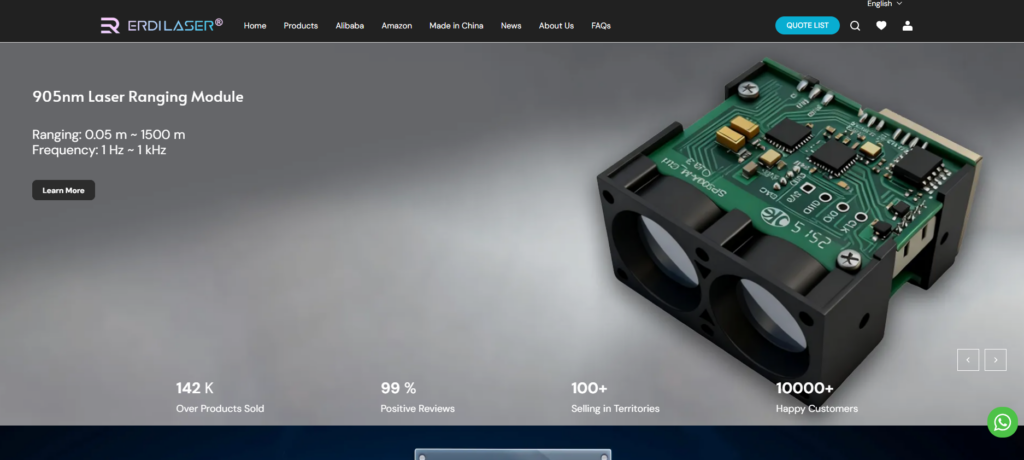
The homepage hero section sets the tone for the entire website. Rather than using abstract slogans or generic imagery, we focused on:
- High-resolution product visuals
- Clear technical descriptors (range, frequency, performance)
- A restrained, professional color palette
This approach immediately signals that ERDI is a serious technology provider, not a generic catalog brand.
Key Metrics as Visual Proof
Directly beneath the hero section, we introduced quantitative credibility markers:
- Total product sales
- Global customer reach
- Positive reviews and industry presence
These elements function as visual evidence, reinforcing trust without requiring lengthy explanations.
Certification and Compliance as Design Assets
Turning Documents into Trust-Building Content
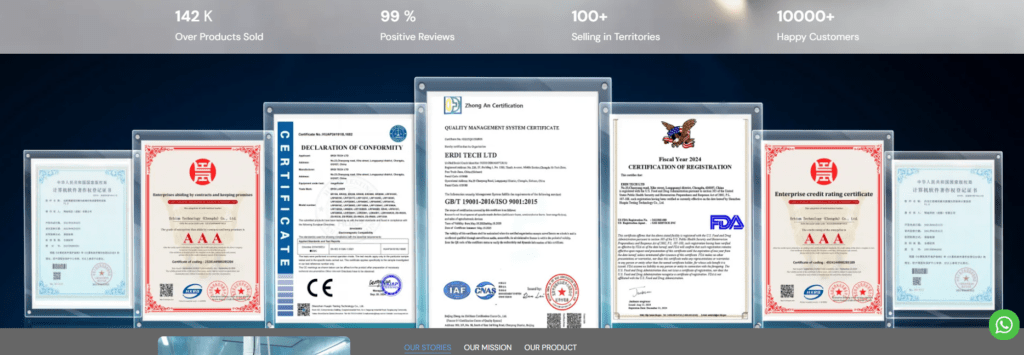
ERDI holds multiple international certifications. Instead of hiding these in PDFs or footer links, we elevated them into a dedicated visual section.
Design decisions included:
- Uniform certificate presentation
- Clear spacing and alignment
- Integration with brand color tones
By treating certifications as a core design element, the site communicates compliance and professionalism naturally.
Product Architecture and Category Design
Designing for Complex Product Lines
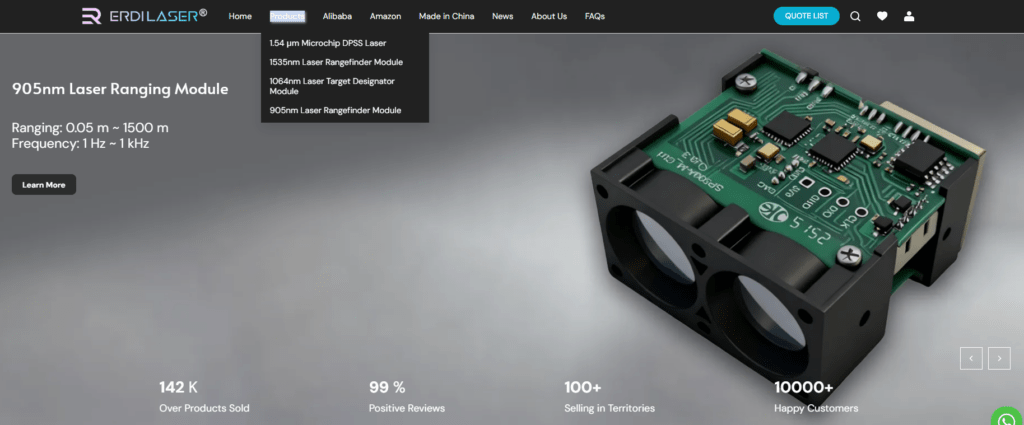
ERDI offers multiple product families, each with different use cases and technical parameters. Our design challenge was to create a system that allows users to quickly:
- Understand category differences
- Compare product capabilities
- Navigate without confusion
Modular Product Cards
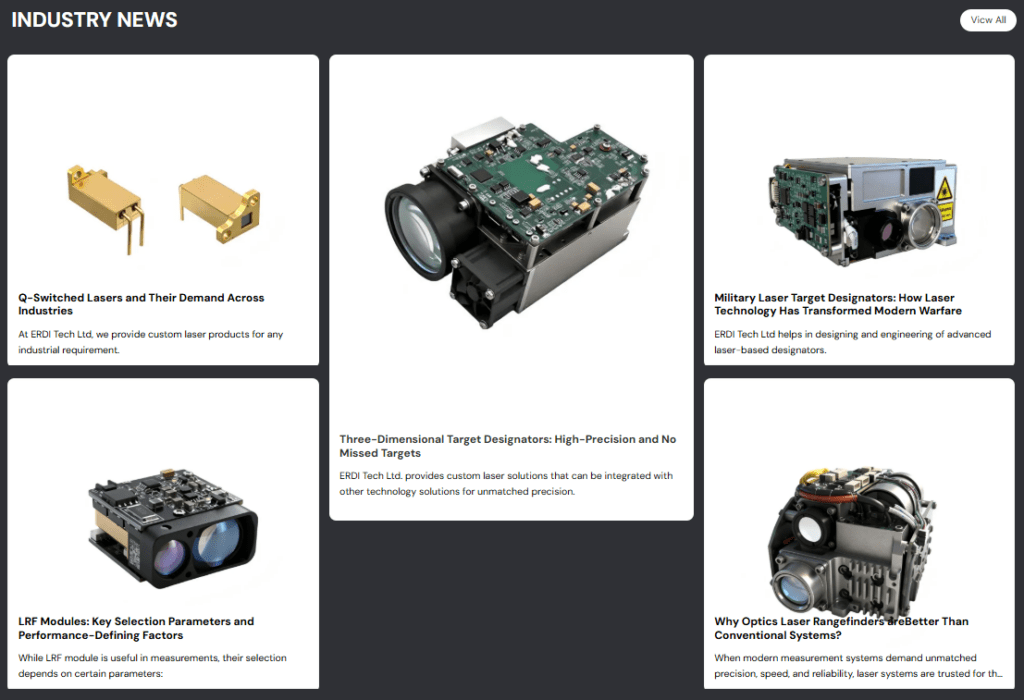
We designed product cards with:
- Consistent image framing
- Clear naming conventions
- Minimal but meaningful descriptors
This modular approach ensures scalability as new products are added, while keeping the interface clean and organized.
Visual Storytelling Through Application Scenarios
Showing Products in Real-World Contexts
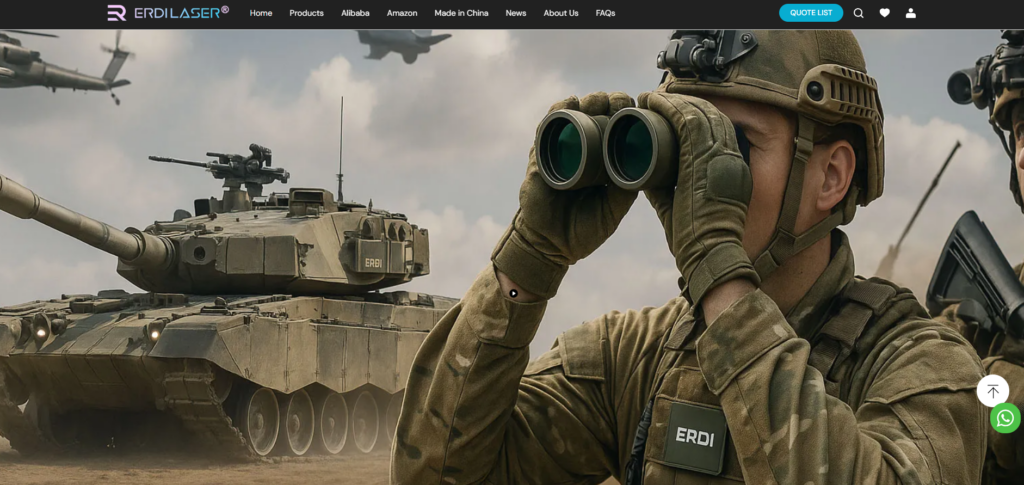
Technical buyers want to see how products perform in real environments. We integrated application imagery and scenario-based content to support this need.
Design strategies included:
- Contextual photography
- Balanced contrast between technical and environmental visuals
- Strategic placement to break up dense content sections
This storytelling approach helps users visualize usage without reading long explanations.
Industry News and Knowledge Positioning
Building Thought Leadership Through Design
The Industry News section was designed not as a blog feed, but as a knowledge showcase.
Each article preview follows a consistent layout:
- Visual relevance
- Clear headlines
- Easy scannability
This reinforces ERDI’s role not just as a manufacturer, but as an informed industry participant.
Trust Signals and Social Proof
Partner Logos and Testimonials
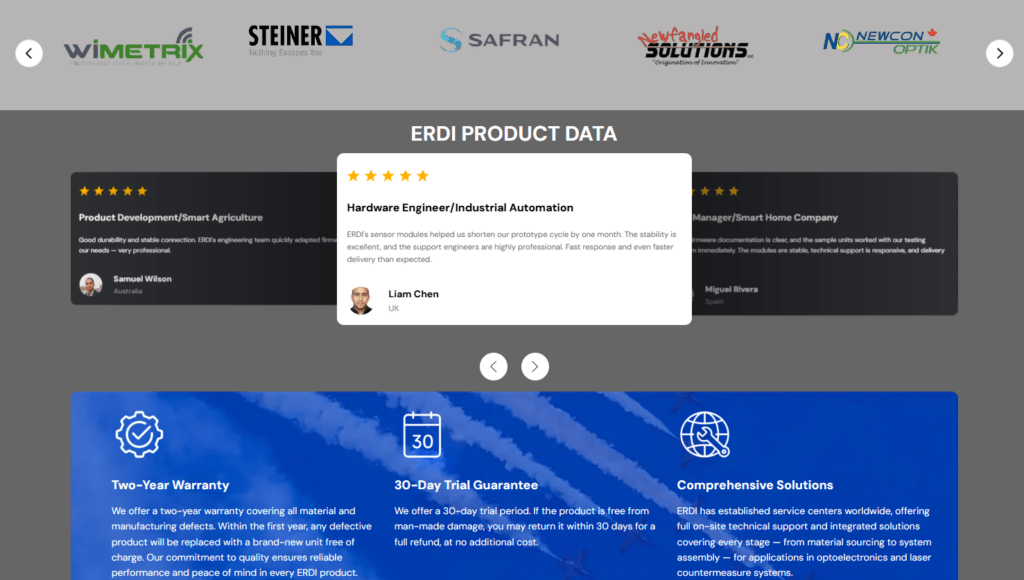
Global brands require global validation. We integrated partner logos and testimonials into the lower sections of the homepage to reinforce credibility after users have engaged with content.
The design emphasizes:
- Subtle animation
- Balanced spacing
- Non-intrusive presentation
This ensures trust signals feel earned, not promotional.
Challenges We Faced and How Design Solved Them
Challenge 1: Dense Technical Information
Solution:
We prioritized hierarchy, spacing, and visual grouping to prevent information overload.
Challenge 2: B2B Conversion Without Aggressive CTAs
Solution:
We used soft calls-to-action, such as “Learn More” and “Explore Solutions,” aligned with enterprise buying behavior.
Challenge 3: Maintaining Brand Seriousness While Staying Modern
Solution:
A restrained color palette, consistent typography, and disciplined layout choices preserved professionalism without feeling outdated.
Final Results and Impact
The redesigned Shopline website achieved:
- Stronger first-impression authority
- Improved content clarity and navigation
- Enhanced trust through visual storytelling
- A scalable design system for future growth
Most importantly, the site now supports ERDI’s long-term positioning as a global technology leader rather than just a product supplier.
Conclusion
Design plays a critical role in how complex technology brands communicate with the world. Through a structured, content-driven, and conversion-aware Shopline design approach, ERDI’s website now reflects the precision, reliability, and professionalism of its products.
This project demonstrates how thoughtful page design—without relying on heavy development—can transform a technical website into a powerful business asset.
At AIRSANG, this is exactly what we specialize in: helping global brands translate complexity into clarity through strategic Shopline website design, visual systems, and conversion-focused user experiences.

Design and build a WordPress website or corporate site with a full eCommerce system for you.
Price range: $200.00 through $2,500.00Custom requirements or special quotations
Original price was: $2.00.$1.00Current price is: $1.00. Main Image Design for Amazon Home Physiotherapy Device Explained
Introduction: Building a Trustworthy Image for Home Therapy Devices on Amazon When designing the main image for a home therapy device on Amazon, our primary...
Main Image Design for Amazon Lipstick Conversion
Introduction: Designing a Lipstick Main Image That Sells on Amazon When we design a Main image for an Amazon lipstick, our responsibility goes far beyond...
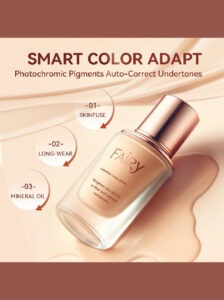
What Makes an Amazon Liquid Foundation Main Image Convert
Introduction Designing a Main image design for Amazon Liquid foundation is never just about making a product look beautiful. On Amazon, the main image and...
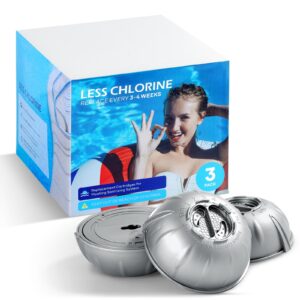
Designing an Effective Amazon Main Image for Filter Cartridges
Introduction Designing a Main image for Amazon is never just about making a product look attractive. It is about clarity, trust, and instant understanding—especially for...

Five Pet WordPress Themes Compared
Introduction Choosing the right pet-related WordPress theme is more than a design decision—it directly affects usability, scalability, and long-term business growth. Pet care and pet...

Building a Scalable WordPress Website for a Science-Driven Brand: The AminoUSA Project
Introduction In today’s digital landscape, a website is more than a place to list products. For science-driven brands operating in regulated or research-focused industries, a...

Building a Scalable Shopify Store for a Global Blade Brand: The CoolKatana Project
Introduction In cross-border eCommerce, a Shopify website is more than a storefront.For brands operating in niche, culture-driven categories, the website must do far more than...
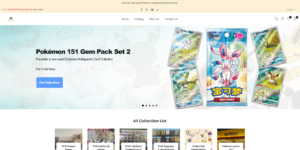
Designing a High-Conversion Shopify Store for Pokémon Cards
Introduction In the world of collectible eCommerce, especially within the Pokémon Trading Card Game (TCG) market, a website must do more than simply list products....
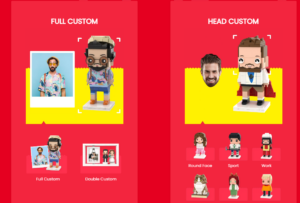
High-Converting Shopify Design for a Custom Brick Brand
Introduction In today’s competitive eCommerce landscape, especially in the personalized gift and collectible space, a Shopify website must do far more than display products. It...
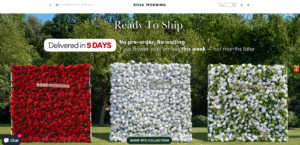
Shopify Website Design Case Study for a Premium Floral Brand
Introduction In today’s competitive eCommerce landscape, a Shopify website must do far more than display products. It needs to communicate brand value instantly, guide users...
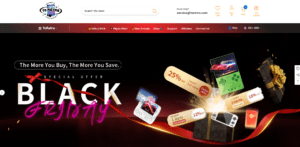
Shopify Design Case Study: Retro Gaming Store
Introduction In a highly competitive eCommerce environment, visual clarity and emotional connection often determine whether a visitor becomes a customer. This is especially true in...
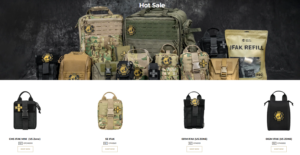
Shopify Design Case Study: Tactical Rescue Brand
Introduction A strong Shopify website does more than display products—it communicates purpose, builds trust, and guides users toward confident purchasing decisions. This is especially true...
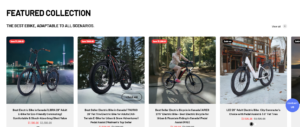
Shopify Website Design Case Study for an Electric Bike Brand
Introduction In today’s competitive electric bike market, a Shopify website must do more than display products—it must tell a story, build trust, and guide users...
Scalable Shopify E-commerce for a Creative Brand
Introduction When creative brands grow, their websites often struggle to keep up. As product lines expand, content increases, and traffic rises, many visually driven brands...
Shopify Website Design Case Study for a Home Decor Brand
Introduction In the highly competitive home decor market, visual identity is no longer just about aesthetics—it directly influences trust, browsing behavior, and purchasing decisions. For...
Building a Scalable WordPress Subscription Website Case Study
Introduction For modern e-commerce brands, a website is no longer just a digital storefront. It is the engine that supports subscriptions, content storytelling, trust building,...
High-Conversion WordPress Design for Adult Brands
Introduction In highly competitive eCommerce markets, strong visuals alone are not enough. A successful WordPress website must guide visitors through a clear, intentional journey—one that...

Scalable WordPress Sex Doll E-commerce Website
Introduction Launching a high-performing cross-border eCommerce website is never just about putting products online.For brands operating in highly competitive and visually driven markets, the website...