











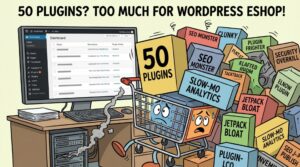

If you run a WordPress eCommerce store, chances are you’ve asked yourself this question at least once:
Are 50 plugins too much for a WordPress eShop?
Some store owners panic as soon as their plugin count hits double digits. Others run stores with dozens of plugins and see no immediate issues at all. So what’s the truth?
In this guide, we’ll break down the real relationship between plugin count, performance, security, and scalability — in plain language. By the end, you’ll understand when plugins become a problem, when they don’t, and how to make smart decisions for a growing WordPress eShop.
Why WordPress Stores End Up with So Many Plugins

WordPress itself is intentionally lightweight. Out of the box, it doesn’t include advanced SEO tools, caching, security hardening, or eCommerce features.
That flexibility is exactly why WordPress powers millions of online stores — but it also explains why plugin counts grow fast.
A typical WordPress eShop often uses plugins for:
- Payments and checkout optimization
- Shipping rules and tax calculations
- SEO and schema markup
- Performance and caching
- Security and spam prevention
- Analytics and tracking
- Email marketing and automation
- Multi-language or currency switching
- Page builders and design enhancements
Individually, each plugin solves a real problem. Collectively, they can stack up quickly.
So the question isn’t why stores have many plugins — it’s whether that number actually matters.
The Myth: “More Plugins Automatically Means a Slower Site”
One of the most common misconceptions in the WordPress world is:
“Too many plugins will slow down your site.”
This sounds logical, but it’s incomplete.
WordPress doesn’t slow down because of the number of plugins — it slows down because of how those plugins are built and used.
Think of plugins like apps on your phone:
- 50 lightweight, optimized apps won’t necessarily slow your phone
- 5 poorly built apps running constantly in the background can
The same rule applies to WordPress.
What Actually Impacts WordPress Performance
When evaluating whether 50 plugins are too much for a WordPress eShop, these are the factors that truly matter:
1. Plugin Quality
A single poorly coded plugin can:
- Run heavy database queries on every page
- Load unnecessary scripts site-wide
- Conflict with caching mechanisms
Meanwhile, a well-built plugin:
- Loads assets only when needed
- Follows WordPress coding standards
- Minimizes database calls
One bad plugin can do more damage than ten good ones.
2. Plugin Purpose Overlap
Many stores unknowingly install plugins that duplicate functionality.
Examples:
- Multiple plugins injecting scripts into the frontend
- Two SEO plugins partially overlapping
- Several performance plugins fighting each other
This redundancy creates:
- Script conflicts
- Slower load times
- Debugging nightmares
Reducing overlap often improves performance without reducing features.
3. Frontend vs Backend Load
Not all plugins affect your site equally.
- Frontend plugins (sliders, popups, analytics, visual effects) impact page speed directly
- Backend-only plugins (admin tools, backups, editor enhancements) rarely affect users
A store with 50 backend-focused plugins may outperform a store with 15 heavy frontend plugins.
4. Hosting Environment
A powerful server can handle far more plugins than a cheap shared hosting plan.
Key factors include:
- PHP version and memory limits
- Object caching (Redis/Memcached)
- Database optimization
- CDN usage
On well-optimized hosting, even plugin-heavy stores can run smoothly.
So… Are 50 Plugins Too Much for a WordPress eShop?

Short answer: Not necessarily.
A better question is:
Are those 50 plugins necessary, optimized, and working together efficiently?
Here’s how to interpret plugin counts realistically:
| Plugin Count | What It Usually Means |
|---|---|
| Under 15 | Very minimal setup, often limited features |
| 20–30 | Typical small to medium eShop |
| 30–50 | Feature-rich or multi-language store |
| 50+ | Complex store or poorly audited setup |
The number alone doesn’t determine success or failure.
When Plugin Count Becomes a Real Problem
While 50 plugins isn’t automatically bad, there are clear warning signs that your store is carrying too much weight.
Red Flags to Watch For
- Slow admin dashboard
- Long page load times despite caching
- Frequent plugin conflicts
- Updates breaking core functionality
- High server CPU usage
- Inconsistent checkout behavior
If you experience several of these issues, the problem is usually plugin management, not WordPress itself.
How to Audit Plugins the Smart Way
Instead of blindly removing plugins, use a structured approach.
Step 1: Categorize Every Plugin
Group plugins into:
- Core functionality (payments, cart, checkout)
- Performance and security
- Design and UX
- Marketing and analytics
- Admin-only utilities
This helps you see redundancy clearly.
Step 2: Identify “Must-Have” vs “Nice-to-Have”
Ask:
- Does this plugin directly impact revenue or conversions?
- Is there another plugin already doing something similar?
- Is this feature worth the performance cost?
Many plugins survive audits simply because no one questions them.
Step 3: Replace Multiple Plugins with One System
In many cases:
- One well-built plugin can replace 3–4 smaller ones
- Custom code can replace simple feature plugins
- Theme-level solutions can reduce plugin reliance
This is where professional setup makes a huge difference.
Performance Isn’t Just About Speed — It’s About Stability
For eCommerce, stability matters as much as speed.
Too many unmanaged plugins increase the risk of:
- Checkout failures
- Payment conflicts
- Inventory sync issues
- Broken updates during peak sales
A clean, well-structured plugin stack ensures your store stays reliable during traffic spikes and promotions.
Why Many High-Performing Stores Still Use Many Plugins
It may surprise you, but many successful WordPress eShops run 40–60 plugins — and perform extremely well.
The difference is:
- Careful plugin selection
- Regular audits
- Professional performance optimization
- Clean hosting environments
These stores treat plugins as modular tools, not random add-ons.
The Real Question Store Owners Should Ask
Instead of worrying about plugin count, ask:
- Is my store fast for real users?
- Is checkout reliable?
- Can the site scale as traffic grows?
- Is the backend easy to maintain?
If the answer is yes, then plugin count is largely irrelevant.
Final Thoughts: Smart Plugins Beat Fewer Plugins
So, are 50 plugins too much for a WordPress eShop?
Not if:
- Each plugin has a clear purpose
- Overlaps are eliminated
- Performance is actively optimized
- The store is built with scalability in mind
But without strategy, even 15 plugins can cause serious problems.
How AIRSANG Can Help
At AIRSANG, this is exactly the kind of problem we solve every day.
We work with cross-border eCommerce brands that rely on WordPress to:
- Build scalable international stores
- Optimize plugin stacks for speed and stability
- Reduce unnecessary plugins without losing features
- Design conversion-focused storefronts for global audiences
If you’re unsure whether your WordPress eShop is overloaded — or under-optimized — we can help you audit, rebuild, and scale with confidence.


Design and build a WordPress website or corporate site with a full eCommerce system for you.
Price range: $200.00 through $2,500.00Custom requirements or special quotations
Original price was: $2.00.$1.00Current price is: $1.00. Are 50 Plugins Too Many for a WordPress eCommerce Store?
Understanding the Real Performance Impact Having 50 plugins on a WordPress eCommerce site isn’t automatically a problem. In fact, the number alone rarely determines performance....

Main Image Design for Amazon Lipstick Conversion
Introduction: Designing a Lipstick Main Image That Sells on Amazon When we design a Main image for an Amazon lipstick, our responsibility goes far beyond...

How Hackers Steal WordPress Admin Emails (And How to Stop Them)
Let’s start with an uncomfortable truth: Your WordPress admin email is probably way more public than you think.And hackers? They love that. To them, your...

What Makes an Amazon Liquid Foundation Main Image Convert
Introduction Designing a Main image design for Amazon Liquid foundation is never just about making a product look beautiful. On Amazon, the main image and...

Designing an Effective Amazon Main Image for Filter Cartridges
Introduction Designing a Main image for Amazon is never just about making a product look attractive. It is about clarity, trust, and instant understanding—especially for...

Replay Attacks on WordPress: Real Threat or Overhyped Myth?
Let’s clear something up first. Replay attacks don’t look scary.They don’t smash passwords.They don’t inject evil code with green hacker text flying everywhere. They’re sneaky....
How to Duplicate WordPress Pages Without Breaking Anything
Let’s face it. Sometimes you don’t want to create a new page.You just want the same page… but slightly different. Same layout.Same blocks.Same settings. Because...

Five Pet WordPress Themes Compared
Introduction Choosing the right pet-related WordPress theme is more than a design decision—it directly affects usability, scalability, and long-term business growth. Pet care and pet...

Comparing Five Swimwear eCommerce Themes
Introduction Choosing the right theme for a swimwear or lingerie independent store is not just a visual decision—it directly affects conversion rates, scalability, and long-term...
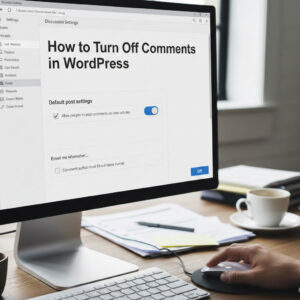
How to Turn Off Comments in WordPress (Without Losing Your Mind)
Let’s talk about WordPress comments. In theory, comments are great.They encourage discussion.They build community.They make your website feel “alive.” In reality? They’re often a magnet...

WordPress 500 Error: When Your Website Decides to Panic
Your WordPress site was fine a minute ago.You refreshed the page.And suddenly—boom 💥—500 Internal Server Error. No explanation.No apology.Just a cold, confusing message that basically...

How to Contact Shopify Support: Simple, Stress-Free Guide
Running a Shopify store should feel exciting—not confusing. When questions pop up or issues slow you down, Shopify offers several support paths depending on what...
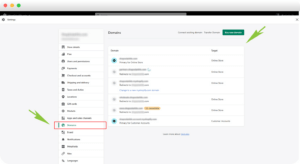
How to Deactivate a Shopify Store: A Clear, Practical Guide
Deactivating a Shopify store isn’t complicated, but it does come with consequences many merchants overlook. This guide breaks the process down in a simple, educational...
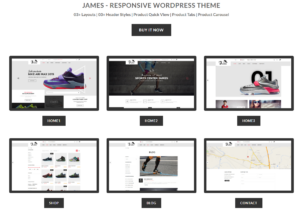
Five Shoe Store Themes Compared
Introduction Choosing the right theme for a footwear-focused independent store is not just a visual decision—it directly affects scalability, daily operations, and long-term conversion performance....

Shopify vs Etsy: The Ultimate Online Selling Showdown
Introduction: Two Platforms Walk Into a Bar… If Shopify and Etsy were people, Etsy would be that charming friend who already has a booth at...

Is Your Shopify or WordPress Site Hacked? Here’s What to Do
Introduction: The Digital Equivalent of Waking Up to a Broken Window Imagine waking up, grabbing your morning coffee, opening your laptop… and discovering your website...

How to Start a Shopify Store Without Losing Your Mind
Starting a Shopify store sounds glamorous. You picture yourself sipping coffee at noon, checking sales notifications, and casually telling friends,“Yeah, my store did pretty well...

Is Shopify Legit? A Clear Guide for New Online Sellers
If you’re researching eCommerce platforms, chances are you’ve typed one very specific question into Google: is Shopify legit? That question is completely reasonable. Launching an...