
Is it worth building an independent website with only a few products? It may be, but product count should not be your only criterion. If you know whom you sell to, can explain your products clearly, and have a way to bring the first visitors to the site, you can build something small but complete. If your products, fulfillment, or customer acquisition approach remain undecided, validating those issues first is more cost-effective than rushing into a large website.
Here, an “independent website” means a site whose content and visitor journeys the brand manages itself. It can accept orders or initially focus on product presentation and inquiries. A small product range is well suited to starting with minimal pages: help visitors understand the products, trust you, and know how to contact you or buy. This article explains when to build, how much to build initially, and how to decide the next step , rather than promising that having a website guarantees orders.
Having few products is not necessarily a disadvantage
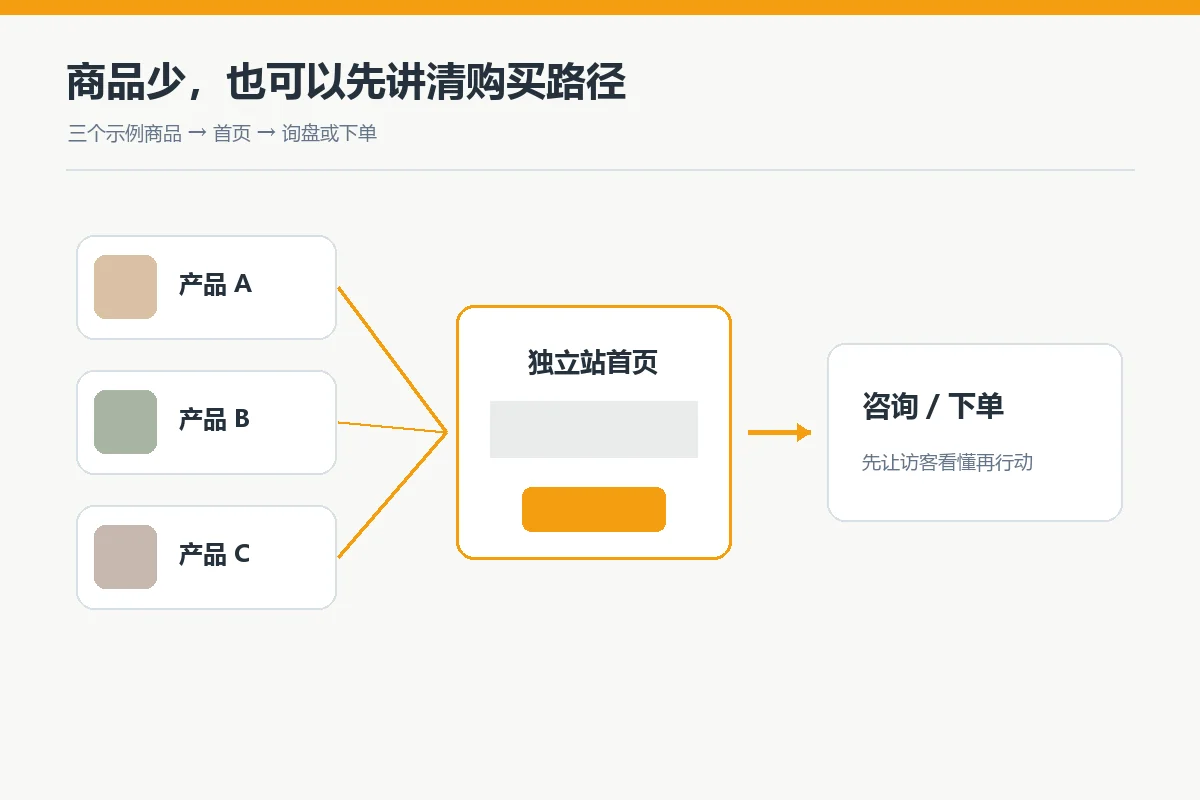
Imagine a brand making only two desktop speakers. Prospects may care less about hundreds of choices than the differences between the two, suitable room sizes, listening trials, shipping costs, and returns. If the homepage and product pages answer these questions, a small range can still provide a clear buying journey. Conversely, visitors may leave a site with dozens of products if prices, dimensions, and delivery details are missing.
Product count is just one part of website planning. Shopify’s official product documentation lists titles, prices, descriptions, images, inventory, and variants as product information. Basic product creation requires only a title and price, but being listable does not mean visitors will want to buy. Merchants also need actual images, use cases, and transaction terms. If you are distinguishing a sales-focused independent store from a corporate presentation site, first read the difference between an independent store and a corporate website , then decide this site’s main purpose.
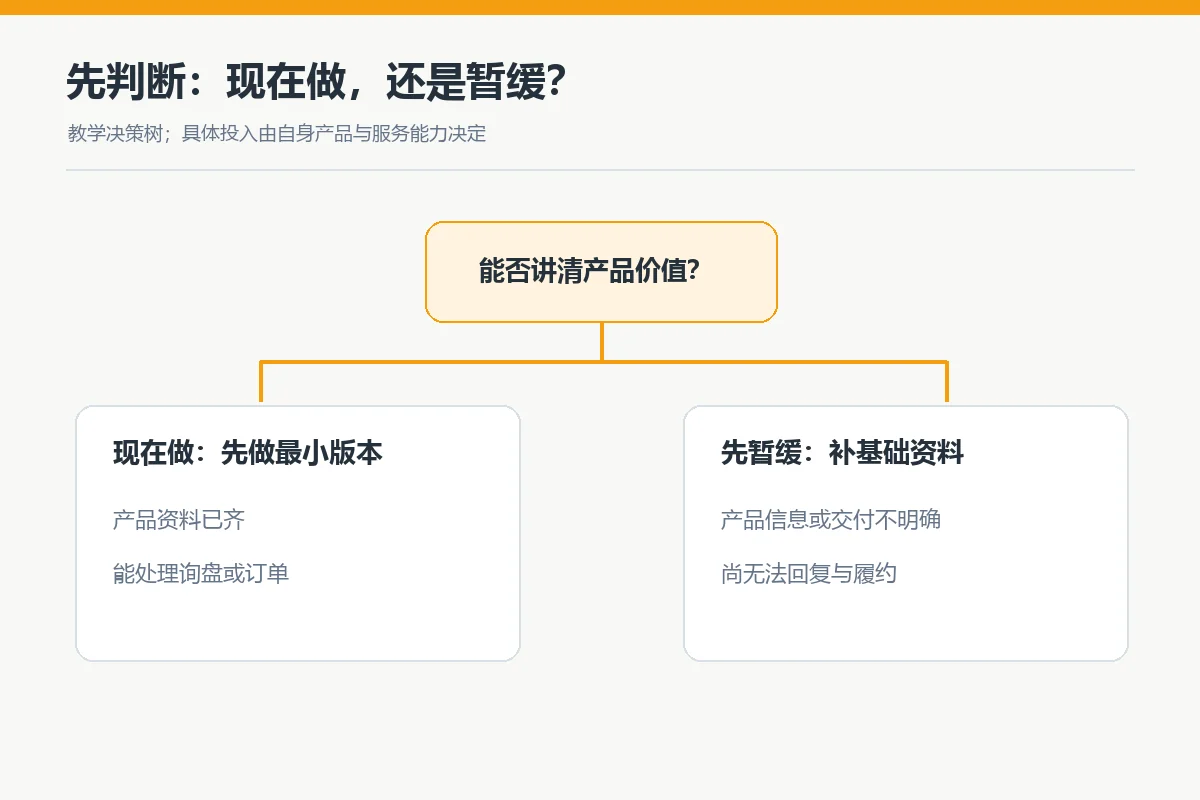
Check three conditions before starting
First: can you describe your customer in one sentence?
“For everyone” rarely produces useful homepage copy. Try something more specific: “For people who listen to music in small homes and do not want large speakers.” This does not exclude other customers; it selects an initial audience that makes the product’s value clear. If you cannot write that sentence, collect existing customers’ questions and reasons for buying before choosing a template.
Second: is your product information sufficient for a buying decision?
Prepare at least a clear name, actual or licensed images, specifications, use cases, pricing or a quote request method, delivery coverage, and after-sales information. Products requiring discussion before pricing can initially direct visitors to inquiries. For standard retail goods, visitors also need a visible ordering and payment path. An attractive page cannot resolve concerns if delivery and return rules are unclear.
Third: where will the first visitors come from?
A website does not automatically attract visitors just because it launches. Do you have social media content, marketplace customers, trade show contacts, email subscribers, or a plan for ongoing search-oriented content? These can all provide initial entry points you can validate. With no existing source, choosing one channel and one content approach makes problems easier to diagnose than opening several advertising accounts at once. Here, customer acquisition means bringing people who may need your products to the site, not purchasing clicks without buying intent.
These three situations call for different starting points
The following table offers editorial suggestions for prioritizing work. It is neither a platform rule nor a return-on-investment forecast.
| Current situation | What to do first | What not to rush into |
|---|---|---|
| Stable products and an existing visitor source | Build a small independent website and make the homepage, core product pages, and purchase/inquiry journey work first. | Developing a complex membership system or numerous campaign pages immediately. |
| Stable products but no confirmed visitor source | Create clear presentation and contact pages while testing one acquisition channel. | Treating the website launch itself as an acquisition plan. |
| Products, fulfillment, and pricing are still changing | Organize customer feedback, samples, and fulfillment rules first; use a simple page to collect inquiries if needed. | Investing in a complex store and extensive content production. |
The point is not to wait until everything is perfect. If products are stable and you can fulfill orders but lack steady traffic, build a basic site while testing content channels. Just do not substitute “finishing the website” for “finding customers.” If the products themselves change frequently, reduce the site scope first so every packaging, price, or delivery change does not require rebuilding everything.
If you decide to proceed, start with a small but complete version
The homepage should guide visitors, not contain everything
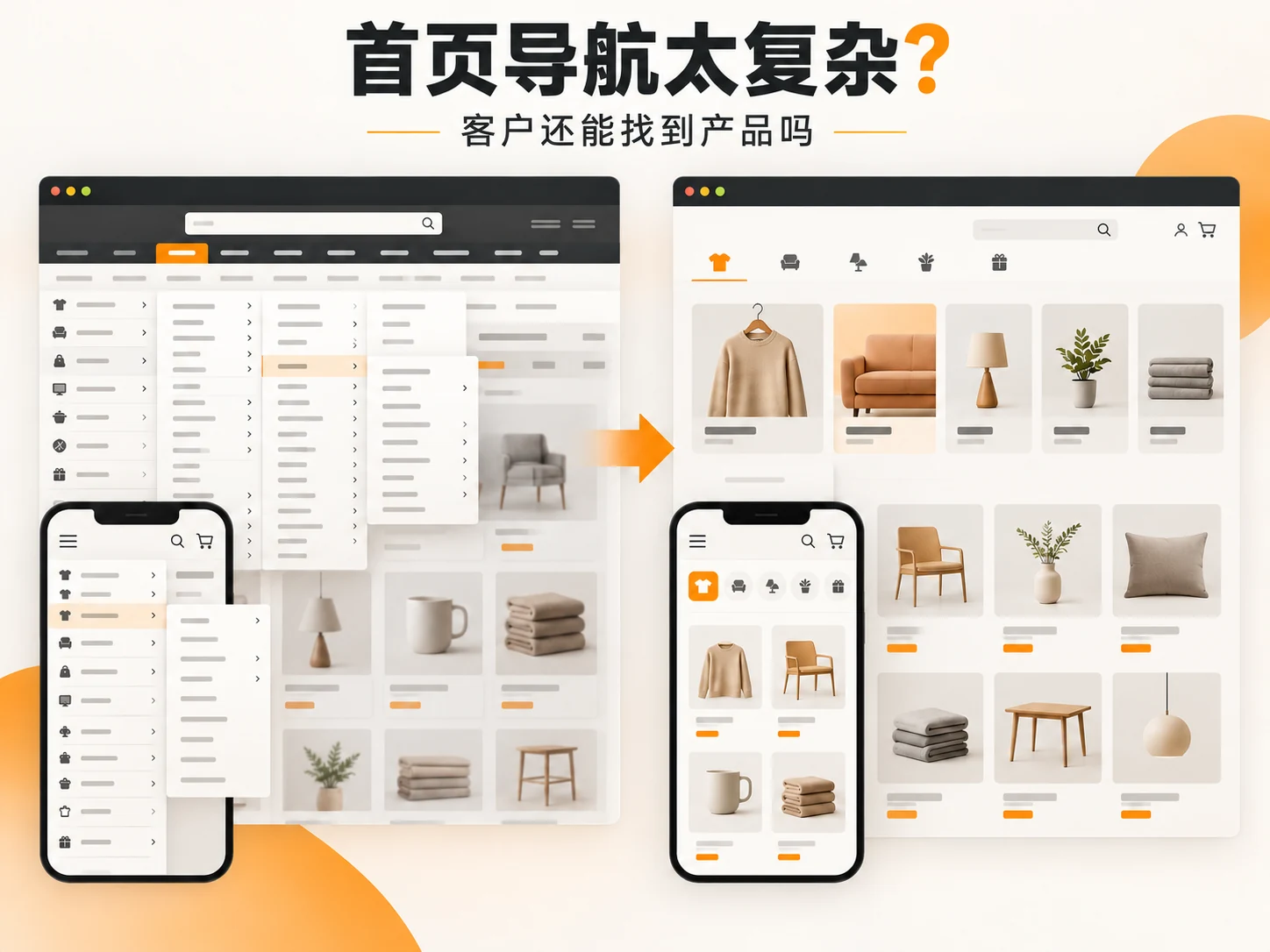
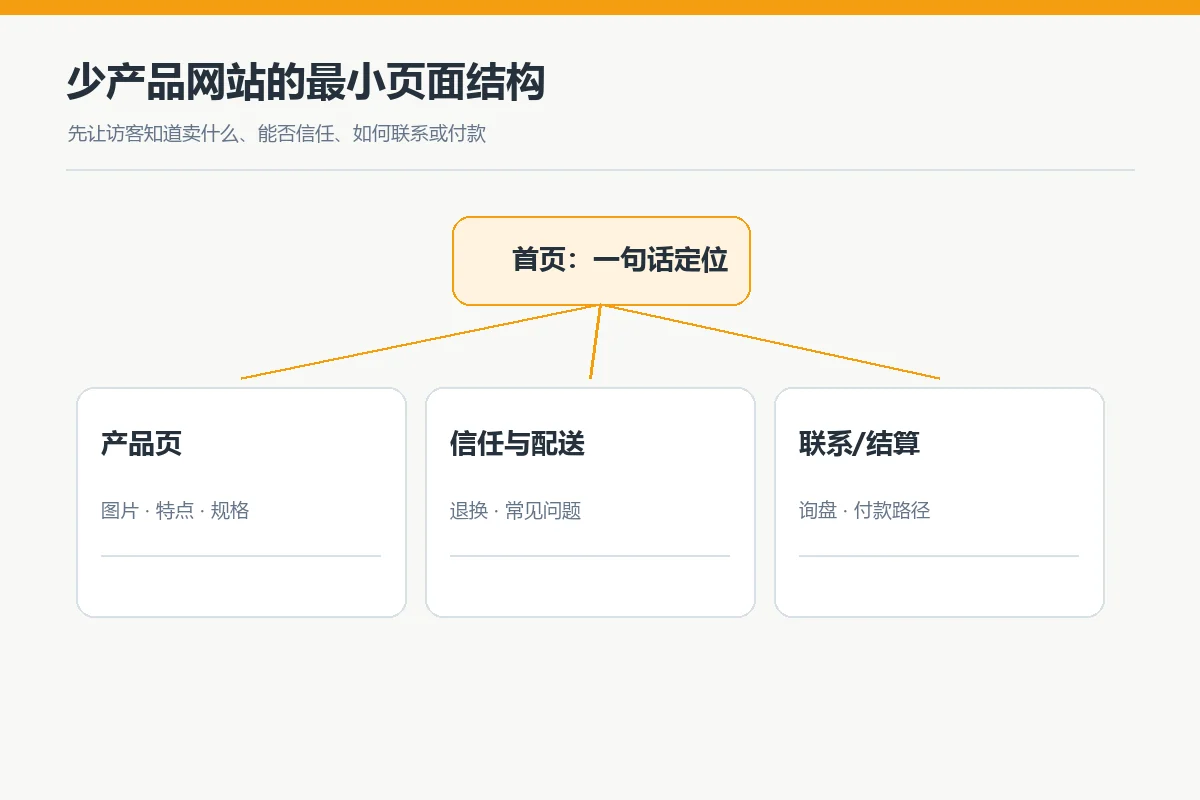
The first screen should explain what you sell, whom it suits, and where to click next. Then show a few core products and real use cases, and make delivery, returns, and contact information easy to find. Visitors should not search three menu levels for your only flagship product. With few products, clear navigation is more useful than complex categories.
Every product page should answer the same basic questions
Start with recognizable product images and the main purpose, then provide actual dimensions, materials, compatibility, or other specifications. Publish the price where possible; for project-based quotes, explain what information is needed. Buttons should be honest too: use “Buy now” if online payment is available and “Ask about this product” if manual confirmation is required. Do not label both different actions “Learn more.”
Complete the transaction and trust information
Retail sites should explain shipping costs, delivery regions, estimated processing times, return conditions, and customer support contact methods. If times and costs vary by region, specify the applicable scope rather than hiding exceptions behind a vague “free worldwide shipping.” Inquiry sites should explain who replies and what information is usually needed. Do not promise a specific number of hours without an established response time.
This minimum version is not a rough version; it enables a first-time visitor to complete a clear action. For tool selection, also see available tools for building an independent website ; this article does not present any platform as the only answer for every small brand.
After launch, look beyond visitor numbers
“One hundred people visited today” only confirms visits, not that people understood the products. Choose the most important action first: retail sites can track adding to cart, starting checkout, and purchases; quote-based sites can track qualified inquiries. A qualified inquiry includes product, quantity, or region information relevant to your actual service; every blank form is not a valid sales opportunity.
If using Google Analytics 4, its official ecommerce reporting documentation lists events such as adding to cart and purchasing, but also makes clear that these ecommerce events are not automatically collected on every website. They must be configured and sent correctly before reports contain the corresponding data. If tracking is incomplete, do not interpret “zero purchases” in a report as nobody wanting the product. Complete a purchase journey yourself first, then verify that the events were recorded.
For search traffic, you can also use the Google Search Console Performance report to see impressions and clicks in Google Search. With many impressions but few clicks, first check whether titles and descriptions address users’ questions. If people reach product pages but do not inquire, examine whether images, specifications, shipping costs, or contact buttons create hesitation. These situations require different fixes; do not blame everything on insufficient traffic.
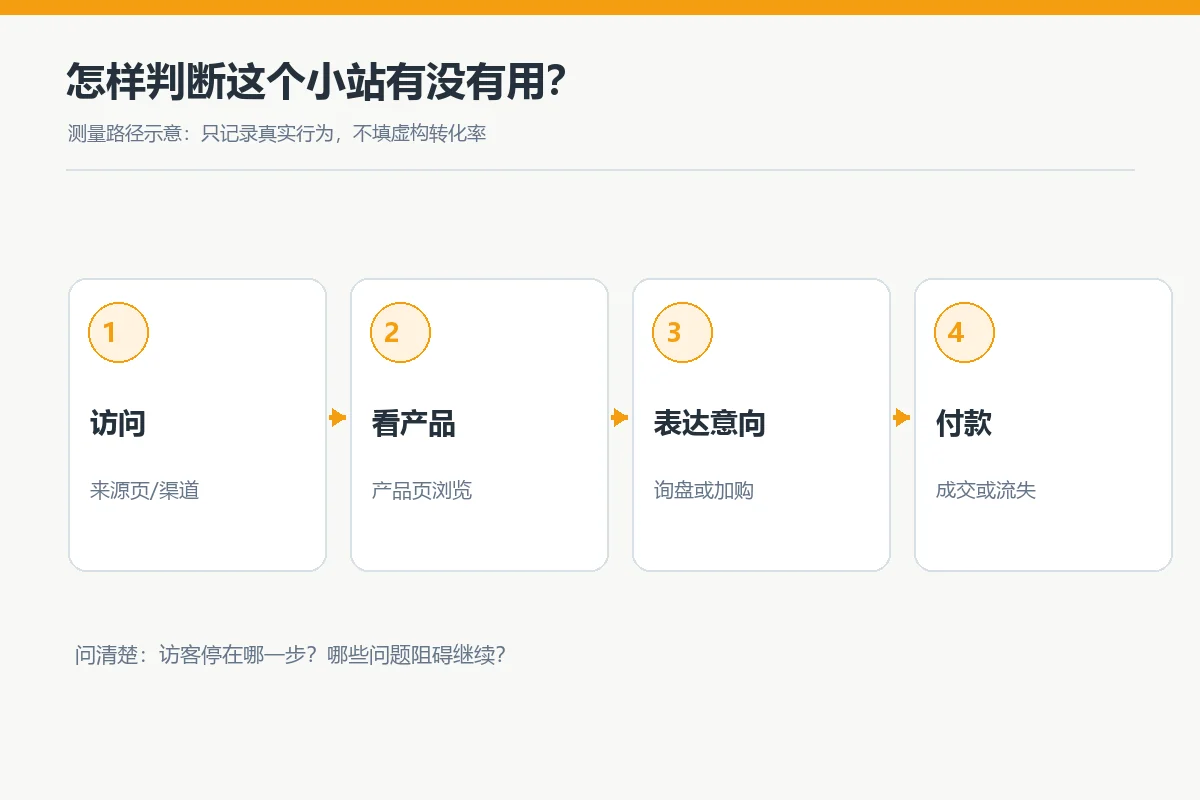
A practical trial plan for a small product range
Before launch: record the hypothesis you want to test
Write down the audience, flagship product, expected visitor entry point, and desired action. For example: “Send people repeatedly asking about dimensions on social media to the product page and see whether they find specifications and start an inquiry.” This is easier to check than “increase brand influence.” Estimate the budget around essential pages, images, payments or forms, and basic maintenance rather than copying someone else’s full-site quote. To understand cost components, see independent website project scope and budget .
At launch: complete the entire customer journey yourself
Open the pages on both computer and phone. Follow the homepage product link, check images, specifications, and buttons, then try ordering or submitting an inquiry clearly marked as a test. Confirm that notifications arrive, return information is findable, and mobile text and buttons are unobstructed. If a step fails, fix it before discussing additional pages.
At review: examine evidence before expanding or reducing scope
Record actual weekly questions, entry sources, product page views, qualified inquiries, and orders in one table. With small samples, do not declare the whole direction a failure after one or two days without sales, or conclude that the model works after a single order. Look for recurring barriers first: add shipping details if many ask about costs; rewrite the comparison if people repeatedly confuse the two models; check payment and delivery terms if people leave at checkout.
If visitors still do not match your target audience after several rounds of changes, revisit acquisition channels. If visitors are interested but you still cannot fulfill orders, prioritize supply and after-sales support. A website can receive demand but cannot replace products and fulfillment. For a more systematic review of content and technical issues after launch, continue with the first 90 days website review method .
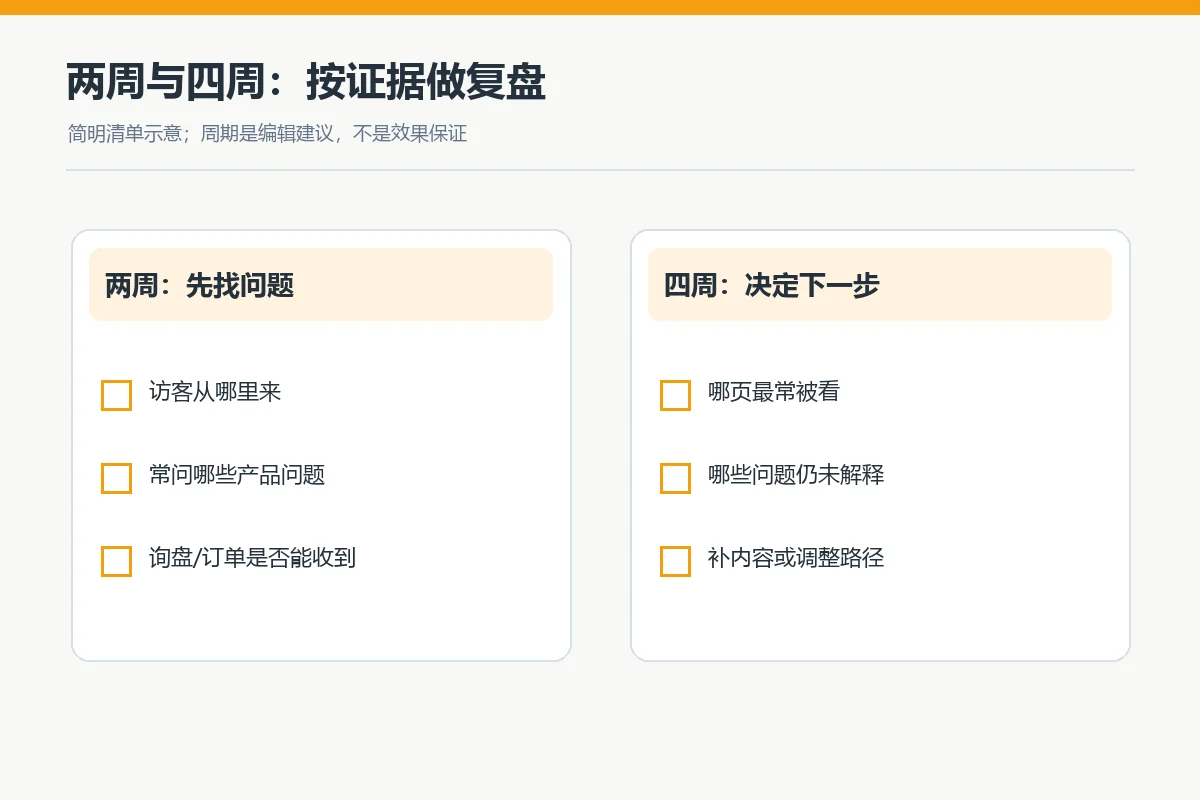
Conclusion: a small range can justify a website, but establish a clear journey first
Is it worth building an independent website with only a few products? If you can explain your target customers, fulfillment terms, and first visitor sources, it is worth starting with a small but complete site. It does not need numerous categories, but must help people understand the products, find trust information, and complete purchases or inquiries smoothly.
If products and delivery rules are undecided, use a simple page to record customer questions and postpone a complex store. If products are settled but visitor sources are unknown, test one channel alongside the site. The first step today is simple: choose a flagship product, list customers’ five most common questions, and draw the journey from entry to purchase or inquiry. If the journey breaks down, resolve that gap first.