












Introdução
If you have ever searched “how do i delete wordpress,” you probably already know the answer is not as simple as pressing one button. WordPress can mean different things depending on how your site was built. You might be using WordPress.com, where the site lives inside the WordPress.com platform. You might be using a self-hosted WordPress installation from WordPress.org, where your files, database, domain, plugins, and hosting account are managed separately. You might also be asking how to reset WordPress, remove an old test site, or close an online project.
This guide explains the process in a beginner-friendly way. Think of a WordPress website as a house with two main parts: the visible structure and the storage room. The visible structure includes themes, plugins, images, and code files. The storage room is the database, where posts, pages, comments, users, settings, and many plugin records are stored. To delete WordPress properly, you need to understand both.
What Does “Delete WordPress” Actually Mean?
When people ask “how do i delete wordpress,” they may mean one of three things. First, they may want to delete a WordPress.com site from their account. Second, they may want to remove a self-hosted WordPress website from a hosting server. Third, they may want to reset a site so it becomes clean and empty while the domain and hosting remain active.
These are not the same action. Deleting a WordPress.com site can permanently remove the site and its content, and WordPress.com notes that the original WordPress.com address cannot be reused after deletion. The same documentation also explains that deleted WordPress.com sites can be restored within 30 days, but after that period, the data and address are gone for good.
A self-hosted WordPress website works differently. You normally delete it from your hosting account by removing the site files and deleting the related database. The original article you provided also separates the process into practical methods, including manual deletion through hosting tools, removal of the database, and deletion through hosting dashboards or installers.
Why Someone Might Delete a WordPress Site
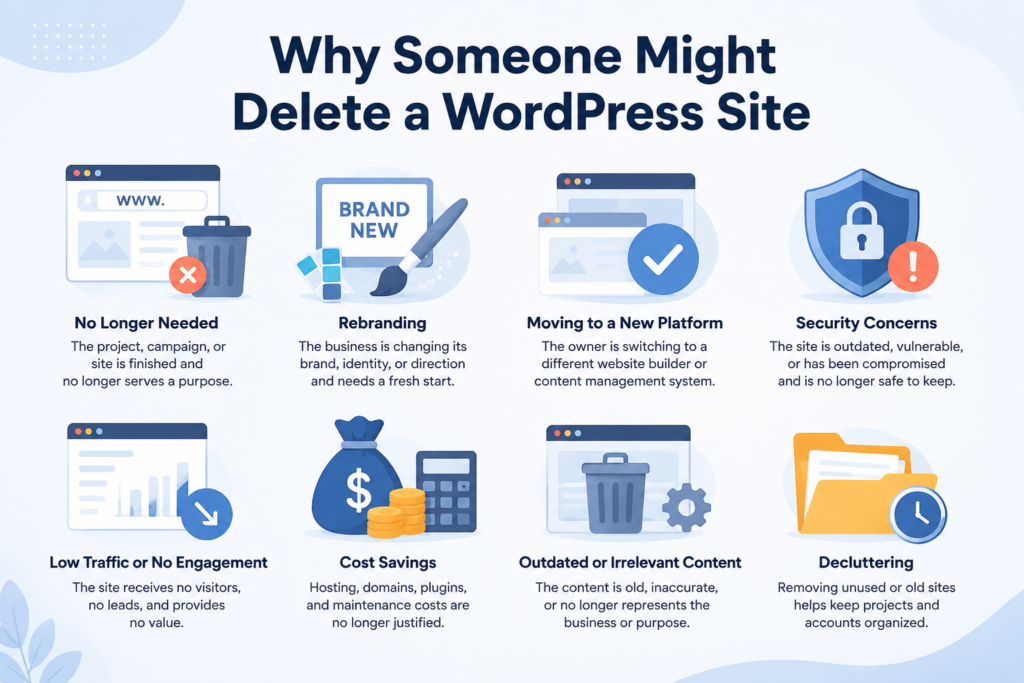
Deleting a WordPress site is usually a business, technical, or organizational decision. Some site owners are rebranding and no longer want the old site to appear online. Others have finished a temporary campaign, event, portfolio, or school project and do not need to keep paying for hosting. A company may also move to a different platform, merge several websites into one, or remove outdated content that no longer matches its services.
Security can be another reason. If a neglected site has old plugins, weak passwords, spam pages, or suspicious files, leaving it online may create unnecessary risk. Deleting it is not always the only solution, but if the site is abandoned and no longer useful, removing it cleanly can be smarter than ignoring it.
There is also a practical cost issue. A WordPress site may require hosting, a domain name, paid plugins, premium themes, email services, backup storage, and maintenance time. If the site has no clear purpose, deleting or archiving it can reduce clutter and expenses.
Before You Delete: Make a Backup First
The most important rule is simple: never delete first and think later. Even if you are sure you no longer need the website, create a backup before removing anything. WordPress developer documentation explains that a full WordPress backup needs both the database and the site files because the database and file system store different parts of the website.
The database usually contains posts, pages, comments, user data, menus, many settings, and plugin-generated information. The files usually include WordPress core files, themes, plugins, uploads, images, documents, configuration files, and custom code. If you only export posts from the WordPress dashboard, you may not have the whole website. If you only download the files, you may not have the content stored in the database.
A safer backup plan includes three parts. First, export the database through phpMyAdmin, a hosting backup tool, or a backup plugin. Second, download the site files through the hosting file manager, FTP, SFTP, or your host’s backup system. Third, save a copy somewhere outside the hosting account, such as your computer or cloud storage. If your host deletes the account or the server fails, a backup stored only on that host may not help.
Check Domains, Email, Subscriptions, and Access
Before deleting, review everything connected to the site. Your domain name may be registered with the same company as your hosting, or it may be managed elsewhere. Deleting WordPress should not automatically mean deleting your domain. If you still want to use the domain later, keep it active and update the DNS when needed.
Email is another common problem. Some businesses use addresses like [email protected] ou [email protected] through the same hosting account as the website. If you cancel hosting without checking email, you may interrupt messages. Confirm where your email is hosted before removing the site.
You should also check paid items. These can include WordPress.com plans, domain subscriptions, premium themes, page builders, security services, backup tools, and plugin licenses. WordPress.com specifically instructs users to remove active purchases before deleting a WordPress.com site.
How Do I Delete WordPress on WordPress.com?
If your site is hosted on WordPress.com, the process is handled inside the WordPress.com dashboard. Start by signing in to the correct account. Then open the hosting dashboard, choose the site you want to remove, go to the site settings, and find the delete section. WordPress.com requires confirmation by entering the full site address before the final deletion button becomes available.
Before confirming, export your content or download a backup. Also consider whether you really need permanent deletion. If your goal is only to hide the site from visitors, making it private may be better. If your goal is to start over while keeping the same address, resetting may be better. If your goal is to move the site to another person, transferring ownership may be better. WordPress.com lists these as alternatives to deletion, including making the site private, changing the address, resetting, or transferring the site.
How Do I Delete WordPress on a Self-Hosted Website?
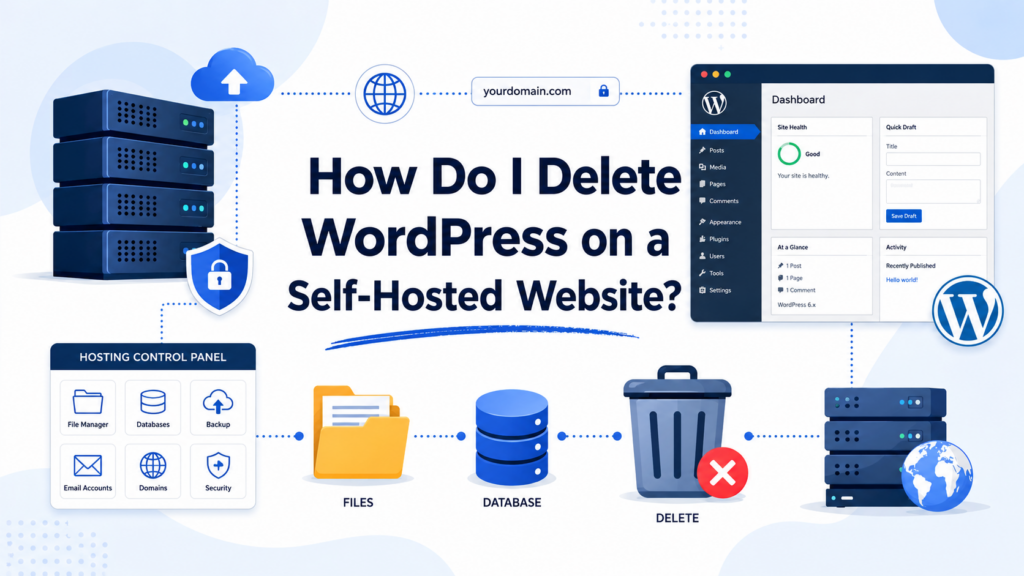
For a self-hosted WordPress website, deletion usually happens through your hosting account, not inside the WordPress dashboard. The WordPress admin area can remove posts, pages, plugins, and themes, but it usually cannot delete the entire server installation by itself.
The clean self-hosted deletion process looks like this: back up the site, identify the correct installation folder, identify the correct database, remove the files, delete the database or database tables, remove unused users or database permissions, and update domain settings if needed.
Start by logging in to your hosting panel. This could be cPanel, Plesk, DirectAdmin, a custom host dashboard, or a managed WordPress dashboard. Find the file manager or connect by SFTP. Locate the folder where WordPress is installed. Common folders include public_html, www, htdocs, or a domain-specific directory. Do not delete random folders until you are certain they belong to the correct site.
Next, identify the database. Open the wp-config.php file and look for the database name, database user, host, and table prefix. This tells you which database WordPress uses. After backing it up, open phpMyAdmin or the host’s database tool and delete the database or drop the WordPress tables. If the database is shared with another application, do not delete the whole database. Remove only the tables that belong to the WordPress installation, and only after confirming the table prefix.
Then delete the WordPress files. These include wp-admin, wp-includes, wp-content, index.php, wp-config.php, and other WordPress files in the installation directory. If the folder contains files for another site, be careful. Download a copy first, then delete only the WordPress installation you intend to remove.
Using a Hosting Auto-Installer
Many hosting accounts include tools such as Softaculous or other one-click installers. If WordPress was installed through one of these tools, uninstalling it through the same tool may be easier than manual deletion. The original article notes that an installer can provide an uninstall option that removes the selected WordPress installation from the hosting account.
This method is convenient, but you should still read every confirmation screen. Some uninstallers let you choose whether to remove files, the database, database users, or the installation record. If you want a complete deletion, select the options that remove both files and database data. If you only want to remove the application but keep a database copy, choose more carefully.
Resetting WordPress Instead of Deleting It
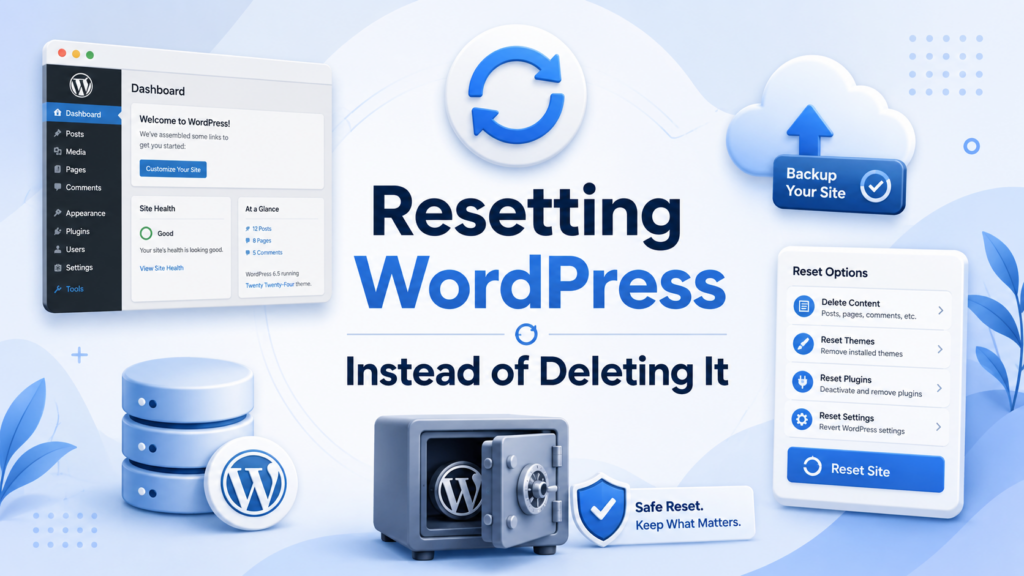
Sometimes the better question is not “how do i delete wordpress?” but “how do I start over?” If you still like your domain, hosting, and general setup, a reset may be enough. A reset removes content and settings so you can rebuild without deleting the hosting account or reinstalling everything manually.
Resetting is useful for test sites, demo sites, failed design experiments, and projects where the domain still matters. A reset can remove posts, pages, media, themes, plugins, users, and settings depending on the tool used. Plugins such as WP Reset are commonly used for this type of job, and the original source mentions reset plugins as an easier option for users who do not want to fully remove the installation.
However, reset tools can also be destructive. Read the plugin instructions carefully, create a backup, and confirm what will remain after the reset. Some tools keep the current admin user and site URL, while others can remove more data. Never run a reset on a live client or business site unless you are completely sure.
What About Search Engines?
Deleting WordPress removes the site from your server, but it does not instantly erase every trace of the site from search engines. Search results can remain for a while until search engines revisit the URL and detect that the content is gone. If the pages return a proper 404 or 410 status, search engines will eventually drop them. If you are replacing the old site with a new one, redirects may be better than deletion because they guide visitors and search engines to the new location.
For businesses, this step matters. A sudden deletion can break backlinks, remove search traffic, and create a poor user experience for visitors who bookmarked old pages. If the site had valuable content, consider exporting important pages and redirecting high-value URLs before removal.
Erros comuns a evitar
The biggest mistake is deleting the wrong folder or database. Many hosting accounts contain staging sites, subdomains, backups, and old installations. Always match the site folder with the domain and match the database name in wp-config.php before deleting.
The second mistake is trusting an incomplete backup. A WordPress export file is helpful, but it is not always a full copy of the website. For a complete restore, you normally need both files and database data.
The third mistake is forgetting subscriptions. A deleted site does not always cancel every related service. Check hosting, domains, email, plugins, backup storage, security tools, and premium themes separately.
The fourth mistake is deleting when hiding would be enough. If you only need a temporary pause, use privacy settings, maintenance mode, password protection, or a coming-soon page. Permanent deletion should be reserved for sites you truly no longer need.
A Simple Deletion Checklist
Before you delete, write down your site URL, hosting provider, domain registrar, database name, email provider, and active paid services. Create a full backup and test that the backup files actually exist. Save important images, documents, analytics data, and contact form records. Tell any team members or clients before the site goes offline.
For WordPress.com, export your content, remove purchases if required, go to settings, confirm the full site address, and delete. For self-hosted WordPress, back up files and database, remove WordPress files from the correct directory, delete the correct database or tables, clean up unused database users, and update DNS or hosting records.
Conclusão
Deleting WordPress is not difficult when you understand what you are deleting. The key is to know whether you are using WordPress.com or a self-hosted WordPress site, create a full backup before making changes, check connected services such as domains and email, and choose the right method for your goal. A WordPress.com site can be removed from its settings area, while a self-hosted site usually requires deleting both files and database data through the hosting account. If you only want a fresh start, resetting or making the site private may be safer than permanent deletion.
Perguntas frequentes
1. How do I delete WordPress safely?
To delete WordPress safely, create a full backup first, including both your website files and database. Then confirm whether your site is on WordPress.com or self-hosted WordPress. WordPress.com sites can be deleted from the account settings, while self-hosted sites usually require removing files and the database through your hosting control panel.
2. Will deleting WordPress remove my domain name?
No, deleting WordPress does not always delete your domain name. Your domain is usually managed separately through a domain registrar or hosting provider. Before deleting your site, check your domain settings, renewal status, and DNS records if you plan to use the domain again.
3. Can I recover my WordPress site after deleting it?
It depends on how the site was deleted. WordPress.com may allow recovery within a limited time, but permanent deletion can remove the site for good. For self-hosted WordPress, recovery is only possible if you saved a complete backup of the files and database before deletion.
4. What should I back up before deleting WordPress?
You should back up your WordPress database, themes, plugins, media uploads, custom files, and important settings. The database stores posts, pages, comments, users, and many settings, while the files store images, themes, plugins, and other site assets.
5. Is resetting WordPress better than deleting it?
Resetting WordPress may be better if you want a fresh start but still want to keep your domain, hosting, and WordPress installation. Deleting WordPress is better when you no longer need the site at all. Always back up your site before either action.
6. How do I delete WordPress from a self-hosted website?
To delete WordPress from a self-hosted website, log in to your hosting control panel, back up the site, remove the WordPress files from the correct directory, and delete the related database or database tables. You should also check email, domains, and subscriptions before completing the deletion.


Conceber e construir um sítio Web WordPress ou um sítio empresarial com um sistema de comércio eletrónico completo para si.
Faixa de preço: $200.00 a $2,500.00custom-requirements-or-special-quotations
O preço original era: $2.00.$1.00O preço atual é: $1.00. 50 plugins são demais para uma loja virtual WordPress?
Entendendo o Impacto Real no Desempenho Ter 50 plugins em um site de eCommerce WordPress não é automaticamente um problema. Na verdade, o número por si só raramente determina o desempenho....

Explicação do design da imagem principal para o dispositivo de fisioterapia doméstica da Amazon
Introdução: Construindo uma imagem confiável para dispositivos de terapia doméstica na Amazon Ao projetar a imagem principal de um dispositivo de terapia doméstica na Amazon, nosso principal...

Design da imagem principal para conversão de batom da Amazon
Introdução: Conceber uma imagem principal de batom que vende na Amazon Quando concebemos uma imagem principal para um batom da Amazon, a nossa responsabilidade vai muito além...

Como os hackers roubam e-mails de administradores do WordPress (e como impedi-los)
Vamos começar com uma verdade incómoda: o seu e-mail de administrador do WordPress é provavelmente muito mais público do que pensa e os hackers? Eles adoram isso. Para eles, o seu...

O que faz uma base líquida da Amazon converter a imagem principal?
Introdução: Criar uma imagem principal para a base líquida da Amazon não se resume apenas a deixar o produto bonito. Na Amazon, a imagem principal e...

Como projetar uma imagem principal eficaz para cartuchos de filtro Amazon
Introdução: Criar uma imagem principal para a Amazon nunca se resume apenas a tornar um produto atraente. Trata-se de clareza, confiança e compreensão imediata — especialmente para...
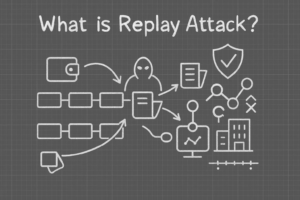
Ataques de repetição no WordPress: ameaça real ou mito exagerado?
Vamos esclarecer uma coisa primeiro. Ataques de repetição não parecem assustadores. Eles não quebram senhas. Eles não injetam código malicioso com texto verde de hacker voando por toda parte. Eles são sorrateiros...
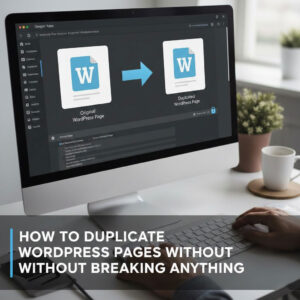
Como duplicar páginas do WordPress sem danificar nada
Vamos ser sinceros. Às vezes você não quer criar uma página nova. Você só quer a mesma página… mas um pouco diferente. Mesmo layout. Mesmos blocos. Mesmas configurações. Porque….

Comparativo de cinco temas WordPress para animais de estimação
Introdução Escolher o tema WordPress certo para o seu negócio de animais de estimação é mais do que uma decisão de design — afeta diretamente a usabilidade, a escalabilidade e o crescimento a longo prazo. Cuidados com animais de estimação e...

Comparando cinco temas de e-commerce de moda praia
Introdução: Escolher o tema certo para uma loja independente de moda praia ou lingerie não é apenas uma decisão visual — afeta diretamente as taxas de conversão, a escalabilidade e o sucesso a longo prazo...
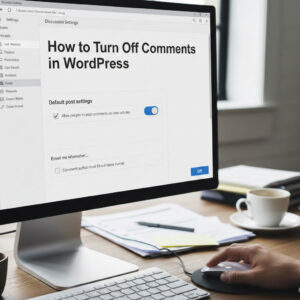
Como desativar os comentários no WordPress (sem enlouquecer)
Vamos falar sobre os comentários do WordPress. Em teoria, os comentários são ótimos. Eles incentivam a discussão, constroem comunidade e dão vida ao seu site. Na prática? Muitas vezes, eles atraem...

Erro 500 do WordPress: Quando seu site decide entrar em pânico
Seu site WordPress estava funcionando perfeitamente até um minuto atrás. Você atualizou a página. E de repente — bum 💥 — Erro Interno do Servidor 500. Sem explicação. Sem pedido de desculpas. Apenas uma mensagem fria e confusa que basicamente...

Criando um site WordPress escalável para uma marca voltada para a ciência: o projeto AminoUSA
Introdução No cenário digital atual, um website é mais do que um lugar para listar produtos. Para marcas com foco em ciência que atuam em setores regulamentados ou voltados para pesquisa, um...

Construindo uma loja Shopify escalável para uma marca global de lâminas: O Projeto CoolKatana
Introdução No comércio eletrônico internacional, um site Shopify é muito mais do que uma vitrine. Para marcas que atuam em nichos de mercado e categorias culturais específicas, o site precisa fazer muito mais do que...
Criando uma loja Shopify de alta conversão para cartas Pokémon.
Introdução No mundo do comércio eletrônico de itens colecionáveis, especialmente no mercado do Pokémon Trading Card Game (TCG), um site precisa fazer mais do que simplesmente listar produtos...
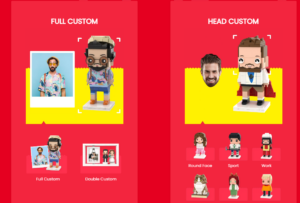
Design Shopify de alta conversão para uma marca de tijolos personalizada.
Introdução No cenário competitivo do comércio eletrônico atual, especialmente no segmento de presentes personalizados e itens colecionáveis, um site Shopify precisa fazer muito mais do que simplesmente exibir produtos. Ele...
Como entrar em contato com o suporte da Shopify: um guia simples e sem complicações.
Gerir uma loja Shopify deve ser uma experiência empolgante, não confusa. Quando surgem dúvidas ou problemas que atrapalham o seu trabalho, a Shopify oferece diversas opções de suporte, dependendo da situação.
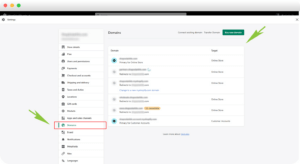
Como desativar uma loja Shopify: um guia claro e prático
Desativar uma loja Shopify não é complicado, mas acarreta consequências que muitos lojistas ignoram. Este guia explica o processo de forma simples e didática...