




Introduction
If you’ve ever built a website or explored blogging platforms, you’ve probably asked the question: who owns WordPress?
At first glance, it sounds like a simple question with a simple answer—most software products are owned by a company. But WordPress is different. It powers a huge portion of the internet, yet it doesn’t belong to one single owner in the traditional sense.
Instead, WordPress exists as a mix of open-source software, a nonprofit foundation, and a for-profit company that builds services around it. This structure often creates confusion, especially for beginners who assume WordPress is just another commercial platform.
To really understand who owns WordPress, we need to break it down into its code, its trademarks, its organization, and the companies behind it.
What WordPress Actually Is
Before talking about ownership, it’s important to understand what WordPress actually is.
WordPress is a content management system (CMS) that allows users to create websites without needing to code everything from scratch. It started in 2003 as a fork of an earlier blogging tool and quickly evolved into one of the most widely used website platforms in the world.
Today, WordPress is used for:
- Blogs
- Business websites
- Online stores
- News platforms
- Membership sites
- And nearly any type of website you can imagine
One of the biggest reasons for its popularity is that it is open-source software. That means its source code is freely available for anyone to use, modify, or distribute under a legal license called the GPL (General Public License).
This is where things start to get interesting—because open-source software is not “owned” in the same way as traditional software.
So, Who Owns WordPress?
The short answer is:
No single person or company owns WordPress as software.
Instead, WordPress is part of the open-source ecosystem. The code is publicly available, and anyone can use it without paying licensing fees.
However, that doesn’t mean there is no control or structure behind it. WordPress is divided into three key layers of “ownership”:
- The software (open-source project)
- The trademarks (brand and name)
- The commercial ecosystem (companies and services built around it)
Each layer has different rules and different controlling entities.
The WordPress Software: Open Source and Community Driven
The WordPress software itself is released under the GNU General Public License (GPL).
This license gives anyone the freedom to:
- Use WordPress for any purpose
- Modify the code
- Create custom versions
- Redistribute it
This means the actual software is not owned by any company.
Instead, it is maintained by a global community of developers. Thousands of contributors help improve WordPress through bug fixes, updates, and feature development.
This is why WordPress is often described as a community-driven project rather than a corporate product.
The idea behind this model is simple: the software belongs to everyone, not just one organization.
The WordPress Foundation: Protecting the Project
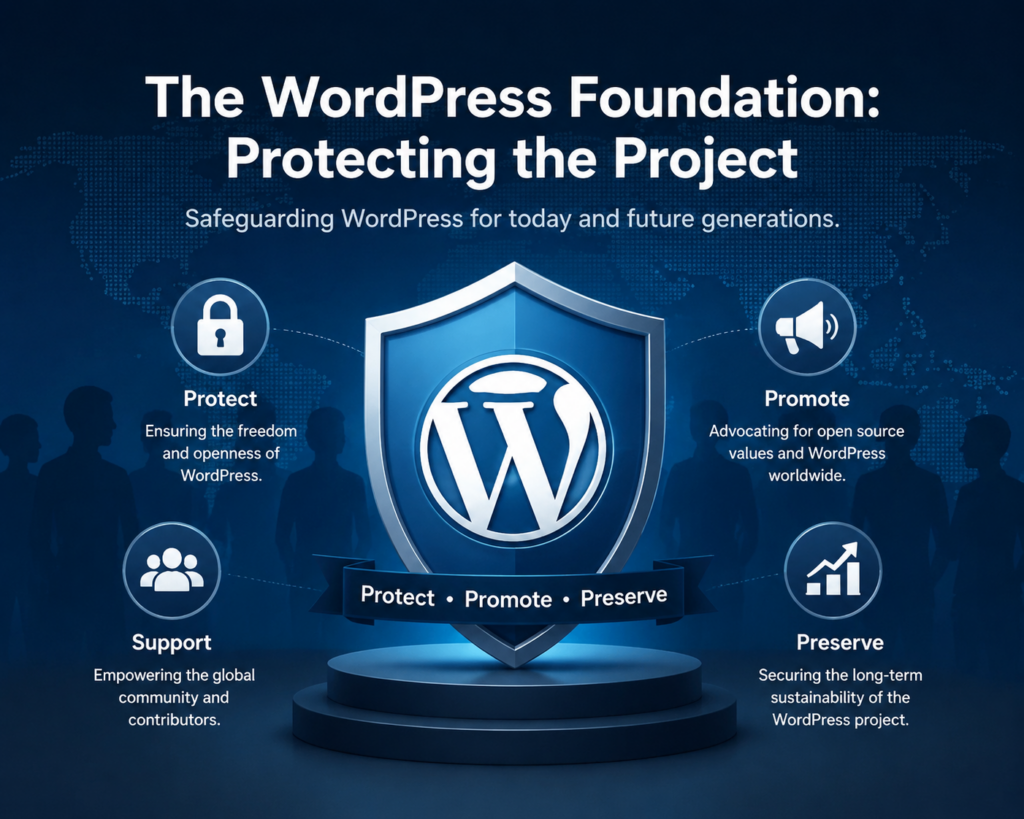
While the software itself is open-source, the WordPress Foundation exists to protect the WordPress name and trademarks.
The foundation is a nonprofit organization created to ensure that WordPress remains free and open in the long term. Its role includes:
- Owning the WordPress trademark
- Protecting the brand name “WordPress”
- Supporting open-source values
- Ensuring long-term access to the software
This is an important distinction: the foundation does not control the code, but it does control the branding.
The reason for this structure is to prevent any company from taking over the WordPress name and turning it into a closed commercial product.
In other words, the foundation helps ensure that WordPress stays open and accessible forever.
Automattic: The Company Behind WordPress.com
Now we come to the part that confuses most people.
There is a company called Automattic, and it is closely associated with WordPress.
Automattic is a for-profit company founded by Matt Mullenweg, one of the co-creators of WordPress.
Automattic runs several well-known services, including:
- WordPress.com (hosted website platform)
- WooCommerce (e-commerce plugin)
- Jetpack (WordPress plugin suite)
- Tumblr (blogging platform)
While WordPress software is open-source, WordPress.com is a commercial hosting service built on top of it.
This is where the confusion often comes in:
- WordPress.org = open-source software project
- WordPress.com = commercial platform owned by Automattic
So when people ask “who owns WordPress,” they are often mixing these two separate things.
Matt Mullenweg’s Role in WordPress
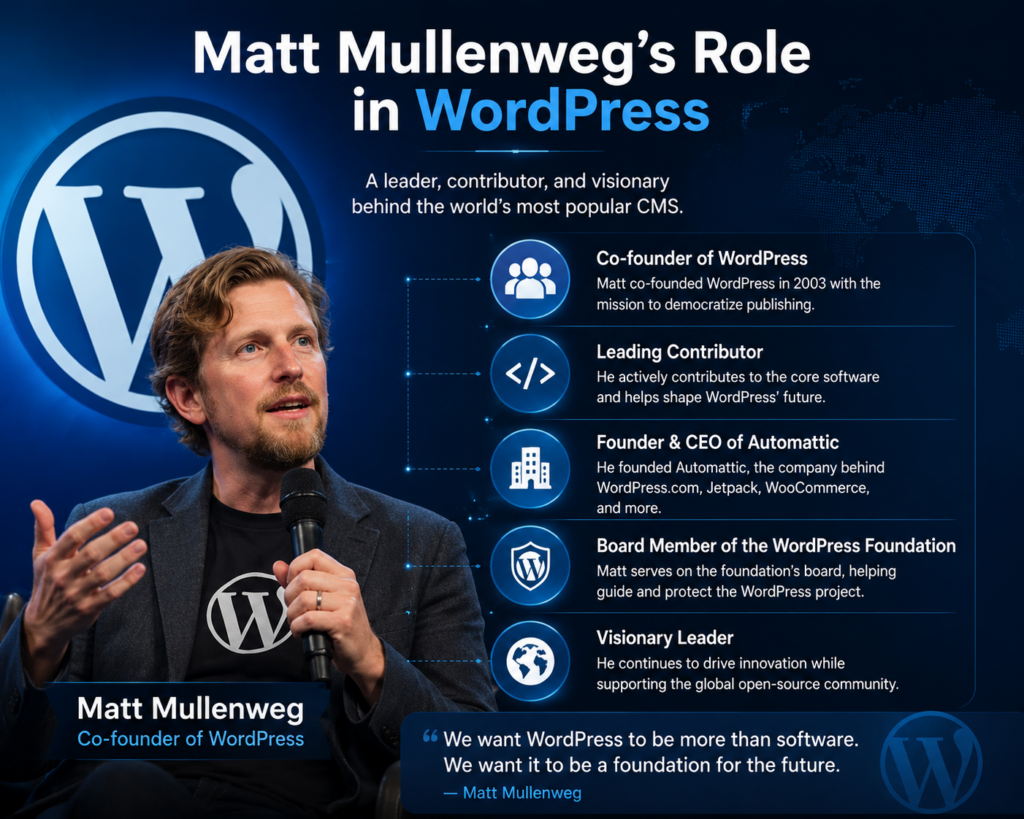
A key figure in the WordPress ecosystem is Matt Mullenweg.
He is:
- Co-founder of WordPress
- Founder and CEO of Automattic
- A leading contributor to the WordPress project
- A board member of the WordPress Foundation
Because of these multiple roles, Mullenweg has significant influence across the ecosystem.
However, it is important to understand that:
- He does not own WordPress software
- He does not own the WordPress Foundation alone
- He does lead a major company that builds WordPress-based products
His influence comes from leadership and contribution rather than traditional ownership.
WordPress.org vs WordPress.com: The Biggest Confusion
One of the most misunderstood aspects of WordPress is the difference between WordPress.org and WordPress.com.
WordPress.org
- Free open-source software
- Community-maintained
- Used by developers and website owners
- You install it on your own hosting
WordPress.com
- Commercial hosting platform
- Owned by Automattic
- Offers managed WordPress websites
- Includes paid plans and services
Many beginners assume they are the same thing, but they are not.
This separation is essential to understanding who owns WordPress, because ownership depends on which part you are talking about.
Who Controls the WordPress Trademark?
Even though the software is free, the WordPress name and logo are protected trademarks.
These trademarks are managed by the WordPress Foundation.
That means:
- You can use WordPress software freely
- But you cannot use the WordPress brand commercially without rules
- Companies must follow branding guidelines when referencing WordPress
This is why many companies say things like:
- “WordPress hosting”
- “WordPress-powered websites”
Instead of implying they are officially part of WordPress itself.
Trademark control helps prevent confusion and protects the integrity of the ecosystem.
Why WordPress Is Designed This Way
The structure of WordPress may seem complicated, but it actually solves a big problem in software development: control vs freedom.
If one company owned everything, it could:
- Change pricing
- Restrict usage
- Lock users into a closed system
- Limit developer contributions
Instead, WordPress was designed to stay open and community-driven while still allowing commercial companies to build services on top of it.
This hybrid model allows:
- Free public software
- Sustainable business ecosystems
- Innovation from independent developers
- Long-term stability
It’s a balance between openness and practicality.
Misconceptions About WordPress Ownership
Because of its structure, several myths exist about WordPress:
Myth 1: Automattic owns WordPress
False. Automattic only owns WordPress.com and related products, not the core software.
Myth 2: Matt Mullenweg owns WordPress
False. He is a co-founder and influential leader, but WordPress is open-source.
Myth 3: WordPress is a normal commercial product
False. It is a public open-source project.
Myth 4: The WordPress Foundation controls everything
False. It mainly manages trademarks, not development or hosting services.
The Real Answer to “Who Owns WordPress”
So after breaking everything down, the most accurate answer is:
- The software is owned by no one (open-source GPL model)
- The trademark is owned by the WordPress Foundation
- The commercial ecosystem is led by companies like Automattic
- The project is maintained by a global community of contributors
So WordPress is not something owned by a single entity—it is a distributed system with multiple layers of governance and contribution.
Conclusion
When people ask who owns WordPress, they are usually expecting a simple company name. But WordPress doesn’t work like that.
It is an open-source platform where the code belongs to the public, the brand is protected by a nonprofit foundation, and major services are built by companies like Automattic.
This unique structure is exactly why WordPress has grown so large. It combines freedom, community collaboration, and commercial sustainability in one ecosystem.
In the end, WordPress isn’t “owned” in the traditional sense—it is shared, maintained, and evolved by millions of users and developers around the world.
FAQ
1. Who owns WordPress?
WordPress is not owned by any single company. It is an open-source project maintained by a global community of developers.
2. Is WordPress owned by Automattic?
No. Automattic does not own WordPress itself. It runs WordPress.com, a commercial hosting service built on WordPress software.
3. Who owns the WordPress trademark?
The WordPress trademark is owned and managed by the WordPress Foundation, a nonprofit organization.
4. What is the WordPress Foundation?
The WordPress Foundation is a nonprofit that protects the WordPress name and ensures the project remains open source.
5. What is the difference between WordPress.org and WordPress.com?
WordPress.org provides free open-source software, while WordPress.com is a hosted platform operated by Automattic.
6. Can anyone use WordPress for free?
Yes. WordPress software is open source and free to download, use, and modify under the GPL license.


Design and build a WordPress website or corporate site with a full eCommerce system for you.
Price range: $200.00 through $2,500.00custom-requirements-or-special-quotations
Original price was: $2.00.$1.00Current price is: $1.00. Are 50 Plugins Too Many for a WordPress eCommerce Store?
Understanding the Real Performance Impact Having 50 plugins on a WordPress eCommerce site isn’t automatically a problem. In fact, the number alone rarely determines performance....

Main Image Design for Amazon Home Physiotherapy Device Explained
Introduction: Building a Trustworthy Image for Home Therapy Devices on Amazon When designing the main image for a home therapy device on Amazon, our primary...

Main Image Design for Amazon Lipstick Conversion
Introduction: Designing a Lipstick Main Image That Sells on Amazon When we design a Main image for an Amazon lipstick, our responsibility goes far beyond...

How Hackers Steal WordPress Admin Emails (And How to Stop Them)
Let’s start with an uncomfortable truth: Your WordPress admin email is probably way more public than you think.And hackers? They love that. To them, your...

What Makes an Amazon Liquid Foundation Main Image Convert
Introduction Designing a Main image design for Amazon Liquid foundation is never just about making a product look beautiful. On Amazon, the main image and...

Designing an Effective Amazon Main Image for Filter Cartridges
Introduction Designing a Main image for Amazon is never just about making a product look attractive. It is about clarity, trust, and instant understanding—especially for...

Replay Attacks on WordPress: Real Threat or Overhyped Myth?
Let’s clear something up first. Replay attacks don’t look scary.They don’t smash passwords.They don’t inject evil code with green hacker text flying everywhere. They’re sneaky....
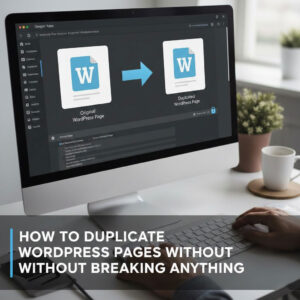
How to Duplicate WordPress Pages Without Breaking Anything
Let’s face it. Sometimes you don’t want to create a new page.You just want the same page… but slightly different. Same layout.Same blocks.Same settings. Because...

Five Pet WordPress Themes Compared
Introduction Choosing the right pet-related WordPress theme is more than a design decision—it directly affects usability, scalability, and long-term business growth. Pet care and pet...
Comparing Five Swimwear eCommerce Themes
Introduction Choosing the right theme for a swimwear or lingerie independent store is not just a visual decision—it directly affects conversion rates, scalability, and long-term...
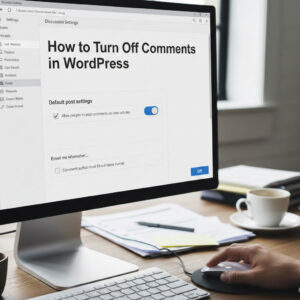
How to Turn Off Comments in WordPress (Without Losing Your Mind)
Let’s talk about WordPress comments. In theory, comments are great.They encourage discussion.They build community.They make your website feel “alive.” In reality? They’re often a magnet...

WordPress 500 Error: When Your Website Decides to Panic
Your WordPress site was fine a minute ago.You refreshed the page.And suddenly—boom 💥—500 Internal Server Error. No explanation.No apology.Just a cold, confusing message that basically...

Building a Scalable WordPress Website for a Science-Driven Brand: The AminoUSA Project
Introduction In today’s digital landscape, a website is more than a place to list products. For science-driven brands operating in regulated or research-focused industries, a...

Building a Scalable Shopify Store for a Global Blade Brand: The CoolKatana Project
Introduction In cross-border eCommerce, a Shopify website is more than a storefront.For brands operating in niche, culture-driven categories, the website must do far more than...
Designing a High-Conversion Shopify Store for Pokémon Cards
Introduction In the world of collectible eCommerce, especially within the Pokémon Trading Card Game (TCG) market, a website must do more than simply list products....
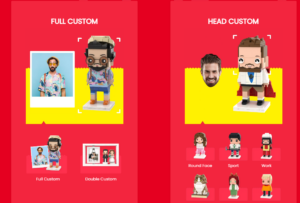
High-Converting Shopify Design for a Custom Brick Brand
Introduction In today’s competitive eCommerce landscape, especially in the personalized gift and collectible space, a Shopify website must do far more than display products. It...
How to Contact Shopify Support: Simple, Stress-Free Guide
Running a Shopify store should feel exciting—not confusing. When questions pop up or issues slow you down, Shopify offers several support paths depending on what...
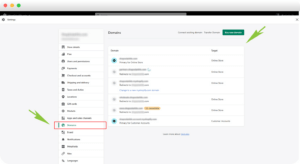
How to Deactivate a Shopify Store: A Clear, Practical Guide
Deactivating a Shopify store isn’t complicated, but it does come with consequences many merchants overlook. This guide breaks the process down in a simple, educational...