



Введение
If you’ve ever built a website or explored blogging platforms, you’ve probably asked the question: who owns WordPress?
At first glance, it sounds like a simple question with a simple answer—most software products are owned by a company. But WordPress is different. It powers a huge portion of the internet, yet it doesn’t belong to one single owner in the traditional sense.
Instead, WordPress exists as a mix of open-source software, a nonprofit foundation, and a for-profit company that builds services around it. This structure often creates confusion, especially for beginners who assume WordPress is just another commercial platform.
To really understand who owns WordPress, we need to break it down into its code, its trademarks, its organization, and the companies behind it.
What WordPress Actually Is
Before talking about ownership, it’s important to understand what WordPress actually is.
WordPress is a content management system (CMS) that allows users to create websites without needing to code everything from scratch. It started in 2003 as a fork of an earlier blogging tool and quickly evolved into one of the most widely used website platforms in the world.
Today, WordPress is used for:
- Блоги
- Бизнес-сайты
- Online stores
- News platforms
- Membership sites
- And nearly any type of website you can imagine
One of the biggest reasons for its popularity is that it is open-source software. That means its source code is freely available for anyone to use, modify, or distribute under a legal license called the GPL (General Public License).
This is where things start to get interesting—because open-source software is not “owned” in the same way as traditional software.
So, Who Owns WordPress?
The short answer is:
No single person or company owns WordPress as software.
Instead, WordPress is part of the open-source ecosystem. The code is publicly available, and anyone can use it without paying licensing fees.
However, that doesn’t mean there is no control or structure behind it. WordPress is divided into three key layers of “ownership”:
- The software (open-source project)
- The trademarks (brand and name)
- The commercial ecosystem (companies and services built around it)
Each layer has different rules and different controlling entities.
The WordPress Software: Open Source and Community Driven
The WordPress software itself is released under the GNU General Public License (GPL).
This license gives anyone the freedom to:
- Use WordPress for any purpose
- Modify the code
- Create custom versions
- Redistribute it
This means the actual software is not owned by any company.
Instead, it is maintained by a global community of developers. Thousands of contributors help improve WordPress through bug fixes, updates, and feature development.
This is why WordPress is often described as a community-driven project rather than a corporate product.
The idea behind this model is simple: the software belongs to everyone, not just one organization.
The WordPress Foundation: Protecting the Project
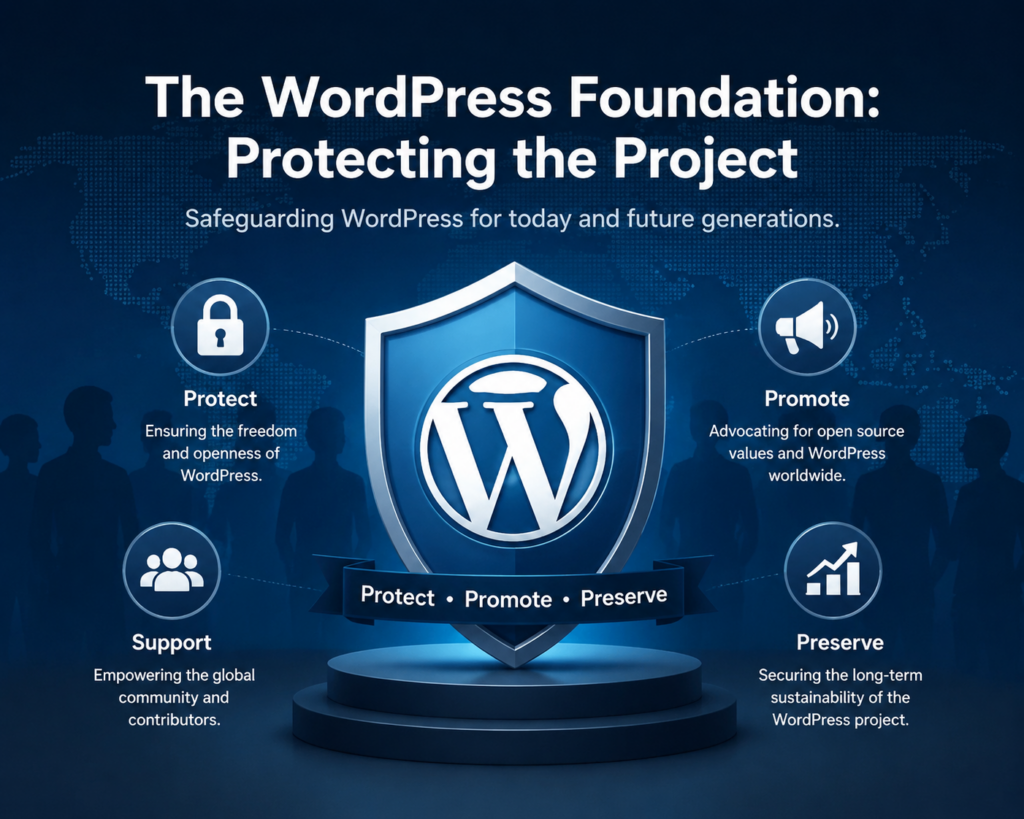
While the software itself is open-source, the WordPress Foundation exists to protect the WordPress name and trademarks.
The foundation is a nonprofit organization created to ensure that WordPress remains free and open in the long term. Its role includes:
- Owning the WordPress trademark
- Protecting the brand name “WordPress”
- Supporting open-source values
- Ensuring long-term access to the software
This is an important distinction: the foundation does not control the code, but it does control the branding.
The reason for this structure is to prevent any company from taking over the WordPress name and turning it into a closed commercial product.
In other words, the foundation helps ensure that WordPress stays open and accessible forever.
Automattic: The Company Behind WordPress.com
Now we come to the part that confuses most people.
There is a company called Automattic, and it is closely associated with WordPress.
Automattic is a for-profit company founded by Matt Mullenweg, one of the co-creators of WordPress.
Automattic runs several well-known services, including:
- WordPress.com (hosted website platform)
- WooCommerce (e-commerce plugin)
- Jetpack (WordPress plugin suite)
- Tumblr (blogging platform)
While WordPress software is open-source, WordPress.com is a commercial hosting service built on top of it.
This is where the confusion often comes in:
- WordPress.org = open-source software project
- WordPress.com = commercial platform owned by Automattic
So when people ask “who owns WordPress,” they are often mixing these two separate things.
Matt Mullenweg’s Role in WordPress
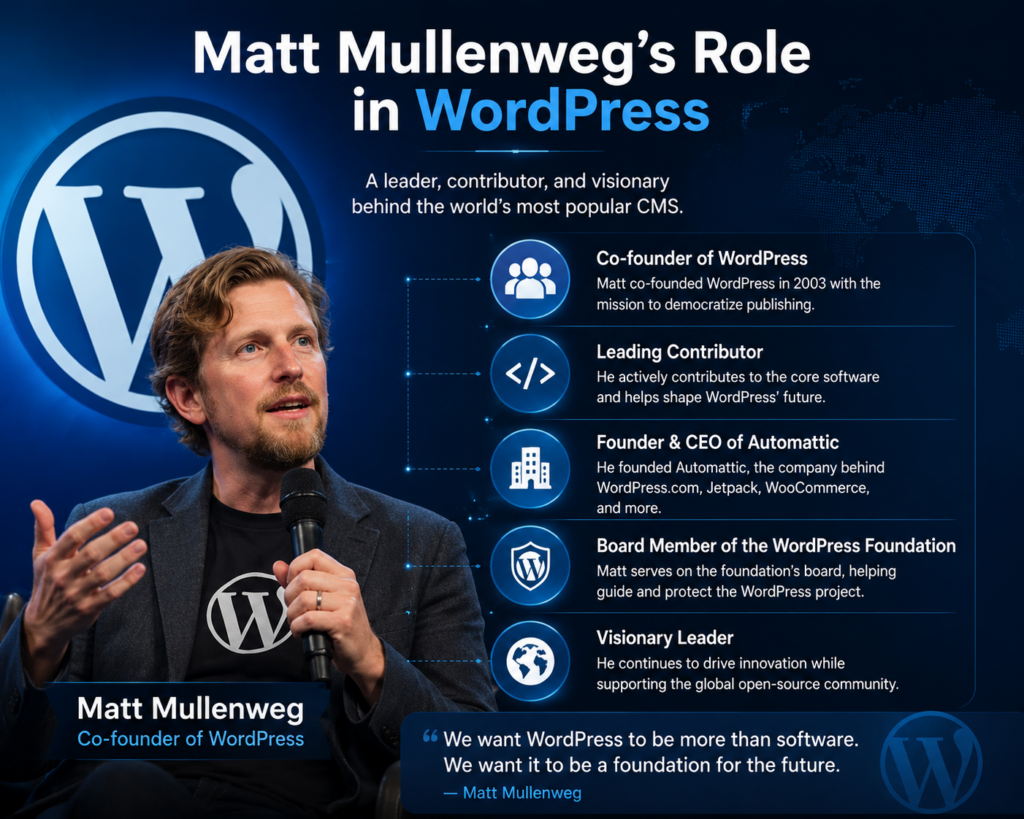
A key figure in the WordPress ecosystem is Matt Mullenweg.
He is:
- Co-founder of WordPress
- Founder and CEO of Automattic
- A leading contributor to the WordPress project
- A board member of the WordPress Foundation
Because of these multiple roles, Mullenweg has significant influence across the ecosystem.
However, it is important to understand that:
- He does not own WordPress software
- He does not own the WordPress Foundation alone
- He does lead a major company that builds WordPress-based products
His influence comes from leadership and contribution rather than traditional ownership.
WordPress.org vs WordPress.com: The Biggest Confusion
One of the most misunderstood aspects of WordPress is the difference between WordPress.org and WordPress.com.
WordPress.org
- Free open-source software
- Community-maintained
- Used by developers and website owners
- You install it on your own hosting
WordPress.com
- Commercial hosting platform
- Owned by Automattic
- Offers managed WordPress websites
- Includes paid plans and services
Many beginners assume they are the same thing, but they are not.
This separation is essential to understanding who owns WordPress, because ownership depends on which part you are talking about.
Who Controls the WordPress Trademark?
Even though the software is free, the WordPress name and logo are protected trademarks.
These trademarks are managed by the WordPress Foundation.
Это значит:
- You can use WordPress software freely
- But you cannot use the WordPress brand commercially without rules
- Companies must follow branding guidelines when referencing WordPress
This is why many companies say things like:
- “WordPress hosting”
- “WordPress-powered websites”
Instead of implying they are officially part of WordPress itself.
Trademark control helps prevent confusion and protects the integrity of the ecosystem.
Why WordPress Is Designed This Way
The structure of WordPress may seem complicated, but it actually solves a big problem in software development: control vs freedom.
If one company owned everything, it could:
- Change pricing
- Restrict usage
- Lock users into a closed system
- Limit developer contributions
Instead, WordPress was designed to stay open and community-driven while still allowing commercial companies to build services on top of it.
This hybrid model allows:
- Free public software
- Sustainable business ecosystems
- Innovation from independent developers
- Long-term stability
It’s a balance between openness and practicality.
Misconceptions About WordPress Ownership
Because of its structure, several myths exist about WordPress:
Myth 1: Automattic owns WordPress
False. Automattic only owns WordPress.com and related products, not the core software.
Myth 2: Matt Mullenweg owns WordPress
False. He is a co-founder and influential leader, but WordPress is open-source.
Myth 3: WordPress is a normal commercial product
False. It is a public open-source project.
Myth 4: The WordPress Foundation controls everything
False. It mainly manages trademarks, not development or hosting services.
The Real Answer to “Who Owns WordPress”
So after breaking everything down, the most accurate answer is:
- The software is owned by no one (open-source GPL model)
- The trademark is owned by the WordPress Foundation
- The commercial ecosystem is led by companies like Automattic
- The project is maintained by a global community of contributors
So WordPress is not something owned by a single entity—it is a distributed system with multiple layers of governance and contribution.
Заключение
When people ask who owns WordPress, they are usually expecting a simple company name. But WordPress doesn’t work like that.
It is an open-source platform where the code belongs to the public, the brand is protected by a nonprofit foundation, and major services are built by companies like Automattic.
This unique structure is exactly why WordPress has grown so large. It combines freedom, community collaboration, and commercial sustainability in one ecosystem.
In the end, WordPress isn’t “owned” in the traditional sense—it is shared, maintained, and evolved by millions of users and developers around the world.
Часто задаваемые вопросы
1. Who owns WordPress?
WordPress is not owned by any single company. It is an open-source project maintained by a global community of developers.
2. Is WordPress owned by Automattic?
No. Automattic does not own WordPress itself. It runs WordPress.com, a commercial hosting service built on WordPress software.
3. Who owns the WordPress trademark?
The WordPress trademark is owned and managed by the WordPress Foundation, a nonprofit organization.
4. What is the WordPress Foundation?
The WordPress Foundation is a nonprofit that protects the WordPress name and ensures the project remains open source.
5. What is the difference between WordPress.org and WordPress.com?
WordPress.org provides free open-source software, while WordPress.com is a hosted platform operated by Automattic.
6. Can anyone use WordPress for free?
Yes. WordPress software is open source and free to download, use, and modify under the GPL license.


Спроектируем и создадим для вас WordPress-сайт или корпоративный сайт с полной системой электронной коммерции.
Ценовой диапазон: от $200.00 до $2,500.00custom-requirements-or-special-quotations
Первоначальная цена составляла: $2.00.$1.00Текущая цена: $1.00. Не слишком ли много 50 плагинов для интернет-магазина на WordPress?
Понимание реального влияния на производительность Наличие 50 плагинов на сайте электронной коммерции WordPress не является автоматической проблемой. На самом деле, само по себе их количество редко определяет производительность.....

Дизайн главного изображения для домашнего физиотерапевтического устройства Amazon: пояснения.
Введение: Создание достоверного изображения для домашних терапевтических приборов на Amazon При разработке главного изображения для домашнего терапевтического прибора на Amazon мы в первую очередь...

Дизайн основного изображения для конвертации помады на Amazon.
Введение: Разработка главного образа помады, которая продается на Amazon Когда мы разрабатываем главный образ для помады Amazon, наша ответственность выходит далеко за рамки...

Как хакеры крадут электронные письма администраторов WordPress (и как им это предотвратить)
Начнем с неприятной истины: ваша электронная почта администратора WordPress, вероятно, гораздо более публична, чем вы думаете. А хакеры? Им это нравится. Для них ваш...

Что делает основное изображение жидкой тональной основы Amazon конвертируемым?
Введение. Разработка дизайна основного изображения для жидкой тональной основы на Amazon — это не просто создание красивого внешнего вида продукта. На Amazon основное изображение и...

Разработка эффективного основного изображения Amazon для фильтрующих картриджей
Введение. Разработка основного изображения для Amazon — это не просто создание привлекательного внешнего вида товара. Речь идёт о ясности, доверии и мгновенном понимании, особенно для...

Повторные атаки на WordPress: реальная угроза или преувеличенный миф?
Давайте сначала кое-что проясним. Атаки повторного воспроизведения не выглядят страшно. Они не взламывают пароли. Они не внедряют вредоносный код с зелёным хакерским текстом, разлетающимся повсюду. Они действуют коварно...
Как скопировать страницы WordPress, ничего не сломав
Давайте посмотрим правде в глаза. Иногда вам не хочется создавать новую страницу. Вам нужна та же самая страница… но немного другая. Тот же макет. Те же блоки. Те же настройки. Потому что….

Сравнение пяти тем WordPress для сайтов о домашних животных
Введение. Выбор подходящей темы WordPress для сайтов, посвященных домашним животным, — это не просто решение, связанное с дизайном; оно напрямую влияет на удобство использования, масштабируемость и долгосрочный рост бизнеса. Уход за домашними животными и...
Сравнение пяти тем оформления для интернет-магазинов купальников
Введение. Выбор правильной тематики для независимого магазина купальников или нижнего белья — это не просто визуальное решение, оно напрямую влияет на коэффициент конверсии, масштабируемость и долгосрочную перспективу...
Как отключить комментарии в WordPress (не сойдя с ума)
Давайте поговорим о комментариях в WordPress. В теории комментарии — это здорово. Они стимулируют дискуссии. Они создают сообщество. Они делают ваш сайт “живым”. А на практике? Зачастую они притягивают...

Ошибка WordPress 500: когда ваш сайт начинает паниковать
Ваш сайт WordPress ещё минуту назад работал нормально. Вы обновили страницу. И вдруг — бац 💥 — ошибка 500 Internal Server Error. Никаких объяснений. Никаких извинений. Просто холодное, непонятное сообщение, которое, по сути...

Создание масштабируемого веб-сайта на WordPress для научно-ориентированного бренда: проект AminoUSA
Введение. В современном цифровом пространстве веб-сайт — это больше, чем просто место для размещения информации о товарах. Для научно-ориентированных брендов, работающих в регулируемых или научно-исследовательских отраслях, это….

Создание масштабируемого магазина Shopify для глобального бренда ножей: проект CoolKatana
Введение. В трансграничной электронной коммерции веб-сайт Shopify — это больше, чем просто витрина магазина. Для брендов, работающих в нишевых, ориентированных на культуру категориях, веб-сайт должен делать гораздо больше, чем...
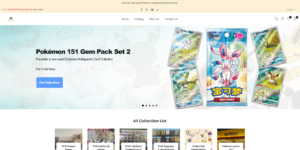
Разработка высокоэффективного магазина Shopify для карточек Pokémon.
Введение. В мире электронной коммерции коллекционных товаров, особенно на рынке коллекционных карточных игр Pokémon, веб-сайт должен делать больше, чем просто перечислять товары...
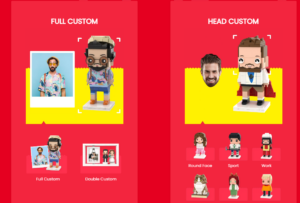
Высокоэффективный дизайн Shopify для индивидуального бренда стационарной торговой точки.
Введение. В условиях современной конкурентной среды электронной коммерции, особенно в сегменте персонализированных подарков и коллекционных товаров, веб-сайт на платформе Shopify должен делать гораздо больше, чем просто отображать товары. Он...
Как связаться со службой поддержки Shopify: простое и понятное руководство
Управление магазином Shopify должно приносить удовольствие, а не путаницу. Когда возникают вопросы или проблемы замедляют вашу работу, Shopify предлагает несколько вариантов поддержки в зависимости от ситуации...
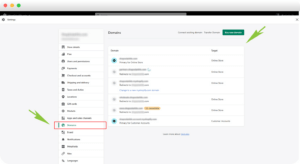
Как деактивировать магазин Shopify: понятное и практичное руководство
Деактивация магазина Shopify — несложная процедура, но она влечет за собой последствия, которые многие продавцы упускают из виду. В этом руководстве процесс описан простым и понятным языком...