











 Japanese
If you are searching for how to delete a Shopify store, chances are you are at a transition point in your business. Maybe the store was only a test project. Maybe sales did not go as planned. Maybe you are moving to another platform, changing your niche, or simplifying operations. Whatever the reason, closing a Shopify store is not just an emotional decision. It is also an operational one.
A lot of merchants assume store deletion is a one-click task. In reality, Shopify’s own workflow is more like a structured shutdown process. You need to think about billing, apps, domains, orders, and data before you deactivate the store. Shopify’s Help Center says deactivation is handled from Settings > Plan, and only the store owner can pause or deactivate the store. Shopify also notes that app subscriptions can continue unless you cancel them separately, and that domains purchased through Shopify usually need to be transferred before deactivation if you want to keep using them.
This is why learning how to delete a Shopify store properly matters. Doing it the right way can help you avoid extra charges, preserve important records, and prevent domain headaches later.
What deleting a Shopify store really means

First, it helps to clear up one common misunderstanding. In everyday conversation, people say “delete a Shopify store,” but Shopify’s official wording is usually deactivate or cancel plan rather than instantly erase everything. In Shopify’s official documentation, the process is done through the Plan settings, where you choose to cancel a trial or cancel a paid plan. Shopify may also offer alternatives such as Pause and Build before you finish the deactivation process.
So when people search for how to delete a Shopify store, what they usually mean is one of these three things:
- They want to stop paying for Shopify.
- They want the storefront to go offline.
- They want to end the store for now or permanently.
Those goals sound similar, but the right path depends on your future plans. If the business is truly over, deactivation may be the best choice. If you think you might relaunch later, pausing the store can be a smarter move. Shopify states that the Pause and Build option lets merchants keep store data while paying a reduced subscription fee and reopening later when ready.
Why merchants decide to close a Shopify store

There is no single reason why merchants look up how to delete a Shopify store. In practice, several common situations lead to this decision.
One is financial pressure. A store might not be profitable enough to justify monthly platform costs, app subscriptions, advertising spend, and ongoing maintenance. Another is platform migration. Some merchants move from Shopify to WooCommerce, Magento, Shoplazza, or a custom system because they want different pricing, workflows, or technical flexibility. Others simply used Shopify during a free trial or product validation stage and no longer need the store once that testing phase ends. These motivations are also reflected in the source article you shared, which lists profitability issues, platform switching, free-trial use, business model changes, and multi-store cost reduction as common reasons for closure.
From an educational point of view, none of these reasons is unusual. E-commerce businesses evolve quickly, and sometimes closing a store is not failure. It is just part of refining strategy.
Before you delete: the checklist most people skip
The most important part of learning how to delete a Shopify store is not the final click. It is the preparation before it.
Export your data
Once your store is deactivated, access changes, and over time data may no longer be available in the way you expect. Shopify’s docs explain that deactivated stores can sometimes be reactivated, but access is not something you should casually assume will remain available forever. The safer approach is to export anything you might need ahead of time.
That usually includes product data, customer information, order history, payout records, analytics snapshots, and any reports you may want later for bookkeeping or migration. Even if you think the store is not valuable anymore, the records often are.
Cancel app subscriptions separately
This is one of the biggest points merchants miss. Shopify explicitly warns that if you pause or deactivate a store, you should cancel app subscriptions as well to avoid future charges. In other words, shutting down the store does not automatically clean up every paid tool attached to it.
If you are using email tools, upsell apps, review systems, subscription apps, shipping add-ons, or external integrations, review each one. Some may bill through Shopify, while others may bill directly through third-party services. A clean shutdown means checking both.
Review your domain setup
Domains are another area where confusion is common. Shopify says that if you bought a domain through Shopify and want to continue using it after deactivation, you need to transfer it before deactivating the store. Shopify also notes that Shopify-managed domains generally cannot simply be “removed” in the same way third-party domains can; transfer is often the key action.
If your domain came from a third-party registrar, the process is different. Shopify provides a separate path for removing third-party domains from a store.
The main lesson is simple: do not shut down first and figure out the domain later.
Handle outstanding bills and payment issues
Shopify’s billing guidance emphasizes that there are important billing implications around pausing and deactivating a store. That includes app subscriptions, financial products, gift cards, and even chargebacks that may arise after the store is deactivated. Shopify specifically notes that if a chargeback happens after deactivation, you may need to reactivate the store to regain admin access and respond properly.
So before taking any final action, make sure open invoices, pending payout questions, and unresolved payment issues are reviewed.
Step by step: how to delete a Shopify store

Now let’s get into the actual process. Based on Shopify’s official documentation, here is the cleanest explanation of how to delete a Shopify store.
Step 1: Log in as the store owner
Only the store owner can pause or deactivate the store. Staff accounts with limited permissions cannot complete this process. Shopify states this clearly in its permissions documentation.
Step 2: Open Settings
Inside Shopify admin, go to the bottom-left area and open Settings.
Step 3: Go to Plan
Shopify’s help documentation says store plans are managed under Settings > Plan. That is where you change plans, pause a store, or deactivate it.
Step 4: Choose the cancellation option
If the store is in a trial period, Shopify says you will see Cancel trial. If the store is on a paid plan, you will see Cancel plan.
This is an important detail because some blog posts still use older wording such as “Deactivate store.” The current official flow centers on canceling the plan from the Plan page.
Step 5: Review pause alternatives
Before final confirmation, Shopify may show you alternatives such as Pause and Build or starting a new store. This is Shopify’s way of making sure you are not taking an irreversible action when a lower-cost temporary option could work better.
Step 6: Confirm cancellation
If you still want to proceed, continue with the cancellation prompts, enter your password if requested, choose a reason, and confirm. Shopify’s official deactivation steps describe this flow directly.
That is the core answer to how to delete a Shopify store.
What happens after the store is deactivated
Once the store is deactivated, the storefront is no longer available to customers and your regular Shopify subscription stops. Shopify’s documentation also explains that access to admin functions changes, and some issues such as chargebacks may require reactivation if you need to submit evidence later.
Many merchants assume closure instantly wipes every trace of the store. That is not the most practical way to think about it. A better mental model is that the selling environment is shut down, billing on the plan stops, and future access becomes limited. Some store information may remain available for a time if you later reactivate, but you should never rely on that as your backup plan. Export first.
How to avoid getting charged again
For many merchants, the real question behind how to delete a Shopify store is this: “How do I stop being billed?”
The best answer is timing plus cleanup.
Deactivate before your next billing cycle, not after it. Cancel app subscriptions. Check domain renewals. Review any connected tools that might have their own billing logic. Shopify’s own help materials repeatedly emphasize app billing and billing considerations around pausing or deactivating.
This is why a store shutdown should be treated like an offboarding process, not a random admin click.
What if you are still in the free trial?
If you are using Shopify only to test ideas, product pages, or a niche concept, you may be looking up how to delete a Shopify store before ever launching. Shopify’s official documentation shows that trial stores can be canceled from the same Plan area, using Cancel trial instead of Cancel plan.
For merchants in the trial stage, the most important point is to end the trial before it converts into paid billing if you do not want to continue.
When pausing is smarter than deleting
From a practical business perspective, not every struggling store should be deleted.
If you are taking a short break, reevaluating products, rebuilding the brand, or waiting for a better season to relaunch, pausing can be more efficient than fully shutting down. Shopify says the Pause and Build plan allows merchants to maintain store data at a reduced rate and reactivate later when ready. For temporary shutdowns, Shopify also documents other options like password-protecting the store for vacation situations.
That matters because rebuilding a store from zero can cost more in time than keeping a simplified version on hold.
Common mistakes merchants make
The educational version of how to delete a Shopify store should also include what not to do.
The first mistake is forgetting apps. This can leave merchants wondering why charges continue after the storefront is gone. Shopify explicitly warns about this.
The second mistake is ignoring domain ownership. If the domain matters to your brand, transfer planning should happen before store deactivation. Shopify makes this point in its domain guidance.
The third mistake is failing to save reports and records. Even if you never reopen the store, your accounting team, future migration team, or next business project may still need historical data.
The fourth mistake is closing a store when the better move is restructuring it. Sometimes the business is not dead; the positioning is just wrong. In those cases, pausing, redesigning, and relaunching can be the better strategy.
Final thoughts
Understanding how to delete a Shopify store is really about understanding how to leave a platform responsibly. The technical steps themselves are simple. The business implications are where merchants often get caught off guard.
If you are certain the store is no longer needed, follow Shopify’s official path through Settings > Plan, cancel the plan or trial, confirm the deactivation, and make sure your apps, data, and domain have already been handled. If you are not completely sure, consider whether pausing the store is the more flexible option.
And if your real issue is not “how to delete a Shopify store,” but rather “why this store stopped working,” then the answer may not be closure at all. Sometimes what a business needs is a better site structure, stronger branding, clearer conversion paths, and a smarter cross-border e-commerce strategy.
That is exactly where エアサン 入って来ます。.
We work on cross-border business projects, and website design is one of our core strengths. Whether you are planning a full redesign, rebuilding an underperforming Shopify store, or migrating your online business into a cleaner and more conversion-focused direction, エアサン can help you make that next move with more clarity and less trial and error. If you need support with store design, user experience, landing page structure, or broader e-commerce execution, エアサン is ready to help.


WordPressのウェブサイトや、完全なeコマースシステムを備えたコーポレートサイトをデザイン・構築します。.
価格帯$200.00~$2,500.00custom-requirements-or-special-quotations
元価格は$2.00。.$1.00現在の価格は$1.00。. WordPress の電子商取引ストアに 50 個のプラグインは多すぎますか?
WordPressのeコマースサイトに50個のプラグインがあるからといって、それが自動的に問題になるわけではありません。実際、数だけでパフォーマンスが決まることはほとんどありません。.

Amazonホーム理学療法機器のメイン画像デザイン解説
はじめにAmazonで家庭用治療器の信頼できるイメージを構築する Amazonで家庭用治療器のメインイメージをデザインする際、私たちが最も重視するのは...

Amazon リップスティックコンバージョンのメイン画像デザイン
はじめにアマゾンで売れる口紅のメイン画像をデザインする アマゾンの口紅のメイン画像をデザインするとき、私たちの責任は...

ハッカーがWordPress管理者のメールアドレスを盗む方法(そしてそれを阻止する方法)
WordPressの管理者メールアドレスは、あなたが思っている以上に公開されているのです。ハッカーはそれが大好きです。彼らにとって、あなたの...

Amazonのリキッドファンデーションのメイン画像がコンバージョンにつながる理由
はじめに Amazonリキッドファンデーションのメイン画像デザインは、単に商品を美しく見せるだけではありません。Amazonでは、メイン画像と….

フィルターカートリッジの効果的なAmazonメインイメージのデザイン
はじめに Amazonのメイン画像をデザインする上で、商品を魅力的に見せることは決して重要ではありません。明確さ、信頼性、そして瞬時に理解できることが何よりも重要です。特に….

WordPress へのリプレイ攻撃: 本当の脅威か、それとも誇張された神話か?
まず最初に明確にしておきましょう。リプレイ攻撃は見た目には怖くありません。パスワードを破壊したり、緑色のハッカーテキストが飛び交うような悪質なコードを挿入したりもしません。彼らは狡猾なのです…。.
WordPressページを何も壊さずに複製する方法
正直に言って、新しいページを作りたくない時もあるでしょう。同じページを少しだけ変えたいだけなのに。レイアウトもブロックも設定も全部同じ。なぜなら….

ペット向けWordPressテーマ5選を比較
はじめに ペット関連のWordPressテーマを適切に選ぶことは、単なるデザイン上の決定ではありません。使いやすさ、拡張性、そして長期的なビジネスの成長に直接影響します。ペットケアとペット...

5つの水着eコマーステーマを比較
はじめに 水着やランジェリーの独立ストアに適切なテーマを選択することは、見た目だけの問題ではなく、コンバージョン率、拡張性、長期的な効果に直接影響します...
WordPressでコメント機能をオフにする方法(気が狂わずに)
WordPressのコメントについてお話しましょう。理論上は、コメントは素晴らしいものです。議論を促し、コミュニティを築き、ウェブサイトに「活気」を与えてくれます。しかし実際にはどうでしょうか?コメントはしばしば人を惹きつけ….

WordPress 500エラー:ウェブサイトがパニックに陥ったとき
WordPressサイトはほんの少し前までは問題ありませんでした。ページを更新した途端、突然…ドカーン💥…500 内部サーバーエラーが発生してしまいました。説明も謝罪もありませんでした。ただ冷たく、混乱を招くメッセージが表示され、その内容は….

科学主導のブランドのためのスケーラブルなWordPressウェブサイトの構築:AminoUSAプロジェクト
はじめに 今日のデジタル環境において、ウェブサイトは単なる製品リストを掲載する場所ではありません。規制の厳しい業界や研究重視の業界で事業を展開する科学主導のブランドにとって、ウェブサイトは….

グローバルブレードブランドのためのスケーラブルなShopifyストアの構築:CoolKatanaプロジェクト
はじめに 越境電子商取引において、Shopify の Web サイトは単なる店舗ではありません。ニッチで文化主導のカテゴリーで活動するブランドにとって、Web サイトは単なる店舗以上のものを実現する必要があります...
ポケモンカード向け高コンバージョンShopifyストアの設計
はじめに 収集可能な電子商取引の世界、特にポケモン トレーディング カード ゲーム (TCG) 市場では、Web サイトは単に製品をリストするだけでは不十分です。...

カスタムレンガブランドのための高コンバージョンShopifyデザイン
はじめに 今日の競争の激しいeコマース市場、特にパーソナライズされたギフトやコレクターズアイテムの分野では、Shopifyのウェブサイトは商品を展示する以上の機能を提供する必要があります。それは….
Shopifyサポートへの問い合わせ方法:シンプルでストレスフリーなガイド
Shopifyストアの運営は、混乱するのではなく、ワクワクするものであるべきです。疑問が生じたり、問題が発生して作業が滞ったりした場合でも、Shopifyは状況に応じて複数のサポートパスをご用意しています。.
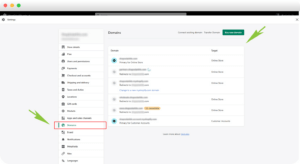
Shopifyストアを非アクティブ化する方法:分かりやすく実践的なガイド
Shopifyストアの無効化はそれほど複雑ではありませんが、多くのマーチャントが見落としている影響があります。このガイドでは、そのプロセスを分かりやすく解説します。.