








Keine Produkte im Warenkorb.
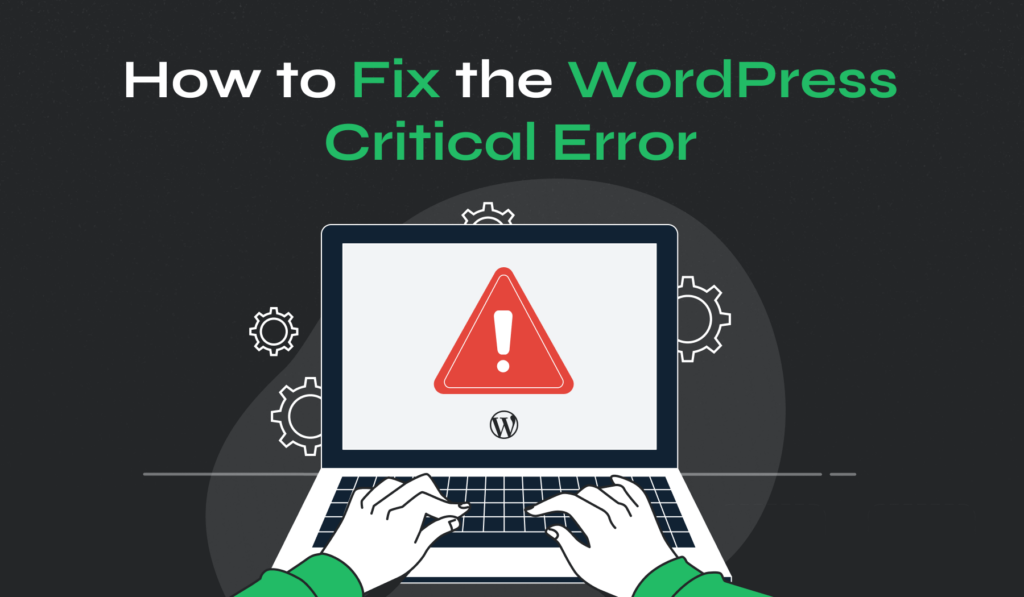
Wenn Sie ein WordPress site long enough, one day it will try to humble you.
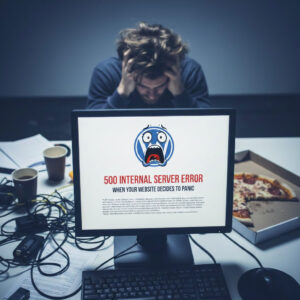
Everything is normal. You sip your coffee. You open your site. Then WordPress looks you dead in the eye and says: “There has been a critical error on this website.” Not a warm greeting. Not a helpful explanation. Just digital panic in a tuxedo.
The good news is that this message usually does not mean your website has vanished into the void forever. In most cases, it points to a PHP-related problem, such as a plugin conflict, a theme issue, exceeded memory limits, or sometimes database trouble. In newer WordPress versions, this message largely replaced the old “white screen of death,” which was somehow even less helpful.
So let’s turn this disaster movie into a repair guide.
This article explains there has been a critical error on this website. wordpress in plain English, with a little humor, so you can stop staring at the error screen like it just insulted your family. We’ll cover what causes it, how to troubleshoot it, and how to get your site back online without throwing your laptop out the window.
Think of WordPress as a busy restaurant.
The theme is the dining room design.
Plugins are the kitchen gadgets.
PHP is the chef making everything run.
Your hosting server is the building itself.
Now imagine one blender explodes, the chef forgets a recipe, and the power flickers at the same time. The restaurant does not calmly explain the exact issue. It just stops serving dinner.
That is what WordPress is doing here.
The “critical error” message usually appears when WordPress hits a serious PHP problem. According to Kinsta’s breakdown, the common causes include plugin or theme conflicts, PHP memory limits being exceeded, broken custom code, or database corruption. Sometimes the site owner also receives an admin email with recovery instructions, though that is not always enough to solve the problem on its own.
In other words, WordPress is not saying, “Here is the exact file, line number, cause, and emotional backstory.” It is saying, “Something is very wrong. Please investigate.”
Which is rude, but manageable.
Back up your site.
Yes, even if you are feeling brave. Especially if you are feeling brave.
Kinsta specifically recommends backing up the site before making changes because troubleshooting this error often involves editing WordPress files, disabling themes or plugins, or restoring older versions. That is the kind of work that can solve the problem fast — or make a mess faster if done carelessly.
So before you start poking around like a detective in a server room, make sure you have a copy of your website.
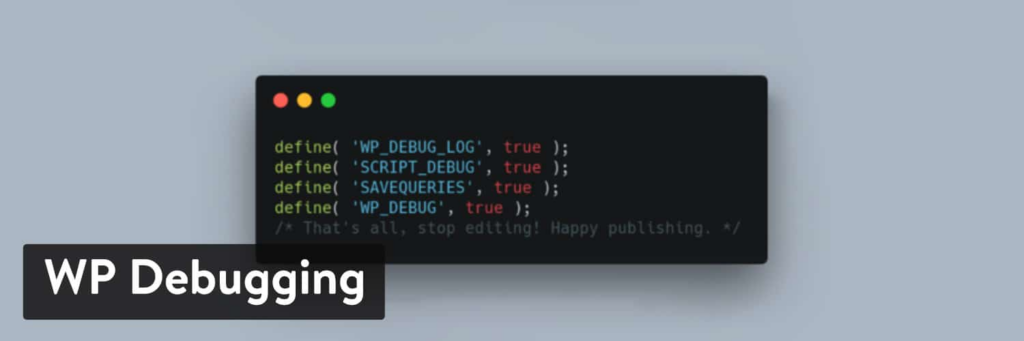
When WordPress goes dramatic, debugging is how you get the gossip.
One of the first troubleshooting steps is enabling debug mode so PHP errors get logged. If you cannot access the dashboard, you can do this manually by editing wp-config.php and enabling WP_DEBUG, WP_DEBUG_DISPLAY, and WP_DEBUG_LOG. Once enabled, WordPress writes errors to a debug.log file inside wp-content, which can reveal whether the problem is tied to a plugin, theme, or specific file. Kinsta also notes that debugging should be turned off when you are done because it can expose error details publicly.
This is the moment where the mystery starts to become less mysterious.
Instead of “critical error,” you may suddenly see clues like:
That log file is often the difference between random guessing and solving the issue like a professional.
Sometimes the fastest fix is not surgery. It is time travel.
If your website worked yesterday and exploded today, restoring a recent backup can be the quickest way back to normal. Kinsta recommends rollback as an early option and suggests testing a restore on a staging site before pushing it live, so you do not overwrite working changes blindly.
This is especially useful if the error appeared right after one of these events:
That last one is historically dangerous.
A backup restore is not always the final answer, because the root cause may still be there. But it can get your site breathing again while you figure out which update or file started the chaos.
Your theme may be beautiful. It may also be the villain.
Kinsta explains that theme conflicts are a common reason for critical errors. One practical test is to switch temporarily to a default WordPress theme, such as Twenty Twenty-One or another default option. If your site starts working after the switch, your theme is likely the source of the problem. If you cannot access the dashboard, this can be done over FTP by renaming the active theme folder or uploading a default theme manually.
This is not personal.
Your custom theme did not wake up evil. It may just be incompatible with:
Switching to a default theme is basically asking WordPress, “Can we try this without the fancy outfit?”
If the answer is yes, then you know where to look next.
If WordPress were a detective series, plugins would be the cast with the highest arrest rate.
Kinsta notes that plugins are often to blame for the critical error. The recommended process is simple: deactivate all plugins, then reactivate them one at a time until the site breaks again. That isolates the bad actor. If you are locked out of the dashboard, you can do the same through FTP by renaming the Plugins folder, which disables plugins at once.
This method is boring, but it works.
And yes, it is possible that the guilty plugin is the one that promised to optimize speed, improve security, boost SEO, generate leads, wash dishes, and solve your childhood trauma.
A plugin conflict does not always mean the plugin is “bad.” It may simply clash with your theme, another plugin, your server environment, or a recent PHP version. Still, finding the exact plugin is a major win.
Sometimes WordPress is not broken. It is just hungry.
PHP scripts need memory to run. WordPress sites with heavy plugins, page builders, or resource-intensive processes can exceed the allowed memory ceiling. Kinsta explains that increasing the PHP memory limit in wp-config.php zu 128M, and in some cases 256M, can resolve the critical error if memory exhaustion is the trigger. They also warn that if a plugin only works when memory keeps being pushed higher, the plugin itself may be the real issue.
This matters because many site owners assume the error means “catastrophic collapse,” when it may really mean “your site tried to do too much with too little RAM.”
That is less scary.
Still annoying. But less scary.
If increasing memory helps, great. If it keeps happening, do not just keep throwing memory at the problem like confetti. Investigate what is consuming it.
This one is sneaky because the error may only appear during certain actions.
Kinsta points out that if the critical error happens only when uploading large files or loading unusually large content-heavy pages, PHP limits may be the culprit. In those cases, adjusting upload size settings or increasing recursion and backtrack limits in wp-config.php may help.
Translation: your site may look fine most of the time, then melt down only when you upload a huge media file or save a monster page full of builders, layouts, and nested elements.
That does not mean your whole site is cursed. It means one task is hitting a ceiling.
Which is still inconvenient, but at least it narrows the suspect list.
Cache is normally your friend.
Until it becomes your weird friend who stores corrupted junk and then insists everything is fine.
Kinsta includes cache corruption as another possible trigger. Clearing the site cache — whether through your host dashboard or a caching plugin — can remove broken cached files and restore normal behavior. They note that clearing cache does not permanently harm site speed; fresh cache will be rebuilt afterward.
This fix is simple enough that it is worth trying early, especially when:
It is not the deepest fix in the toolbox, but sometimes the website equivalent of “turn it off and back on again” is exactly what works.
Old PHP is like expired milk in the office fridge.
Technically still present. Deeply suspicious. Probably causing problems.
Kinsta warns that outdated PHP versions can trigger conflicts with modern themes and plugins, and recommends using a version supported by WordPress. Their article says running older PHP versions increases the chance of compatibility issues and that upgrading through your host can resolve certain critical errors, though a backup is strongly advised before doing so.
A lot of people delay PHP upgrades because they fear breaking the site.
Ironically, nicht upgrading PHP can also break the site.
So if your setup has not been reviewed in a while, this is one of those maintenance tasks that matters more than it looks.
Nobody likes this chapter, but we have to mention it.
Kinsta notes that malware can also cause critical errors, especially when unfamiliar PHP scripts appear and cannot be traced to your theme or plugins. Because malicious code may hide inside legitimate-looking files, they recommend contacting your hosting provider or security experts if malware is suspected rather than deleting files at random.
This is wise.
Deleting random files from WordPress when you are stressed is a classic way to turn a problem into a sequel.
If you suspect malware because your site has strange redirects, unknown admin users, weird file changes, or unexplained scripts, slow down and get expert help. That is not the moment for guesswork.
Then you do what every smart website owner eventually learns to do:
You ask for support before making things worse.
Kinsta’s article emphasizes that hosting support can help identify the source of the problem, especially when you cannot access the site normally. They specifically describe support teams helping users pinpoint faulty files, themes, or plugins, even if the final code fix may still need to be implemented by the site owner or developer.
And honestly, this is an underrated skill in business.
A lot of website owners think they must personally win every battle with WordPress. You do not. The goal is not to become a server monk. The goal is to get the site working, protect revenue, and avoid repeated downtime.
That is what matters.
Once you survive this once, you become a little wiser and a lot less trusting.
Here are the habits that help:
Keep regular backups.
Update plugins and themes carefully, not recklessly.
Use fewer, better plugins.
Test major changes on staging first.
Do not ignore PHP version maintenance.
Use reliable hosting.
Avoid copy-pasting mystery code from sketchy forums at 1:14 a.m.
That last one has ended many beautiful weekends.
The broader lesson is that WordPress is powerful, but it does best when it is managed intentionally. Most critical errors are not random acts of chaos. They are traceable, fixable, and often preventable.
If you searched for there has been a critical error on this website. wordpress, chances are your site just tried to ruin your day.
But in most cases, this error is not the end of your website. It is a loud warning that something in the WordPress stack — usually PHP, a plugin, a theme, memory limits, cache, or server configuration — needs attention. Start with backups, turn on debugging, isolate plugins and themes, check memory and PHP settings, and do not hesitate to get professional help when the issue goes beyond quick troubleshooting.
And if your business is in cross-border e-commerce, every minute of site downtime can mean missed traffic, lost trust, and abandoned orders. That is exactly why AIRSANG focuses on cross-border related services and website design that are built to be clearer, more stable, and easier to maintain. If you need help with website structure, storefront design, or improving the overall user experience of your independent site, AIRSANG is ready to help you turn website chaos into something much more profitable.