










لا توجد منتجات في سلة التسوق.
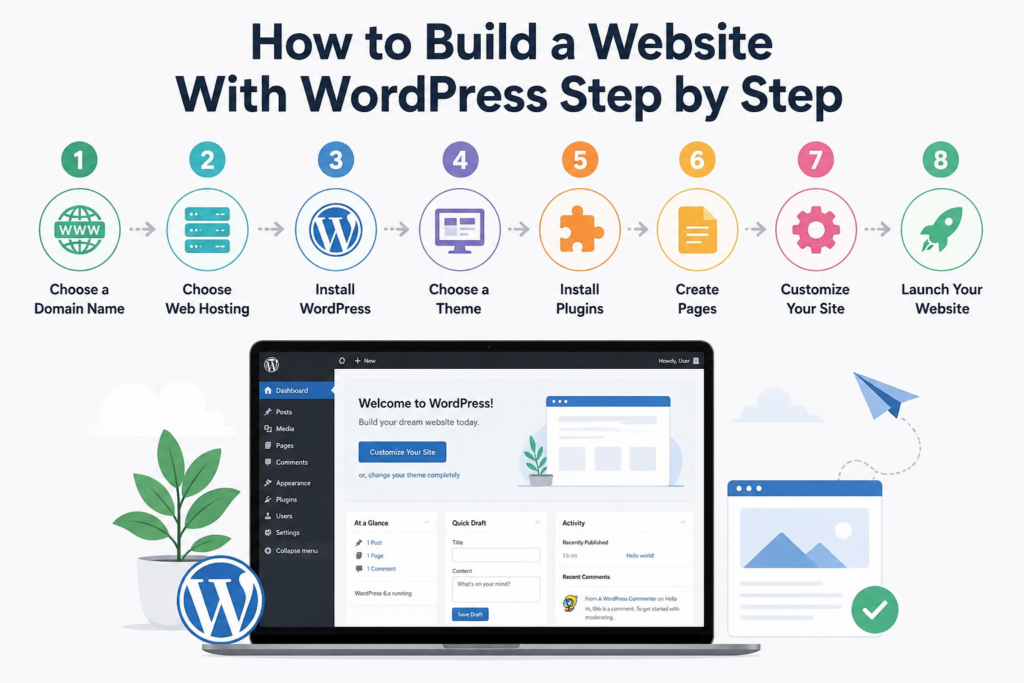
Building a website used to feel complicated and expensive. Years ago, creating a professional site often required coding skills, hiring developers, or spending thousands of dollars on custom work. Today, things are very different. Thanks to ووردبريس, almost anyone can launch a website, online store, portfolio, blog, or business platform without being a technical expert.
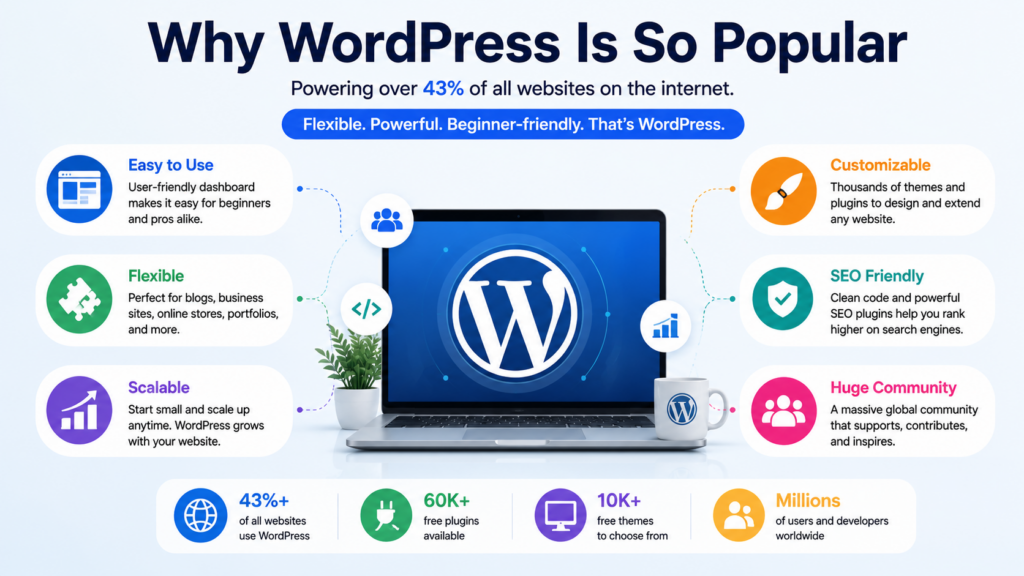
That is one of the main reasons WordPress powers such a large portion of the internet today. It is flexible, beginner-friendly, scalable, and supported by a massive global community. Whether you want to create a personal blog, a photography portfolio, a business website, or a full ecommerce store, WordPress gives you the tools to do it.
In this guide, you will learn exactly how to build a website with WordPress from the ground up. We will walk through everything in a beginner-friendly way, including domains, hosting, themes, plugins, website structure, SEO basics, performance optimization, and security essentials.
If you have been searching for a practical explanation of “how to build a website with WordPress,” this article will help you understand the full process from start to finish.
Before building a website, it helps to understand why millions of people choose WordPress instead of other platforms.
WordPress is an open-source content management system, often called a CMS. That means it allows users to create and manage website content through a visual dashboard instead of writing code manually.
One of WordPress’s biggest strengths is flexibility. It works for:
Unlike many closed website builders, WordPress gives users more ownership and customization freedom. You can change your design, expand functionality, optimize SEO, and scale your site as your business grows.
Another reason WordPress remains popular is its huge ecosystem. Thousands of themes and plugins make it possible to customize nearly every aspect of a website without advanced programming knowledge.
Your domain name is your website’s online address. It is what people type into their browser to visit your site.
ومن الأمثلة على ذلك:
A good domain name should be:
For most websites, a .com domain remains the best option because it is widely recognized and trusted.
When choosing a domain, try to think long-term. A strong domain name can help with branding, marketing, and credibility.
After selecting a domain name, the next step is web hosting.
Web hosting is the service that stores your website files and makes your website accessible online. Every website needs hosting.
Many hosting companies today offer beginner-friendly WordPress hosting with features like:
Managed WordPress hosting has become especially popular because it simplifies the technical side of running a website. Instead of manually configuring servers, users can focus more on content and design.
When choosing hosting, important factors include:
Fast hosting is especially important because website speed affects both user experience and search engine rankings.
Once your hosting account is active, installing WordPress is usually very simple.
Most hosting providers now include one-click WordPress installation tools. Instead of manually uploading files and configuring databases, users can install WordPress through a setup wizard in just a few minutes.
The setup process typically asks for:
After installation, you can access your WordPress dashboard by visiting:
yourdomain.com/wp-admin
This dashboard becomes the control center for your entire website.
From there, you can:
For beginners, the WordPress dashboard may feel overwhelming at first, but the interface becomes much easier after a little practice.
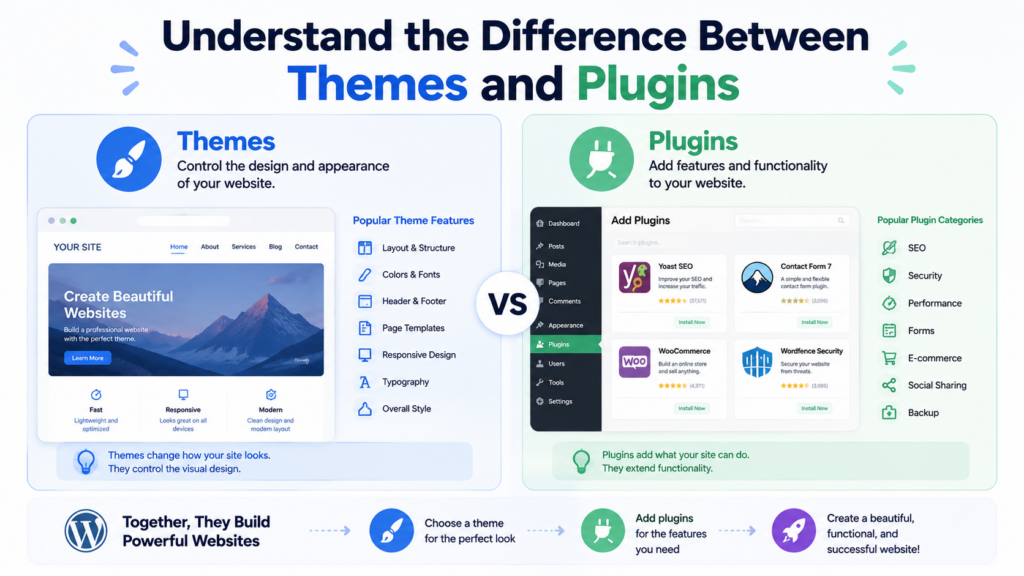
Two of the most important parts of WordPress are themes and plugins.
A theme controls the visual appearance of your website.
It determines things like:
Thousands of free and premium themes are available for different industries and design styles.
Some themes focus on:
When choosing a theme, prioritize:
A well-designed theme creates a better user experience and helps visitors trust your website.
Plugins add extra functionality to your site.
Think of plugins like apps for your website.
Popular plugin categories include:
One of the biggest advantages of WordPress is that plugins allow users to expand website functionality without coding.
However, installing too many plugins can slow down a website, so it is important to use only the tools you truly need.
Every professional website should include several core pages.
The homepage is often the first thing visitors see. It should clearly explain:
A strong homepage combines visuals, structure, and clear messaging.
An About page builds trust and credibility.
People often want to know:
Authenticity matters here.
A Contact page helps visitors communicate with you.
This page may include:
Easy communication improves trust and user experience.
Blogs help websites grow traffic through search engines.
Publishing helpful content around your niche can improve:
WordPress originally started as a blogging platform, which is one reason its blogging system remains so powerful today.
If you run a business or online store, dedicated pages for products or services are essential.
These pages should clearly explain:
Strong structure and clear calls-to-action help increase conversions.
Once the core pages exist, you can begin customizing your website.
Modern WordPress websites often use drag-and-drop editors or block-based editing systems that make design easier for beginners.
Important design elements include:
Good website design is not just about appearance. It also affects usability.
A clean layout helps visitors:
Mobile optimization is especially important because a large percentage of web traffic now comes from smartphones.
A website that looks perfect on desktop but breaks on mobile can lose visitors quickly.
Website speed has become one of the most important factors in modern web design.
Slow websites create frustration and increase bounce rates.
Several factors affect WordPress speed:
Fortunately, there are many ways to improve performance.
Large image files slow down websites significantly.
Optimized images improve loading speed while maintaining visual quality.
Caching stores temporary versions of website pages to reduce server load and speed up delivery.
Many WordPress caching plugins help automate this process.
A Content Delivery Network distributes website files across global servers so visitors can load content from locations closer to them.
This helps improve speed worldwide.
Outdated plugins may slow websites down or create compatibility issues.
Regular maintenance is important for performance and security.
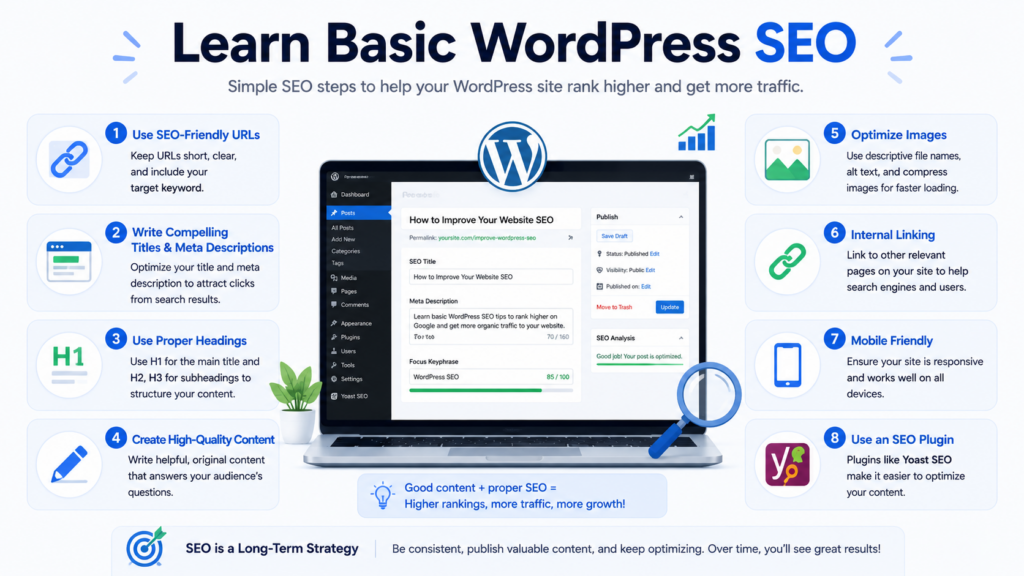
Search engine optimization helps websites appear in Google search results.
Without SEO, even a beautiful website may struggle to attract visitors.
WordPress is considered SEO-friendly because it offers strong optimization flexibility.
Clean URLs are easier for users and search engines to understand.
مثال:
Google prioritizes useful content that answers user questions clearly.
High-quality articles improve search visibility over time.
Titles and meta descriptions help search engines understand page content and influence click-through rates.
Clear heading structure improves readability and SEO organization.
Search engines prioritize mobile-friendly websites.
Responsive design is no longer optional.
Internal links help users navigate your website and help search engines understand your site structure.
Website security is extremely important.
Because WordPress is widely used, it is also a common target for attacks.
Fortunately, basic security practices greatly reduce risks.
Weak passwords remain one of the biggest security problems online.
Always use secure login credentials.
SSL encrypts website data and improves trust.
Modern browsers may mark websites without SSL as “Not Secure.”
Updates often include security fixes.
وهذا يشمل:
Security plugins help protect websites from spam, malware, login attacks, and suspicious activity.
Backups protect your website if something goes wrong.
Many hosting providers now include automatic backups as part of their services.
After building your website, the next step is growth.
A website is not a one-time project. It evolves over time.
Successful websites continue improving through:
Consistency matters more than perfection.
Many beginners delay launching because they want everything to be flawless. In reality, most websites improve gradually after going live.
Publishing helpful content regularly and listening to user behavior often leads to long-term growth.
When learning how to build a website with WordPress, beginners often make similar mistakes.
Installing excessive plugins can hurt speed and stability.
Keep your website lightweight.
Always test your website on phones and tablets.
Blurry or inconsistent visuals reduce professionalism.
SEO should be considered from the beginning, not added later.
Basic security habits help prevent major problems.
Simple, clean layouts usually perform better than cluttered designs.
Learning how to build a website with ووردبريس may seem intimidating at first, but the process has become much more beginner-friendly over the years. With the right hosting, a strong theme, useful plugins, and clear website structure, almost anyone can create a professional online presence without advanced technical knowledge.
WordPress continues to dominate the web because it combines flexibility, scalability, customization, and ease of use. Whether you are starting a blog, building a business website, or launching an online store, WordPress provides the tools needed to grow and adapt over time.
The key is to start simple, focus on user experience, maintain your website properly, and continue improving your content and design as your goals evolve.
Yes, WordPress itself is free and open-source. However, you still need to pay for web hosting, a domain name, and optional premium themes or plugins.
No. Most modern WordPress websites can be built using drag-and-drop builders, themes, and plugins without coding knowledge.
A simple website can be launched in a few hours, while a larger business or ecommerce website may take several days or weeks depending on the design and content.
Themes control the design and appearance of your website, while plugins add extra features and functionality like SEO tools, contact forms, or ecommerce systems.
Yes. WordPress is considered very SEO-friendly because it supports clean URLs, fast-loading themes, SEO plugins, and optimized content structures.
Absolutely. With plugins like WooCommerce, WordPress can power full ecommerce websites with products, payments, shipping, and inventory management.