Introduction
In today’s competitive eCommerce landscape, especially in the personalized gift and collectible space, a Shopify website must do far more than display products. It needs to create emotional connection, simplify customization, guide users through complex choices, and convert inspiration into action.
Minebrick operates in a visually driven niche: custom brick figures made from customer photos. These products are playful, personal, and highly gift-oriented, but they also present unique design challenges. Customers need to understand the process, trust the outcome, visualize the result, and feel confident before purchasing.
This project focused entirely on Shopify website design—not development or custom code. Our role was to design a structured, conversion-focused Shopify experience that clearly communicates value, reduces friction, and scales with seasonal promotions and new product launches.
This case study explores how thoughtful Shopify page design helped Minebrick transform a creative product into a clear, high-converting online experience.
| Deliver Time | Category | Application Platform |
| 29days | Custom Brick Figure | Shopify |
| Designers Involved | Cost | Effect |
| Nancy、Petter | $3700 | Visitor rate📈374% |
Project Overview: Understanding the Minebrick Brand
Who Minebrick Is
Minebrick is a Shopify-based eCommerce brand offering:
- Custom brick figures created from customer-uploaded photos
- Personalized gifts for couples, families, pets, and special occasions
- Collectible-style products with strong visual appeal
The brand sits at the intersection of personalization, gifting, and collectibles, which makes design clarity and emotional storytelling critical.
Design Challenges Unique to This Category
Unlike standard eCommerce products, custom brick figures introduce several challenges:
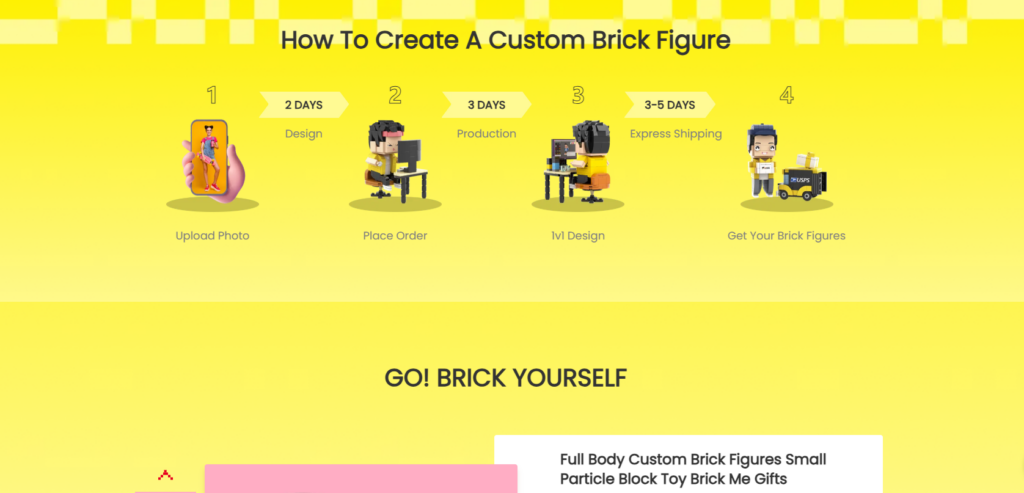
- Customers must understand a multi-step customization process
- The final product is not immediately tangible
- Trust and expectation management are essential
- Visual proof matters more than technical specifications
Our goal was to solve these challenges purely through Shopify page design, layout, and content structure.
Design Goals and Objectives
Before starting the design process, we defined several clear goals:
Primary Design Objectives
- Simplify the customization journey
- Clearly communicate “how it works” without overwhelming users
- Highlight personalization as the core value
- Optimize the homepage and product pages for conversion
- Build trust through visuals, social proof, and structure
Business-Oriented Outcomes
- Increase add-to-cart confidence
- Reduce user confusion during customization
- Support seasonal campaigns (e.g., Christmas, gifts)
- Create a scalable design system for future products
All decisions throughout the project were measured against these goals.
Our Shopify Design Approach
Design First, Not Code First
This project was approached as a design and UX challenge, not a technical build.
Rather than focusing on development features or custom code, we concentrated on:
- Page hierarchy
- Visual flow
- Content prioritization
- User psychology and buying behavior
Shopify already provides a robust platform. Our responsibility was to design how users experience it.
Homepage Design Strategy
Creating a Strong First Impression
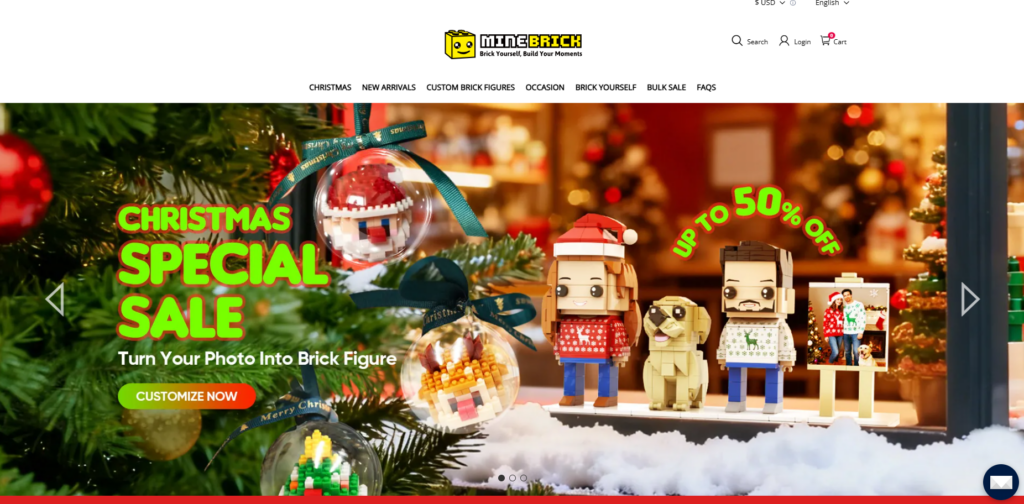
The homepage acts as the primary entry point for new users. For Minebrick, it needed to immediately answer three questions:
- What is this product?
- How does customization work?
- Why should I trust this brand?
The hero section uses bold seasonal visuals and promotional messaging to immediately establish relevance, especially during gift-driven periods like Christmas.
Visual Storytelling Through Sections
Rather than overwhelming users with text, the homepage is broken into visually distinct sections:
- Step-by-step “How It Works” blocks
- Featured customization examples
- Best-selling product highlights
- Real customer visuals and reviews
This modular structure allows users to scan, understand, and engage at their own pace.
Designing the Customization Journey
Making Customization Feel Simple
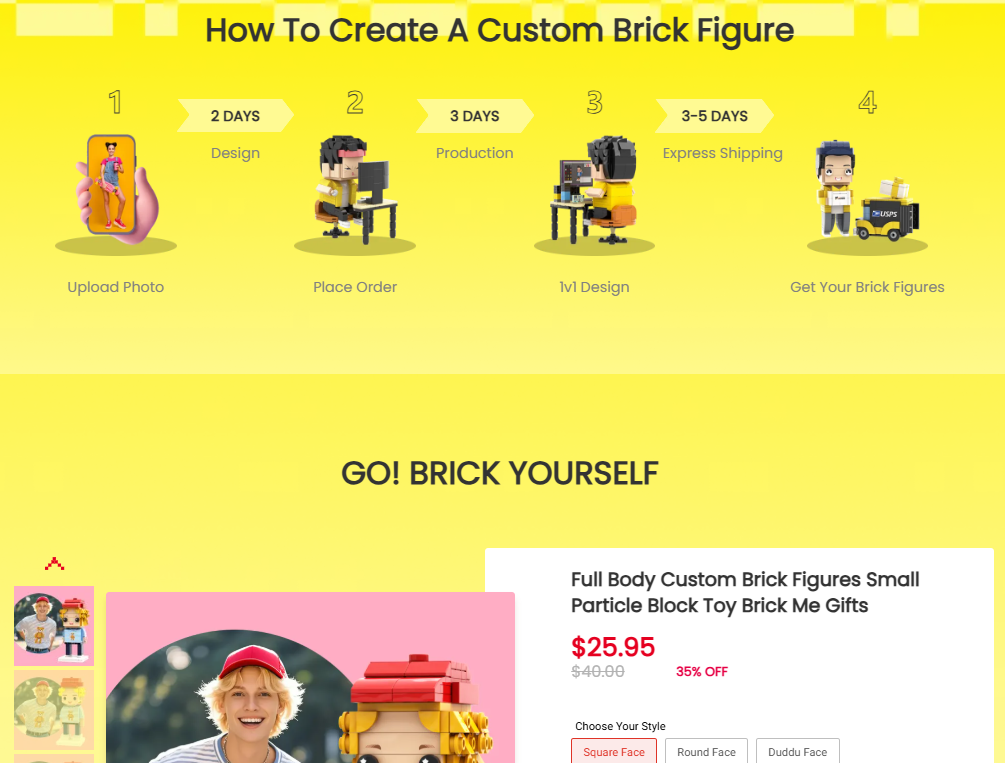
Customization can intimidate users if not presented clearly. We addressed this through design by:
- Using icon-based steps to explain the process
- Keeping instructions short and visually guided
- Placing reassurance messaging near CTAs
Each step is designed to feel approachable, even for first-time buyers.
Guiding Users Toward Action
Strategic CTA placement ensures users always know what to do next. Buttons like “Customize Yours” are visually emphasized without feeling aggressive, keeping the experience friendly and intuitive.
Product Page Design: Building Confidence
Visual Priority Over Technical Detail
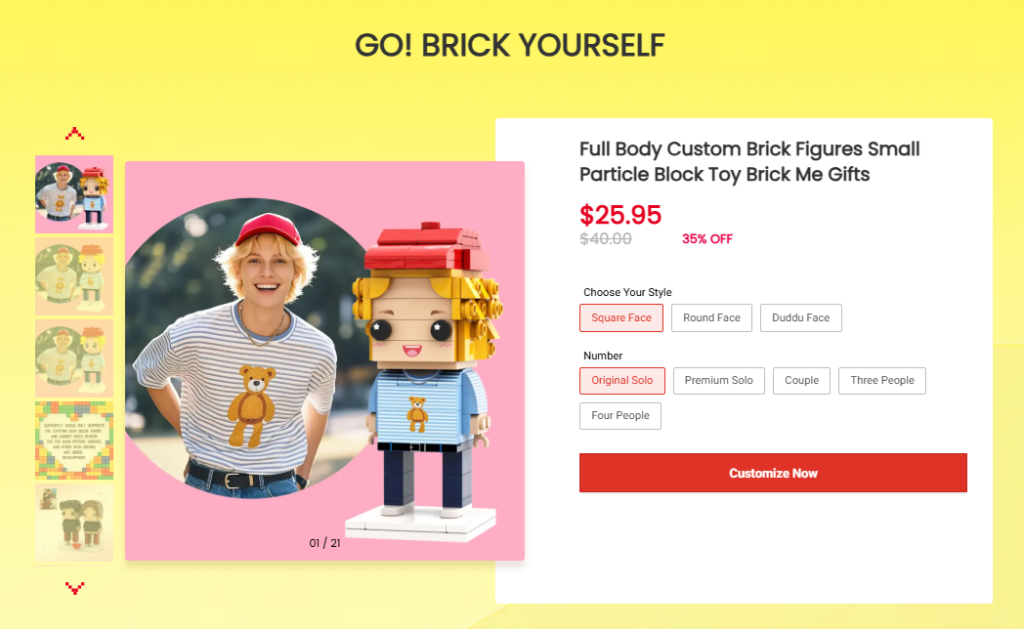
For Minebrick, visuals sell the product more effectively than specifications.
The product pages prioritize:
- Large, high-quality product imagery
- Before-and-after examples
- Lifestyle and gifting context
This allows customers to imagine the final result rather than focusing on abstract details.
Supporting Trust Through Layout
Key trust-building elements are woven into the design:
- Clear pricing presentation
- Transparent customization instructions
- Reassurance around quality and delivery
Instead of long paragraphs, information is broken into scannable sections that respect modern browsing behavior.
Collection and Category Design
Helping Users Explore Easily
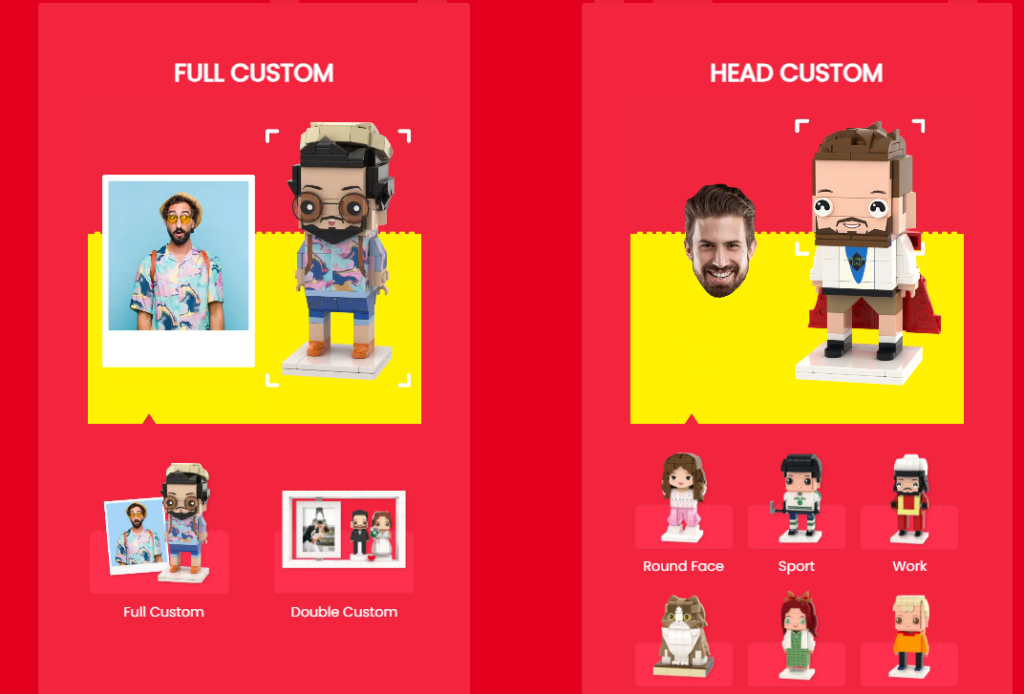
Minebrick offers multiple customization styles and use cases. To prevent overwhelm, collections are visually grouped by:
- Occasion (couples, pets, families)
- Custom level (full custom vs. head-only)
- Popular or gift-ready selections
This allows users to browse intuitively without relying on complex filters.
Visual Consistency Across Collections
Consistent card layouts, image ratios, and spacing ensure that browsing feels cohesive and professional, reinforcing brand trust.
Promotional and Seasonal Design Elements
Designing for Campaign Flexibility
Gift-based brands rely heavily on seasonal traffic. The site design allows for:
- Banner swaps without layout disruption
- Highlighted discounts and urgency messaging
- Featured seasonal product sections
This ensures the website can adapt quickly without a full redesign.
Social Proof and Credibility
Designing Trust Signals, Not Just Adding Them
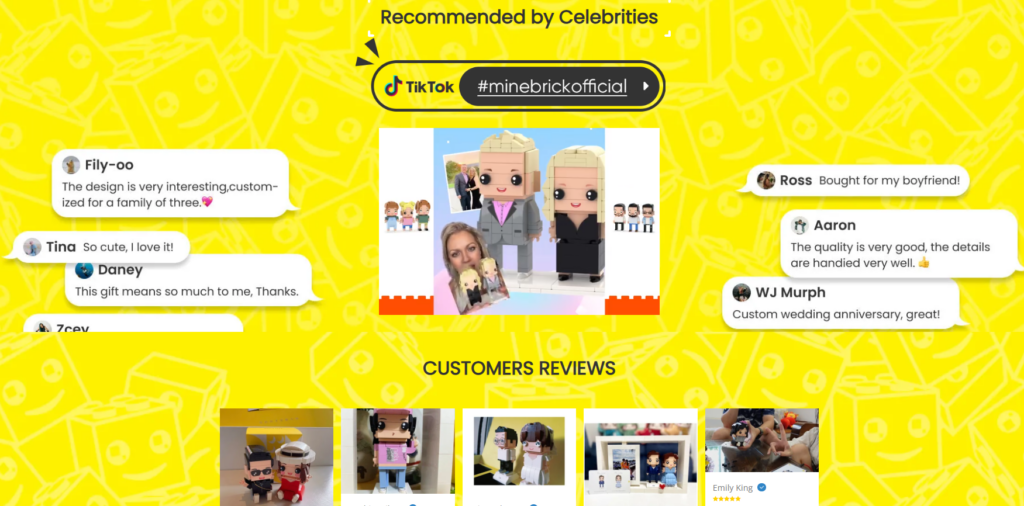
Rather than treating reviews as an afterthought, social proof is intentionally designed into the layout:
- Customer photo reviews
- Visual testimonials
- Influencer-style mentions
These elements appear naturally within the page flow, reinforcing credibility without interrupting the shopping experience.
Challenges We Faced
Balancing Playfulness and Clarity
The product itself is fun and playful, but too much visual noise could reduce clarity. The challenge was to:
- Maintain a playful tone
- Keep the UI clean and readable
- Avoid distracting from the buying decision
Managing Information Density
Custom products require explanation. We solved this by:
- Layering information instead of stacking it
- Using visuals first, text second
- Allowing users to dive deeper only if needed
Our Design Solutions
Structured Visual Hierarchy
Clear spacing, consistent typography, and color hierarchy guide attention naturally from awareness to action.
Modular Shopify Sections
By designing modular sections, the site remains flexible and scalable. New products and campaigns can be added without disrupting the overall experience.
Results and Impact
While this case study focuses on design rather than analytics, the visual and UX improvements achieved several key outcomes:
- A clearer customization journey
- Stronger first-time user understanding
- Improved trust through visuals and layout
- A scalable Shopify design system for future growth
The website now functions not just as a storefront, but as a guided experience.
Conclusion
Minebrick’s Shopify website demonstrates how thoughtful page design can elevate a personalized product from novelty to a confident, conversion-ready brand experience.
By focusing on visual hierarchy, user flow, and emotional storytelling—rather than technical complexity—the site successfully communicates value, builds trust, and supports long-term growth.
This project reflects our broader approach to Shopify design: creating structured, scalable, and conversion-focused experiences tailored to real business goals. At AIRSANG, we specialize in Shopify website design for brands that rely on storytelling, customization, and visual impact to stand out in competitive global markets.
If you’re building or redesigning a Shopify store and want design that supports growth—not just aesthetics—this is exactly the kind of work we do.