
Asking how website platforms charge often produces a deceptively simple number measured on different terms. Some quotes cover only subscriptions, others only production, while hosting, maintenance, and payment fees may appear after launch. Businesses planning an independent website should first separate platform access, website-building services, and operating costs and compare them using the same checklist.
Understand three billing models before confusing buying a platform with building a website
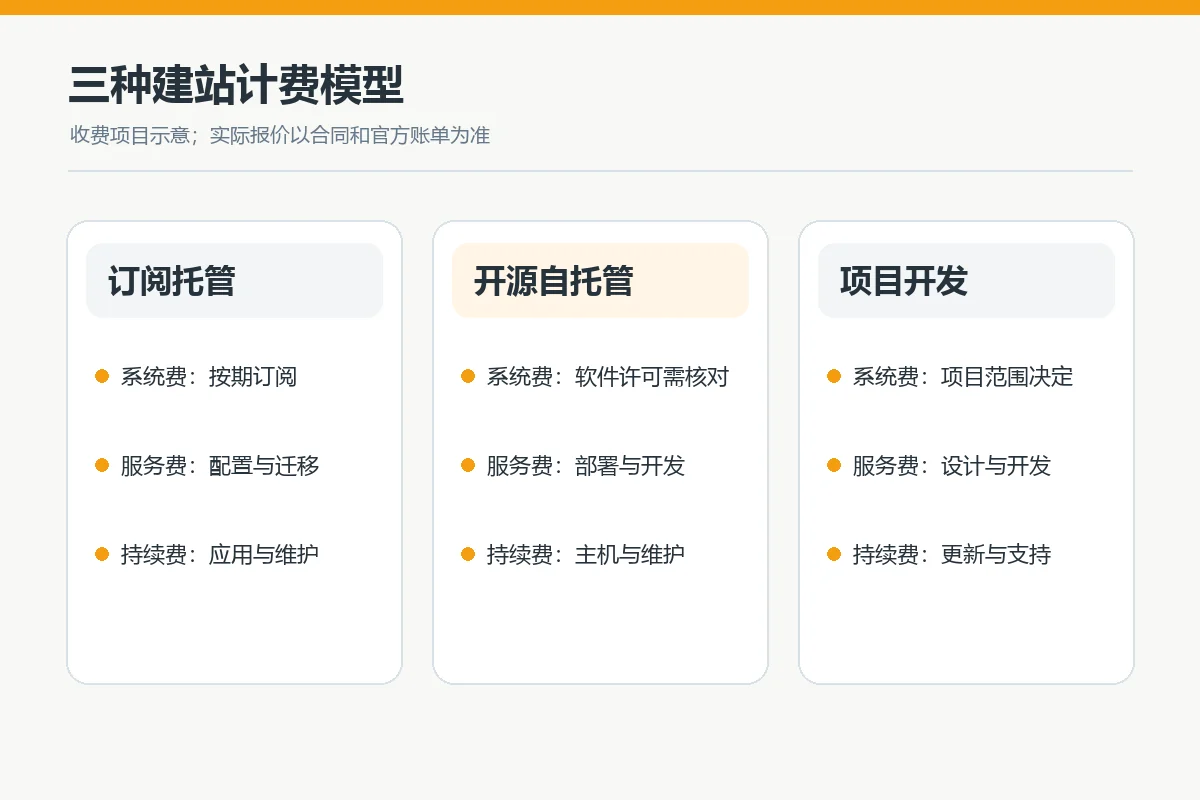
The first is a subscription-based hosted platform , usually purchased monthly or annually. The platform handles hosting and updates within its scope; merchants separately check domains, apps, payment services, templates, and content production. The official Shopify pricing page lists monthly and annual billing, payment charges, and third-party transactions, noting regional differences. This suits teams wanting a quick launch with more infrastructure operations handled by the platform. The limitation is that features may depend on plans and apps, so the monthly fee alone is insufficient.
The second is open-source software with self-hosting . The official WooCommerce overview confirms its core platform is free and open source; the WordPress licensing information also explains its open-source license. Free software does not mean a free website: hosting, domains, themes, extensions, setup, and ongoing maintenance need separate entries. This suits teams seeking control and willing to manage technology and providers. Zero software licensing fees do not eliminate maintenance responsibilities.
The third is one-time project development plus ongoing operations . Design, page building, migration, and training may be charged per project, while platform access and third-party services remain separate. Confirm which deliverables the contract’s one-time payment covers. If later pages, redesigns, renewals, and repairs are excluded, the first payment is not the total cost. If the platform remains undecided, read our WordPress website maintenance cost guide before returning to these fee terms. For Shopify alone, see the Shopify website cost breakdown .
Use one comparison table to see what is actually cheaper
The following is a comparison of quote structures , not a live price list. Suppliers must clarify every potential charge according to entity location, plan, contract, and payment provider. Mark items without written terms Awaiting confirmation rather than automatically entering zero.
| Cost item | Hosted subscription | Self-hosted open source | Project development service |
|---|---|---|---|
| Platform / hosting | Plan subscription; check monthly and annual billing | Check software license and hosting separately | Ask whether third-party platform charges are included |
| Setup / design | Build internally or purchase services separately | Build internally or purchase services separately | Accept against agreed pages and features |
| Themes / extensions | Check theme and app subscriptions | Check themes, plugins, and renewals | Specify license ownership and renewal responsibility |
| Payments / maintenance | Payment rates are separate; verify platform maintenance boundaries | Payment rates, updates, and backups are separate | Clarify support period, response scope, and extra charges |
Shopify subscription pricing and WooCommerce core licensing are not directly comparable. The former still requires payment-fee checks, while the latter requires hosting and maintenance checks.
Divide costs into five ledgers
1. Prelaunch production and materials
List page types and quantities, product-data preparation, images and copy, languages, revision rounds, migration, and training. Ask suppliers to mark each Included, Excluded, or Separately quoted and define acceptance. A homepage design excluding mobile, product pages, or actual content import cannot be compared directly with a complete launch package.
2. Platform, domain, and hosting
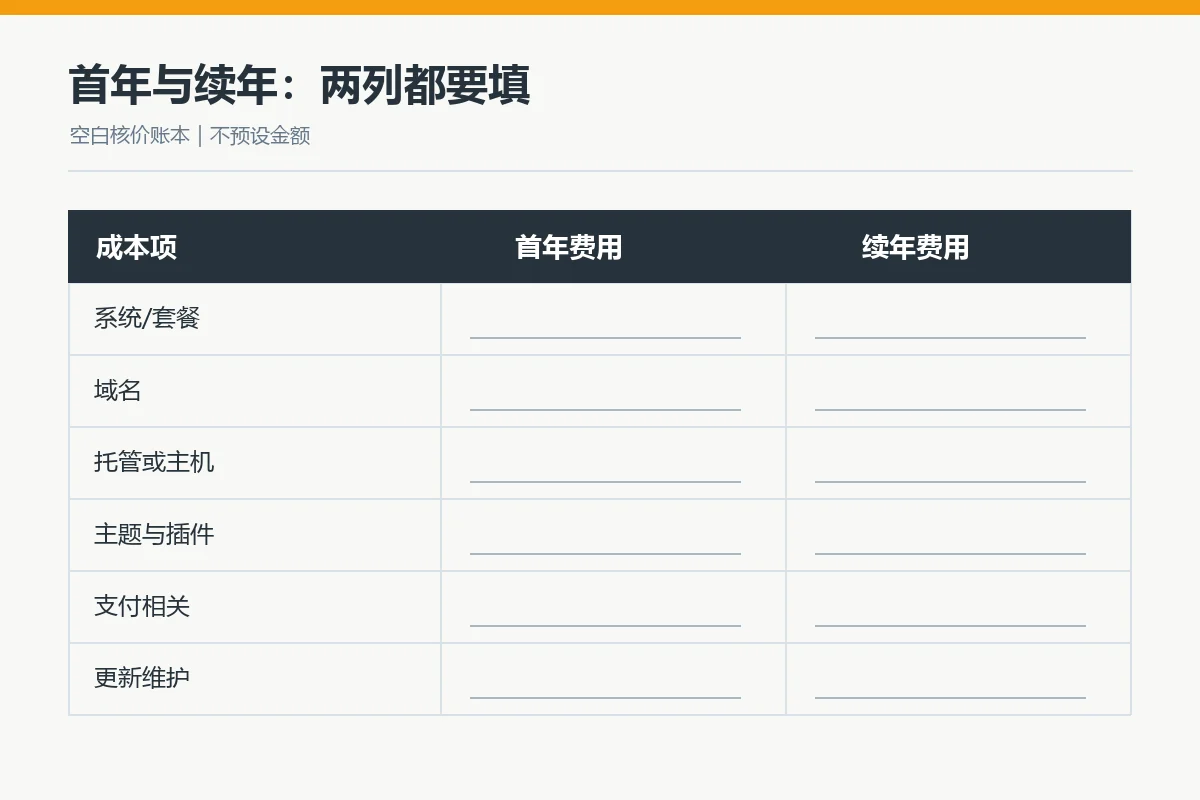
For subscriptions, record plan, billing cycle, renewal rules, included site count, and invoice currency. For self-hosting, record hosting, domain, backups, security updates, and responsible parties. One-time development may still rely on recurring hosting or licenses. Calculate first and subsequent years separately, especially promotional first-year versus normal renewal prices. Do not substitute an advertising-page price for the final checkout price.
3. Themes, plugins, and apps
Confirm whether each is free, licensed once, or recurring. Identify whose account holds the license, whether it covers production use, how long updates and support last, and what stops working after cancellation. Separate built-in features from paid extensions. Do not buy many apps for hypothetical future needs. List actual order, inquiry, inventory, and multilingual requirements first, then verify each.
4. Payments and transactions
Provider fees, platform surcharges, currency conversion, and refund charges may vary by entity country, industry, method, and transaction value. Confirm business eligibility before checking official rates and settlement currencies. Our guide to payment methods for export websites helps distinguish payment tools from website platforms. Keep their charges separate so accepting payments is not mistaken for accepting payments at no cost.
5. Maintenance, changes, and exit
Who handles backups, plugin updates, recovery, content edits, and new functions after launch? Contracts should specify support hours, ticket scope, response commitments, and out-of-scope billing. Clarify ownership of domains, accounts, source files, content, and customer data, plus export procedures when cooperation ends. Similar upfront prices can produce very different long-term costs when handover duties differ.
Copy this checklist into your quote request
Give every supplier the same scope: markets and sales model; page and product scale; languages and currencies; inquiry or cart flows; intended payment channels; administration permissions; and delivery date. Ask for answers using the table instead of a single website price. Blank cells are to be completed by the merchant; they are not AIRSANG or platform quotations.
| Item | First-year amount / currency | Renewal year or individual change | Who pays and what happens at expiry |
|---|---|---|---|
| Platform and hosting | To complete | To complete | To complete |
| Design and content | To complete | To complete | To complete |
| Themes, plugins, and apps | To complete | To complete | To complete |
| Payments, maintenance, and training | To complete | To complete | To complete |
Normalize currency, region, tax treatment, and billing cycle before comparing first-year and renewal totals. Estimate transaction fees using projected order scenarios. Mark unclear terms Awaiting confirmation.

Conclusion: clarify responsibilities and cycles before comparing platform prices
How website platforms charge depends on the mix of subscriptions, self-hosting, and project services rather than a single website price. Separate platform, production, third-party, and operating-maintenance costs, check first and subsequent years, then confirm payment regions, license accounts, and exit handover. If the site’s main purpose is still unclear—lead generation or online transactions—finish the business requirements first and request the same scope from providers. Only then are the numbers comparable.