










لا توجد منتجات في سلة التسوق.
If you are searching for “how to improve seo wordpress,” the first thing to understand is that ووردبريس SEO is not one single setting, plugin, or keyword trick. It is a complete system. Your site needs to be crawlable, fast, clearly structured, useful to readers, and easy for search engines to understand. The original Ignite Visibility guide explains WordPress SEO through setup, indexability, URL structure, plugins, page builders, Core Web Vitals, on-page optimization, schema, internal links, and performance tracking.
WordPress SEO means improving your website so search engines can discover your pages, understand your content, and show the right pages to the right searchers. Google describes SEO as helping search engines understand content while also helping users decide whether to visit your site.
This matters because WordPress gives you a flexible foundation, but it does not automatically make every page rank. You still need good content, clean navigation, optimized URLs, fast loading speed, helpful internal links, and accurate technical settings. Think of WordPress as the building. SEO is the wiring, signage, structure, and user path that help people find the right room.
Before you edit content or install SEO tools, make sure search engines can actually access your site. In WordPress, one small setting can block indexing. Go to the Reading settings and check whether the site is set to discourage search engines. If that option stays enabled after launch, your pages may struggle to appear in search results.
Next, review your robots.txt file. This file gives search engines basic crawl instructions. Most small WordPress sites do not need complex robots.txt rules, but you should still check that important pages are not accidentally blocked.
You should also confirm your XML sitemap works. A sitemap helps search engines find the pages, posts, and other important files on your site. Google explains that sitemaps help search engines crawl a site more efficiently and understand which pages matter.
Permalinks are the permanent URLs for your pages and posts. WordPress lets you choose different URL structures, but for SEO, clear and readable URLs usually work best. WordPress documentation notes that permalink settings can be changed from the dashboard under Settings > Permalinks.
For most business websites and blogs, the “Post name” format is a strong starting point. It creates URLs that look simple and descriptive. For example, a page about WordPress SEO can use a URL like /wordpress-seo-guide/ instead of a long URL with dates or random numbers.
Good URLs should be short, lowercase, and easy to understand. Use hyphens between words. Avoid unnecessary dates unless the date is truly important. A clean URL gives users confidence before they click, and it helps search engines connect the page address with the page topic.
WordPress SEO plugins make optimization easier. Tools like Yoast SEO, Rank Math, and All in One SEO can help manage title tags, meta descriptions, XML sitemaps, canonical tags, breadcrumbs, and schema settings. The plugin does not replace strategy, but it gives you a control panel for many SEO tasks.
After installing a plugin, do not simply leave the default settings untouched. Review your sitemap settings, title templates, schema options, social sharing previews, and indexing rules. Make sure thin pages, duplicate archives, or low-value tag pages do not create unnecessary clutter.
A plugin should support your SEO workflow, not control it blindly. Use it to check basics, but make final decisions based on search intent, content quality, and site structure.
A strong WordPress site feels organized. Visitors should understand where they are, what they can read next, and how pages connect. Search engines also use this structure to understand relationships between topics.
Use categories for broad content groups. For example, a website about digital marketing might use categories such as SEO, content marketing, web design, and analytics. Tags should be more specific, but they should not become messy. Too many tags can create thin archive pages with little unique value.
Breadcrumbs can also help. They show users the path from the homepage to the current page, such as Home > Blog > SEO > WordPress SEO Guide. This makes navigation clearer and reinforces your content hierarchy.
Many people ask how to improve seo wordpress and expect a technical answer. Technical SEO matters, but content quality carries the experience. Google’s guidance says its ranking systems aim to reward helpful, reliable, people-first content.
That means every page should answer a real question or solve a real problem. Do not write only to place keywords. Instead, study what the searcher wants. Are they looking for a beginner checklist, a plugin recommendation, a troubleshooting guide, or a full tutorial?
Strong content usually includes a clear introduction, organized headings, practical examples, and direct answers. It should avoid empty filler. If the topic is complex, explain it step by step. If the reader is likely new, define terms before using them heavily.
For the keyword “how to improve seo wordpress,” a good article should explain setup, content, links, speed, plugins, and measurement because the reader likely wants a complete beginner-friendly path.
Title tags are one of the most visible SEO elements. They appear as the clickable headline in search results and help users understand what the page offers. A good title should include the main topic, match the page content, and feel natural.
For example, instead of writing “SEO Tips,” a stronger title might be “How to Improve SEO WordPress Results: Beginner Checklist.” It is more specific and closer to the searcher’s intent.
Meta descriptions do not guarantee rankings, but they can influence whether people click. Write them like a short promise. Explain what the page covers and why it is useful. Keep them concise, specific, and readable. Avoid stuffing repeated keywords.
Headings give your page structure. Each important page should usually have one H1, followed by H2 sections and H3 subsections where needed. This helps readers scan the page and helps search engines understand the topic flow.
Do not use headings only for visual styling. Use them to organize meaning. For example:
This structure tells the reader what comes next. It also makes long content easier to digest.
Speed affects both user experience and SEO performance. If a WordPress site loads slowly, visitors may leave before reading. Google’s Core Web Vitals focus on loading performance, responsiveness, and visual stability. Google recommends LCP within 2.5 seconds, INP under 200 milliseconds, and CLS of 0.1 or less for a good experience.
To improve WordPress speed, start with images. Compress large files and use modern formats like WebP when possible. Avoid uploading oversized images directly from a camera or design file.
Next, review your theme and plugins. Heavy themes, too many add-ons, and unoptimized page builders can slow down your site. Remove plugins you do not use. Choose tools that are actively maintained and necessary.
Caching also helps. A good caching setup can reduce server load and make pages faster for returning visitors. For larger sites or global audiences, a CDN can deliver assets from servers closer to users.
Most users browse on mobile devices, so your WordPress SEO strategy must include mobile usability. A page that looks good on desktop but feels crowded on a phone can lose traffic and conversions.
Check font sizes, button spacing, image scaling, menu behavior, and form usability. Avoid popups that cover the main content. Make sure important content appears quickly and does not shift around while loading.
A mobile-friendly page should feel natural, not like a squeezed desktop layout.
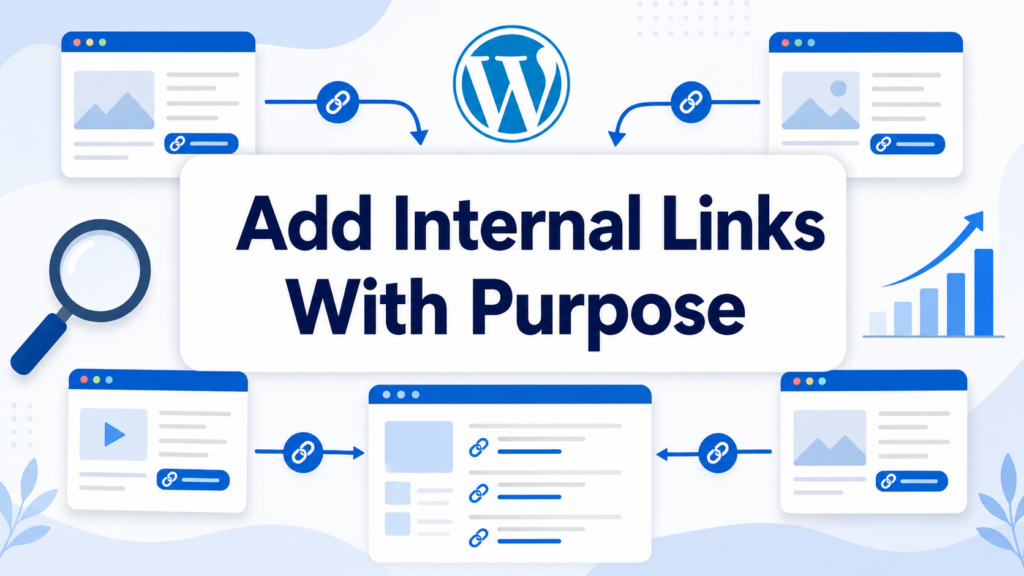
Internal links connect one page on your site to another. They help users discover related information and help search engines understand which pages are important.
Use descriptive anchor text. Instead of “click here,” write something like “WordPress SEO checklist” or “technical SEO audit guide.” The linked text should describe the destination clearly.
Every important page should receive internal links from other relevant pages. If a page has no internal links pointing to it, search engines and users may have a harder time finding it.
Topic clusters work especially well. Create one main guide around a broad topic, then link to supporting articles that explain smaller subtopics in detail. The supporting articles should link back to the main guide.
Structured data gives search engines extra context about your content. For WordPress sites, common types include Article, BreadcrumbList, FAQPage, Product, LocalBusiness, and Review schema.
Many SEO plugins can add basic schema automatically. However, you should still check whether the schema matches the page type. A blog post should not pretend to be a product page. A FAQ schema should only be used when real FAQ content appears on the page.
Structured data does not replace strong content, but it can help search engines interpret your page more accurately.
A footer is not just a design ending. It can support trust, navigation, and internal linking. A good footer may include contact information, privacy policy, terms, important service pages, social links, sitemap links, and location details when relevant.
Avoid stuffing the footer with dozens of keyword-heavy links. Keep it clean and helpful. The best footer answers a simple question: what might a visitor need after reaching the bottom of the page?
SEO is not a one-time setup. After publishing and optimizing pages, you need to measure performance. Google Search Console can show impressions, clicks, click-through rate, indexing issues, search queries, and Core Web Vitals data. Google describes Search Console documentation as part of its tools for helping site owners improve crawlability, indexing, and content understanding.
Track which pages gain traffic, which pages decline, and which keywords bring visitors. If a page has many impressions but low clicks, improve the title and meta description. If a page gets clicks but users leave quickly, improve the content, layout, or page speed.
Also update old content. Remove outdated examples, refresh screenshots, add missing sections, and improve internal links. SEO grows stronger when your site stays maintained.
To improve SEO on ووردبريس, start with the basics: allow indexing, use clean permalinks, confirm your sitemap, and choose a reliable SEO plugin. Then build a clear site structure, write helpful content, optimize titles and headings, improve speed, support mobile users, add purposeful internal links, use structured data carefully, and monitor results over time. WordPress gives you the platform, but consistent SEO work turns that platform into a stronger search asset.
1. What is the best way to improve SEO on WordPress?
The best way is to start with the basics: allow search engine indexing, use clean permalinks, install a reliable SEO plugin, improve site speed, publish helpful content, and build strong internal links.
2. Do I need an SEO plugin for WordPress?
Yes, an SEO plugin can make optimization easier. Tools like Yoast SEO, Rank Math, or All in One SEO help manage titles, meta descriptions, sitemaps, schema, and indexing settings.
3. Why are permalinks important for WordPress SEO?
Clean permalinks make URLs easier for users and search engines to understand. A short, descriptive URL can improve clarity and support better page relevance.
4. How does site speed affect WordPress SEO?
A faster site improves user experience and can support better SEO performance. Compress images, reduce unnecessary plugins, use caching, and choose reliable hosting.
5. How often should I update WordPress content for SEO?
Review important pages every few months. Update outdated information, improve headings, add internal links, refresh examples, and make sure the content still matches search intent.
6. What are internal links in WordPress SEO?
Internal links connect one page on your site to another. They help visitors discover related content and help search engines understand your site structure.