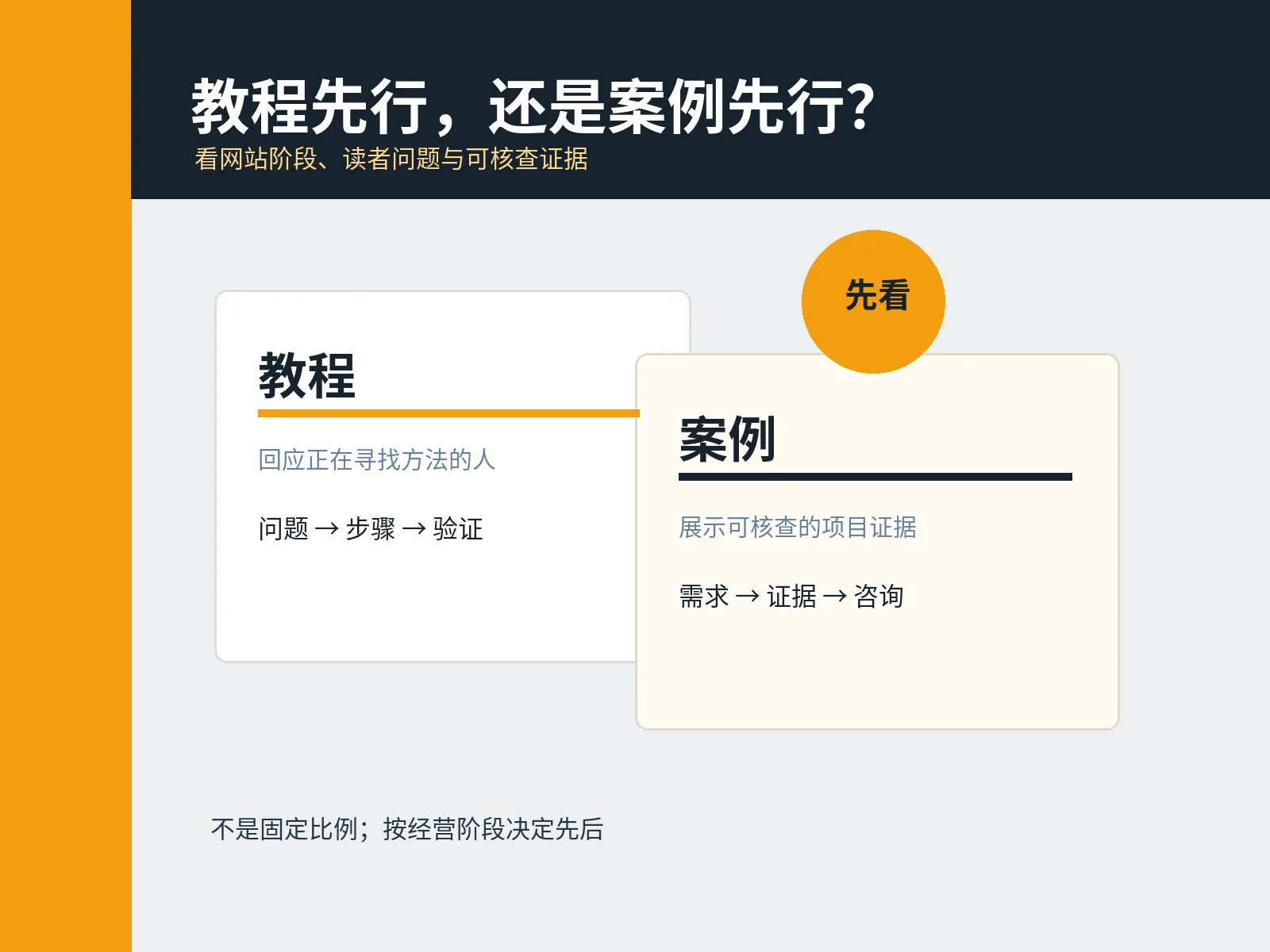
Should brand website blogs write platform tutorials or customer cases first? ? If the website has just been launched and readers are still looking for operational answers, use tutorials to solve specific obstacles first; if there are already projects that are authorized and fact-verifiable, and readers are comparing cooperation options, use cases to answer “Can you do it well?” The two types of content are not competing for the same position: tutorials help readers complete tasks, and cases help readers judge whether the service is suitable for them. The actual publishing order should be determined by a combination of site stage, search intent, and evidence at hand.
Find out what the reader wants to accomplish first, and then decide what to write in the first article
First, list the recent sales inquiries, customer service questions, site searches, and questions in the search results. If any type of problem appears specific and repeated, and there are verifiable solution steps, write it as a tutorial first; if any type of question revolves around delivery scope, design quality, collaboration methods, and risks, prepare a case with evidence. The “priority” here is the editing order, not a fixed ratio of tutorials to cases, nor a formula to ensure traffic.
New website: first create content that can answer basic questions
The new brand website may not yet have a mature case library. At this time, you can start with high-frequency practical issues such as platform selection, website development preparation, product information organization, and homepage information structure. Each tutorial only solves a specific task, clearly describing the applicable objects, preparation materials, operation sequence, common stuck points and how to self-check after completion. For example, when discussing the purpose of the website, you can first let readers read The difference between brand website and official website , and then guide to more specific implementation plans from the text. This link is to help readers continue to make judgments, not to force all articles into the same navigation bar.
If you have a project: verify the evidence first, then write a customer case
If you already have a project, don’t rush to take a screenshot of the homepage and add “significantly improve conversions” and call it a case. First confirm whether the client and project names can be disclosed, which screenshots are authorized, what are the project goals, scope of responsibility, problems before the revision, and verifiable changes after the launch. Without data, the design judgment and delivery process should be written truthfully; subjective evaluation cannot be packaged as order growth. Google’s guidelines for human-centered content Emphasize original information, personal experience, accuracy, and credible sources; this is why cases are more useful than empty propaganda. If the evidence is insufficient, first publish a tutorial that can solve the problem independently, and establish a checklist of case materials.
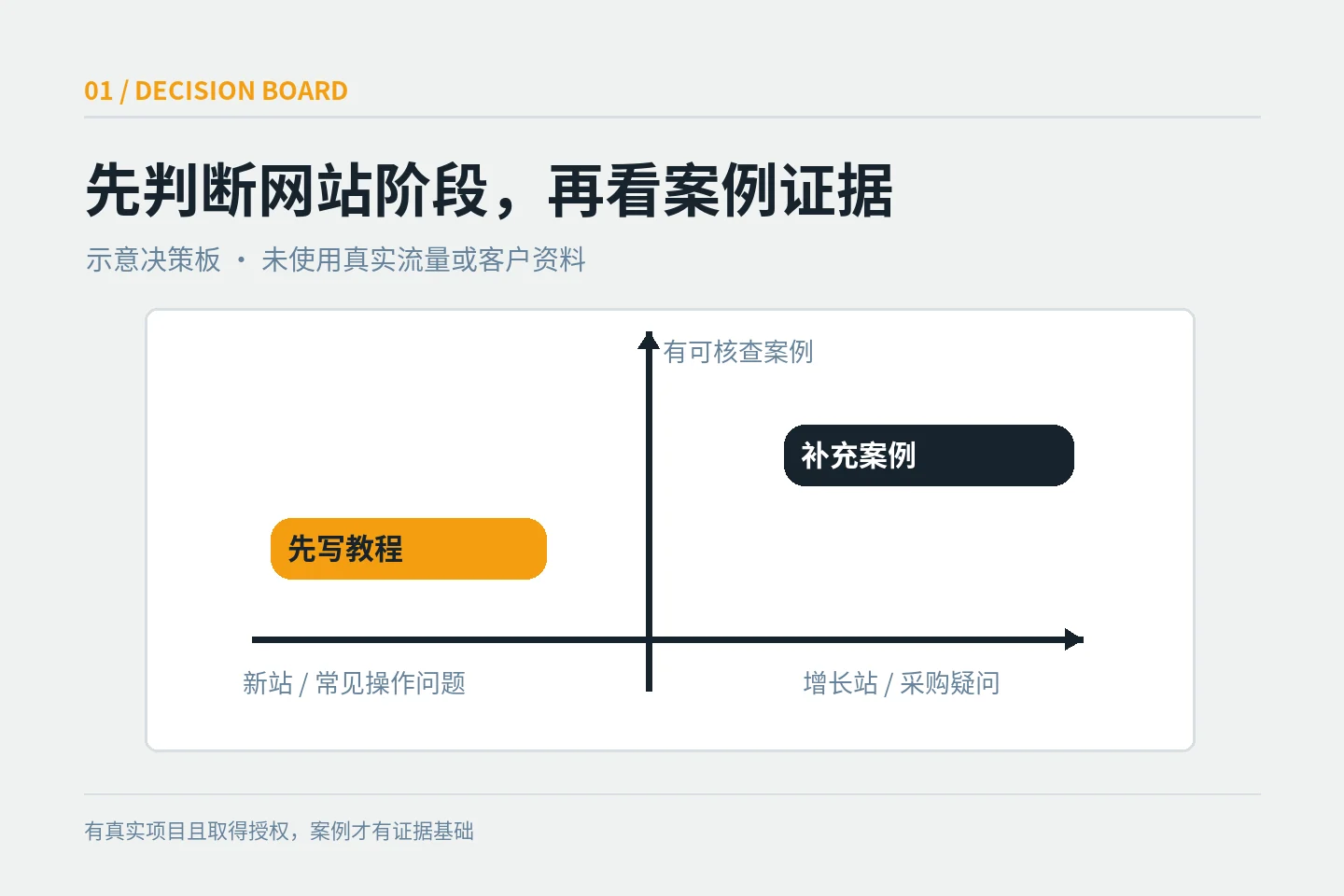
Platform tutorials and customer cases each perform different tasks.
Tutorials can’t just list buttons, and cases can’t just list beautiful pictures. The core delivery of the tutorial is that readers can complete a step after following it; the core delivery of the case is that readers can understand how this team dealt with similar problems after reading it. Both can bring customer inquiries, but customer inquiries are not their only or immediate indicator. The comparison table below is used to decide the topic and CTA. The specific method should be adjusted according to the type of business.
| Dimensions | Platform tutorial | Real customer cases |
|---|---|---|
| reader question | How to use specific functions and how to complete it in one step | How similar projects are planned, delivered and verified |
| necessary evidence | Actual steps, version or applicable boundaries, reviewable sources | Client Authorization, Authentic Page, Project Scope, Verifiable Facts |
| suitable for action | Continue reading the list or view the corresponding service process | View scope of delivery or inquire with project requirements |
| Common mistakes | The screenshot is expired, lacks conditions, and only gives the conclusion. | No authorization, no process, write inferences as performance |
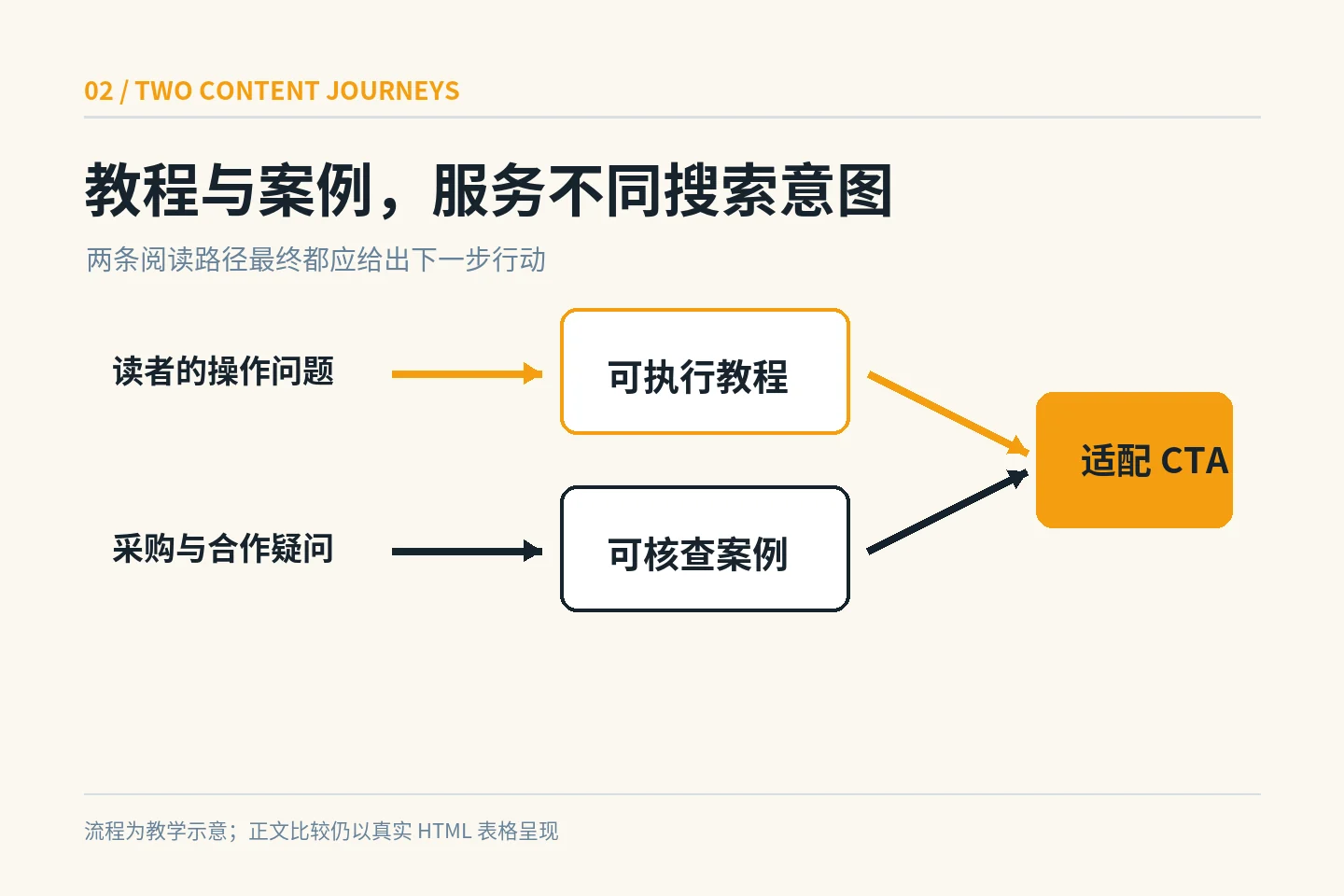
Three website scenarios to determine your first round of content order
Scenario 1: Just launched, there are almost no projects to be disclosed
First write a basic tutorial that readers can use immediately, and put an appropriate next step at the end of each article instead of inserting a consultation button in every paragraph. For example, “What materials are needed for a website design proposal?” can handle searchers in the preparation stage: readers read first Website design proposal list , and then decide whether you need help sorting out the requirements. The goal of this stage is to prove that the team can explain the problem clearly and prepare the project materials that need to be recorded in subsequent cases.
Scenario 2: I already have a customer inquiry, but I am always asked about the scope of delivery.
This shows that readers not only want to learn operations, but also reduce procurement risks. While maintaining tutorial updates, real projects can be broken down into verifiable cases: what are the customer’s original pages, what are the needs, what is the team’s responsibility, which decisions involve the customer, and which pages have been delivered online. Cases do not necessarily require ambitious data; for professional services, clear boundaries of responsibilities and design reasons can also answer readers’ questions. If readers are concerned about how the B2B official website leads to consultation, they can guide you to read Foreign trade B2B official website homepage and customer inquiry path , and then compare the specific cases.
Scenario 3: Already have a fully authorized real project
At this time, you can publish a project case first, and then write a tutorial around the technology or design choice that is most worthy of explanation in the case. The case pages provide context and decisions, and the tutorials assume a transferable approach. For example, when showing the information structure of a certain homepage, don’t just write “more advanced visuals”; you should explain how the navigation, first-screen proposition, product entrance and consultation path correspond to the actual business. If the customer does not allow certain screenshots or data to be disclosed, delete the relevant parts and explain the scope of display, and do not pretend to deliver the actual product with a redrawn fake interface. The content combination formed in this way can not only help people watching the case understand the method, but also allow people watching the tutorial to find verifiable project background.
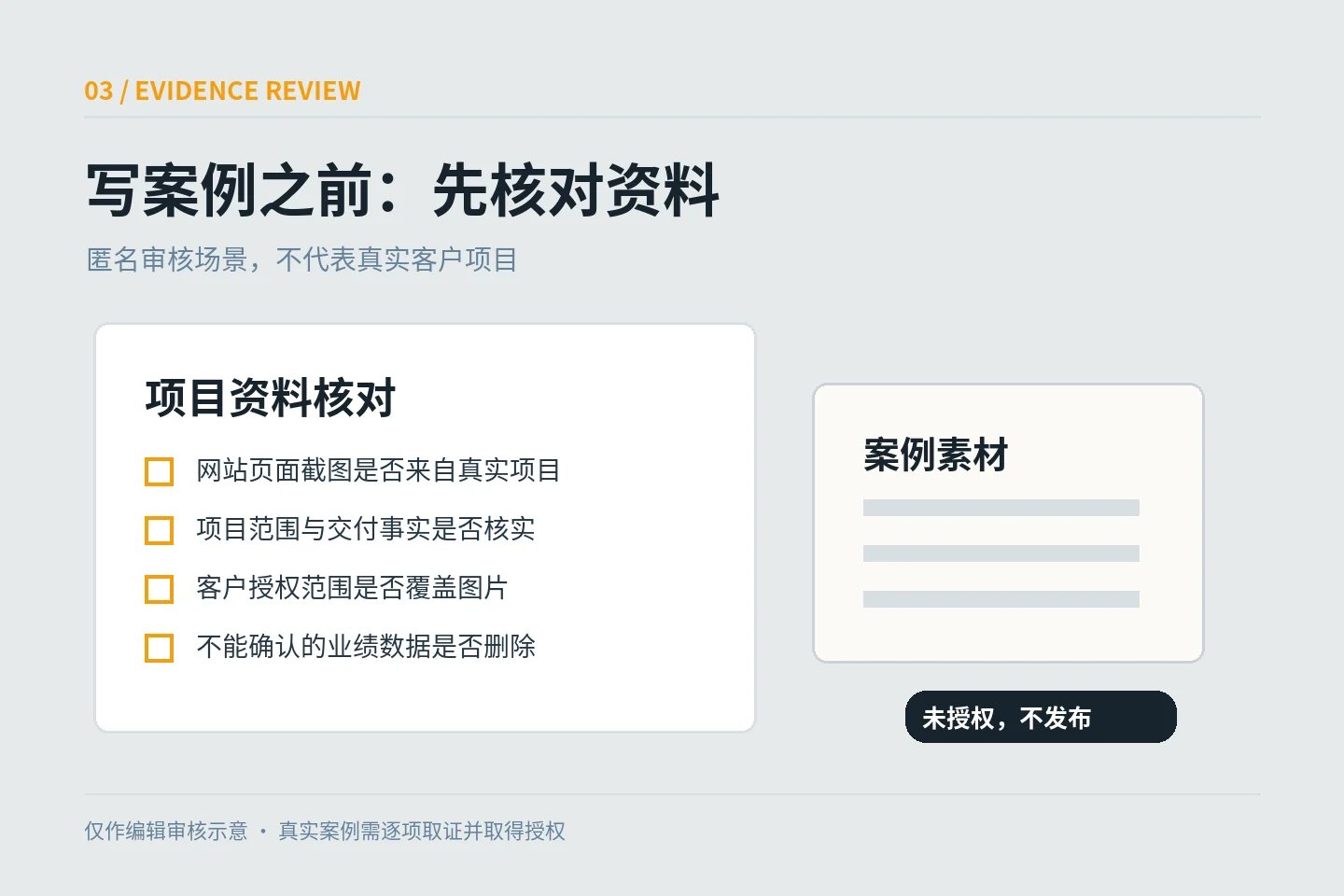
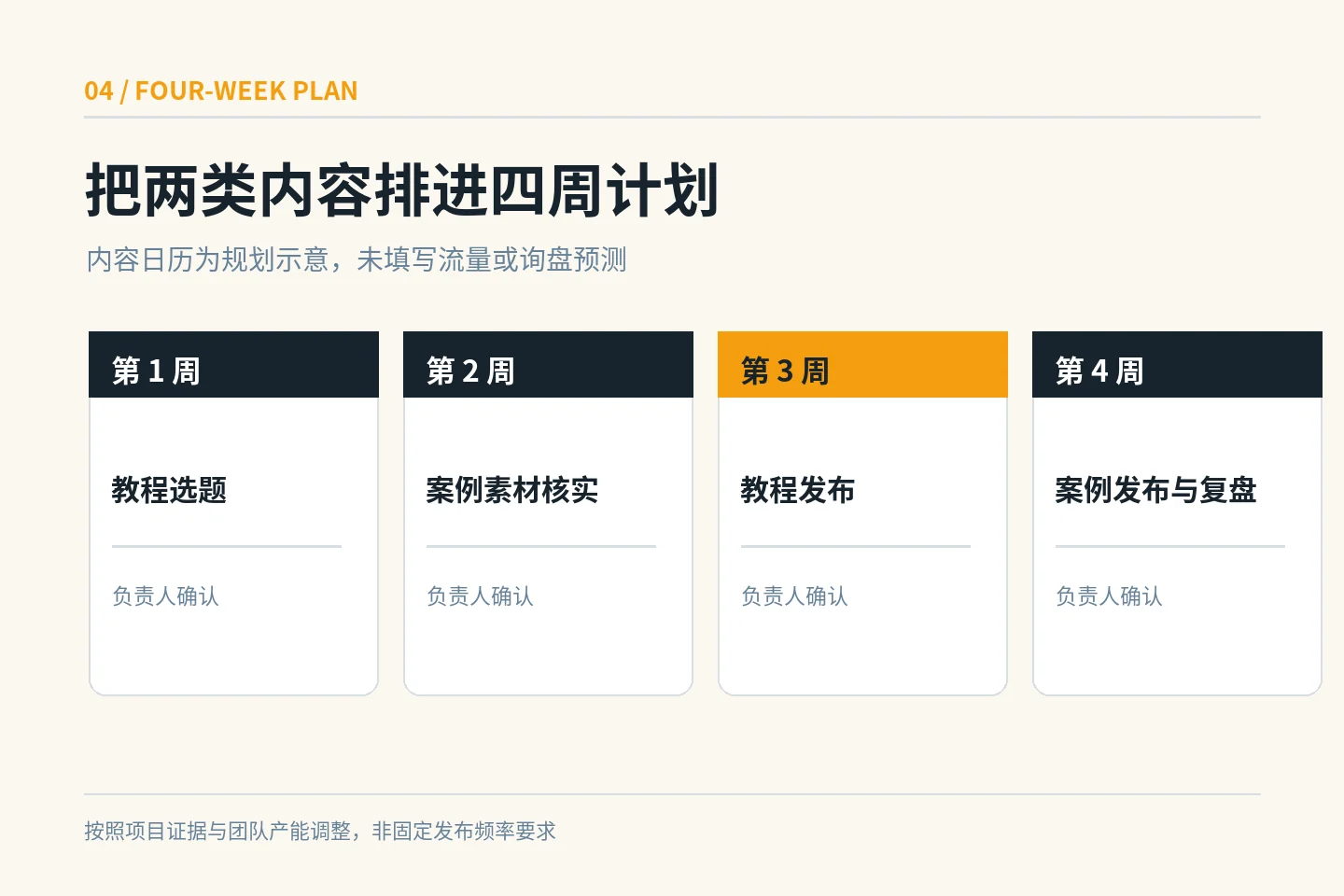
Use four small plans to connect the two types of articles
There’s no need to commit to dozens of articles at once. First pick a main service and a typical reader question, and arrange the editing actions for four weeks: interview sales and delivery personnel in the first week to confirm the problem and search intention; complete a tutorial in the second week and check the steps; obtain case authorization, organize background and screenshots in the third week; publish the case in the fourth week, add two-way internal links and review the quality of the consultation. This is an adjustable working principle, and not all companies must copy the release frequency.
Tutorial connection case: let the method have a scene
A tutorial on the customer inquiry path on the homepage of the website can be linked to the corresponding design instructions in the real project after “what information needs to be placed on the first screen”. The connecting points should be the same question, and the anchor text should also make it clear where to go. If the case has not been written yet, there is no need to put a blank link or make up a “success story” first; record it as an editor’s to-do and wait for the material to be verified before adding it. Every time you update a link, you must review whether the platform version and page structure mentioned in the tutorial are still applicable to avoid old articles leading readers into outdated operations.
Case return method: Make the project more than just a set of screenshots
In the case, you can add a sentence “Why do you do this” next to the key design decision, and then link to the corresponding tutorial; you can also split the case into a series such as home page, product page, customer inquiry path, etc., but each article needs to have independent questions and new evidence. Don’t post the same set of pictures several times with different titles. Shopify’s Blog Strategy Guide Put reader research, keywords, editorial calendar and performance review in the same plan; we connect tutorials and cases here to make editorial recommendations based on the purchase path of the brand website service, rather than citing its result data.
When measuring effectiveness, separate discovery, understanding, and effective action
Don’t just use pageviews to declare which article is the winner. Tutorials usually serve earlier discovery and learning needs, while cases often serve closer to the comparison and consultation stage; the traffic scale of the two is different, and it is not suitable to use a single indicator for comparison. First, set a target action for each article before publishing: Tutorials hope that readers will complete self-checks, access service instructions, or continue reading; cases hope readers will see the delivery boundaries clearly, view related projects, or submit specific requirements. The “please contact me” in the form and the customer inquiry that clearly states the platform, page type, budget or time requirements should also be observed separately.
When observing search exposure and clicks, you can split it by page and query term; Google Search Console Performance Report Instructions Indicators such as clicks, exposure, and click-through rate are introduced, but these are only search behavior data and do not equal the quality of orders or customer inquiries. Actual on-site actions need to be verified using the site’s own statistics or form records, and privacy and tracking settings must be ensured to be appropriate. If the tutorial is read but no one goes to the next step, check whether there is a lack of relevant service entrances; if the case is consulted but the needs do not match, check whether the title, service scope and CTA attract unsuitable readers.
Review the market after four weeks and do not take short-term fluctuations as a conclusion
When reviewing, record the publication time, target query, actual entrance, internal jumps and effective consultations of each article, and then look at which questions have not been answered. It takes time for search results to change, and data for a small number of new articles may occasionally fluctuate, so don’t promise “increasing growth every week.” The truly useful changes are that readers’ questions are clearer, sales have to explain less, or customer inquiries have a more accurate understanding of the service scope. If there is no measurable data, honestly write “not yet verified” and continue to observe in the next round.
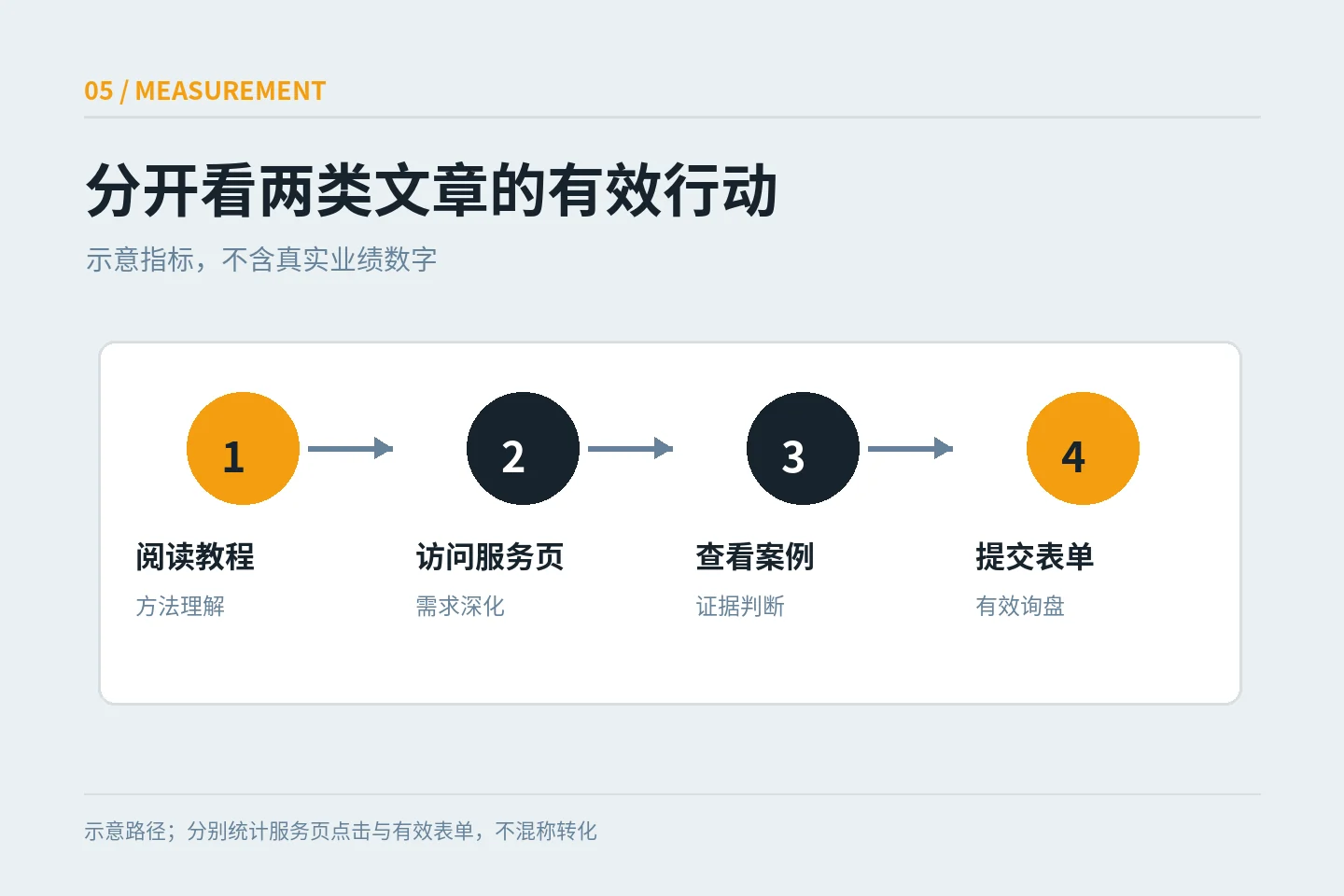
Conclusion: Use reader tasks and real evidence to determine order
The conclusion is: first write the article that can answer the current reader’s question and for which you have evidence. New sites usually start with specific tutorials, and at the same time accumulate authorization and project records for cases. If there are real projects and procurement questions are obvious, let the cases answer “why you believe it” first, and then use tutorials to explain “how to do it.” The two types of content use relevant internal links to form a path from understanding to verification, and measure the effective actions they bring respectively. If you are planning a blog, make a list of the three most frequently asked questions and a list of publicly available project materials before deciding on the first post of the month, rather than debating which is more important: tutorials or cases.