











Introdução
In today’s competitive eCommerce landscape, design is no longer just about aesthetics—it’s about guiding user behavior, building trust, and driving conversions. For furniture-focused brands, especially those offering functional lifestyle products like slipcovers, the challenge becomes even more nuanced: how do you visually communicate comfort, durability, and style—within seconds?
This case study explores how we approached the design of a premium Shopify website for a furniture covers brand, focusing on user experience, visual storytelling, and conversion-oriented layout strategy. Rather than relying on technical complexity, the project was driven entirely by thoughtful design decisions—ensuring that every visual element served a purpose.
| Prazo de entrega | Categoria | Plataforma de Aplicação |
| 29 dias | Furniture Covers | shopify |
| Designers envolvidos | Custo | Efeito |
| Lin Zhang | $3200 | Turnover📈263% |
Understanding the Brand and Market Position
Defining the Core Identity
Before any design work began, we first clarified the brand’s positioning:
- Sofisticado, porém acessível.
- Pet-friendly and family-oriented
- Italian-inspired craftsmanship
- Practical solutions for modern homes
This positioning informed every design decision—from typography and color palette to layout structure and image direction.
Target Audience Insights
We identified key audience segments:
- Pet owners seeking protection for furniture
- Families looking for easy maintenance solutions
- Design-conscious homeowners who value aesthetics
These users are highly visual and emotionally driven. They don’t just buy products—they buy lifestyle upgrades.
Homepage Design Strategy: First Impressions That Convert
Visual Hierarchy and Layout Flow
The homepage was structured to guide users through a natural journey:
- Hero Section – Emotional Hook
- Value Proposition – Quick Clarity
- Product Categories – Easy Navigation
- Lifestyle Imagery – Emotional Engagement
- Social Proof – Trust Building
- Product Highlights – Rational Justification
- Call-to-Action – Conversion Push
Every section was intentionally placed to answer a specific user question.
Hero Section: Selling a Lifestyle, Not a Product
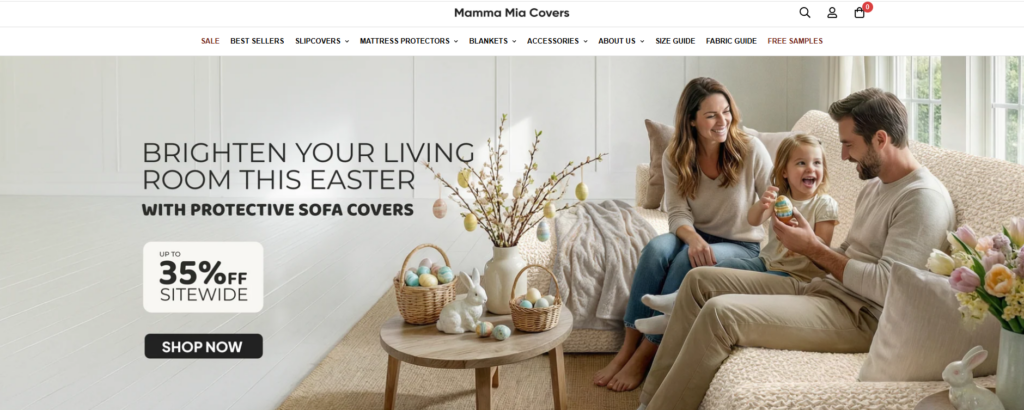
Instead of focusing purely on product features, the hero section emphasizes real-life scenarios:
- Cozy living rooms
- Pets lounging on sofas
- Natural lighting and warm tones
This approach immediately answers the subconscious question:
“Will this fit into my life?”
Design Choices:
- Full-width imagery for immersion
- Soft, neutral color palette to evoke comfort
- Clear headline with benefit-driven messaging
- Minimal distractions to keep focus on the product
Typography and Color System
We selected a combination of:
- Modern sans-serif fonts for readability
- Elegant serif accents for a premium feel
The color palette focused on:
- Warm beige and soft gray tones
- Subtle contrasts to maintain clarity
- Avoiding overly saturated colors to preserve a calm, home-like atmosphere
This balance ensures the site feels both premium and welcoming.
Product Presentation: Clarity Meets Emotion
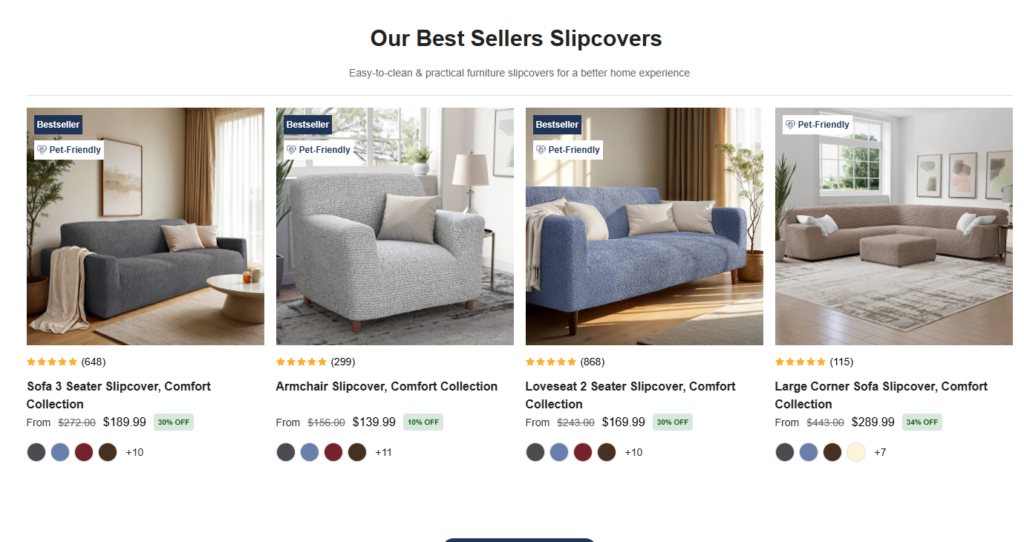
Lifestyle-Driven Product Displays
Instead of isolated product shots, we used:
- Real home environments
- Comparações de antes e depois
- Close-up textures showing fabric quality
This helps users visualize the product in context.
Conversion-Focused Product Cards
Cada cartão de produto foi concebido para:
- Highlight key benefits (e.g., pet-friendly, washable)
- Maintain visual consistency
- Reduzir a carga cognitiva
Key Elements:
- Clean spacing
- Clear pricing visibility
- Subtle hover interactions (design-led, not technical-heavy)
Navigation and User Experience Design
Simplified Navigation Structure
We avoided overwhelming users with too many options. Instead, we focused on:
- Segmentação clara de categorias
- Logical grouping of products
- Sticky navigation for easy access
Smart Filtering Experience
Rather than complex filtering systems, we designed a visually intuitive filtering flow:
- Fabric type
- Color options
- Sofa compatibility
This allows users to quickly narrow down choices without friction.
Construindo confiança através do design
Social Proof Integration
Trust is critical in eCommerce, especially for higher-ticket home products.
We incorporated:
- Customer testimonials
- Lifestyle user-generated content
- Subtle review highlights
These elements were integrated seamlessly into the design—not as intrusive blocks, but as natural parts of the browsing experience.
Sinais visuais de confiança
Instead of overwhelming users with badges, we used:
- Iconografia limpa
- Minimal trust indicators
- Consistent styling
This maintains a premium feel while still reinforcing credibility.
Supporting Pages: Extending the Design System
While the homepage sets the tone, supporting pages reinforce consistency.
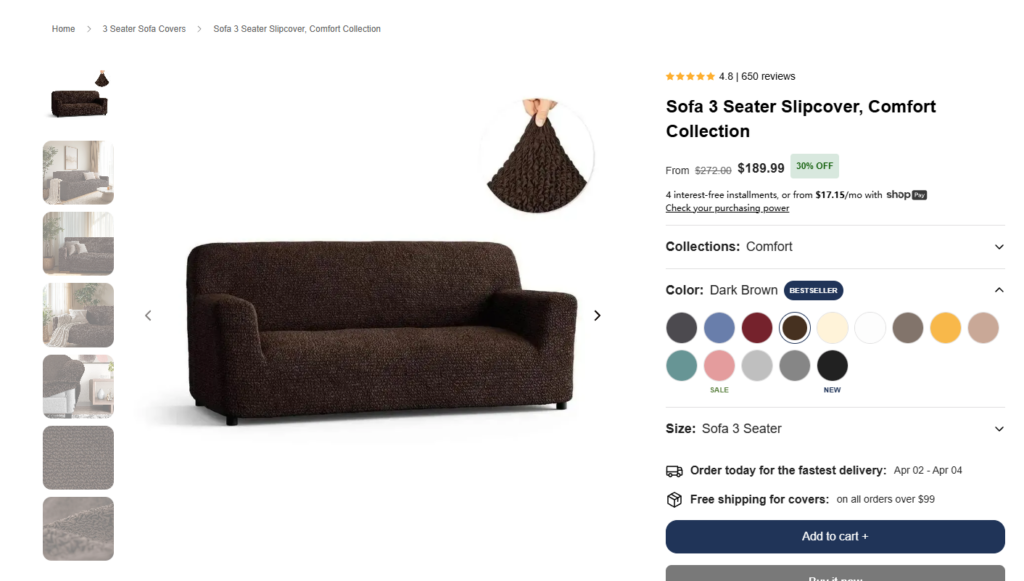
Product Detail Pages (PDP)
The PDP design focused on:
- Clear product storytelling
- Step-by-step feature explanation
- Hierarquia visual forte
Key Sections:
- Fabric benefits explained visually
- Size and fit guidance
- Lifestyle imagery to reinforce usage scenarios
About Page: Humanizing the Brand
The About page was designed to:
- Highlight craftsmanship
- Communicate brand values
- Build emotional connection
Instead of long text blocks, we used:
- Visual storytelling
- Short, impactful copy
- Clean layouts for readability
Collection Pages: Balancing Choice and Clarity
Collection pages were designed to:
- Showcase variety without overwhelming users
- Mantenha espaçamento e alinhamento consistentes.
- Use visual cues to guide selection
Nosso processo de design
1. Research and Discovery
Analisamos:
- Sites concorrentes
- Padrões de comportamento do usuário
- Industry trends
The goal was to identify gaps and opportunities.
2. Wireframing and Structure Planning
Before visual design, we mapped:
- User journeys
- Content hierarchy
- Conversion pathways
This ensured that the design would be both functional and intuitive.
3. Visual Direction and Mood Development
We defined:
- Paletas de cores
- Typography systems
- Image style guidelines
This created a cohesive visual identity.
4. Iteration and Refinement
We continuously refined:
- Layout spacing
- Seleção de imagens
- Copy placement
Every iteration focused on improving clarity and conversion potential.
Desafios que enfrentamos
Communicating Function Through Design
Furniture covers are practical products, but functionality alone isn’t enough.
Challenge:
How to visually communicate durability, flexibility, and ease of use—without relying on technical explanations?
Balancing Aesthetic and Usability
A premium look can sometimes conflict with usability.
Challenge:
Maintaining a high-end feel while ensuring the site remains easy to navigate.
Avoiding Visual Clutter
With multiple product variations and features, there’s a risk of overwhelming users.
Challenge:
Keeping the design clean while still delivering all necessary information.
Nossas Soluções de Design
Visual Storytelling Over Technical Explanation
Utilizamos:
- Lifestyle imagery
- Before-and-after visuals
- Texture close-ups
This communicates product value instantly.
Minimalist Layout with Strong Hierarchy
Garantimos:
- Clear section separation
- Espaçamento consistente
- Focused content blocks
This improves readability and user flow.
Emotion-Driven Design Approach
Instead of selling features, we focused on:
- Comfort
- Convenience
- Lifestyle enhancement
This aligns with how users actually make purchasing decisions.
Perguntas frequentes
A high-converting Shopify furniture store design focuses on clear visual hierarchy, lifestyle-driven imagery, and intuitive navigation. Instead of overwhelming users with features, it highlights key benefits like comfort, durability, and ease of use. Strong product storytelling and trust elements—such as reviews and real-life scenarios—also play a crucial role in guiding users toward purchase decisions.
Lifestyle imagery helps customers visualize how products fit into their daily lives. For furniture covers, showing real homes, pets, and cozy environments builds emotional connection and trust. This approach reduces uncertainty and makes the product feel more relevant, which significantly increases engagement and conversion rates.
Good design improves user experience by simplifying navigation, organizing content clearly, and reducing cognitive load. Elements like clean layouts, consistent spacing, and easy-to-use filters help users find what they need quickly. A well-structured design ensures users move smoothly from browsing to purchasing without confusion.
An effective Shopify homepage typically includes a strong hero section, clear value propositions, organized product categories, lifestyle visuals, and trust-building elements like testimonials. Each section should serve a specific purpose, guiding users step-by-step toward understanding the product and taking action.
Balancing aesthetics and functionality means creating a visually appealing interface without sacrificing usability. This involves using clean layouts, readable typography, and a consistent color system while ensuring all key information remains easy to access. The goal is to create a premium feel that still allows users to navigate effortlessly and make quick decisions.
Resultados e impacto
Improved User Engagement
The design led to:
- Longer session durations
- Higher interaction with product pages
- Increased exploration of collections
Percepção de marca mais forte
Users perceived the brand as:
- Premium
- Trustworthy
- Lifestyle-oriented
Enhanced Conversion Potential
By simplifying navigation and improving clarity, the design:
- Reduced friction in decision-making
- Made product benefits instantly understandable
- Encouraged faster purchasing decisions
Why Design Matters More Than Ever
This project reinforces a key principle:
Good design is not decoration—it’s strategy.
In eCommerce, especially on platforms like Shopify, design directly influences:
- Confiança do usuário
- Product understanding
- Taxas de conversão
A well-designed store doesn’t just look good—it performs.
Conclusão
Designing a high-performing Shopify store requires more than templates or visual polish. It demands a deep understanding of user behavior, brand positioning, and conversion psychology.
From homepage structure to product storytelling, every element of this project was crafted with intention—ensuring that users not only understand the product but also feel confident purchasing it.
Em AIRSANG, we specialize in design-driven eCommerce experiences. From independent site design to product visual strategy, we help brands turn ideas into high-converting digital storefronts. If you’re looking to elevate your Shopify presence through thoughtful design, our team is here to help.

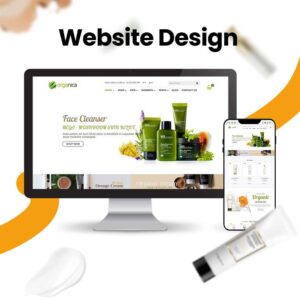
Conceber e construir um sítio Web WordPress ou um sítio empresarial com um sistema de comércio eletrónico completo para si.
Faixa de preço: $200.00 a $2,500.00custom-requirements-or-special-quotations
O preço original era: $2.00.$1.00O preço atual é: $1.00. Explicação do design da imagem principal para o dispositivo de fisioterapia doméstica da Amazon
Introdução: Construindo uma imagem confiável para dispositivos de terapia doméstica na Amazon Ao projetar a imagem principal de um dispositivo de terapia doméstica na Amazon, nosso principal...
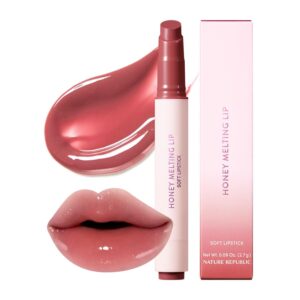
Design da imagem principal para conversão de batom da Amazon
Introdução: Conceber uma imagem principal de batom que vende na Amazon Quando concebemos uma imagem principal para um batom da Amazon, a nossa responsabilidade vai muito além...

Como os hackers roubam e-mails de administradores do WordPress (e como impedi-los)
Vamos começar com uma verdade incómoda: o seu e-mail de administrador do WordPress é provavelmente muito mais público do que pensa e os hackers? Eles adoram isso. Para eles, o seu...
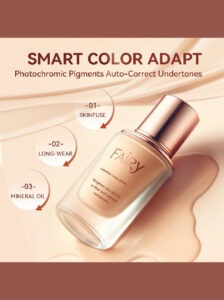
O que faz uma base líquida da Amazon converter a imagem principal?
Introdução: Criar uma imagem principal para a base líquida da Amazon não se resume apenas a deixar o produto bonito. Na Amazon, a imagem principal e...
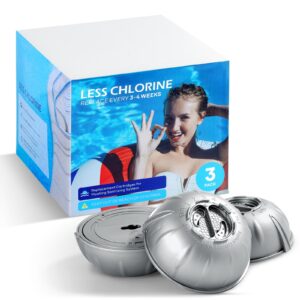
Como projetar uma imagem principal eficaz para cartuchos de filtro Amazon
Introdução: Criar uma imagem principal para a Amazon nunca se resume apenas a tornar um produto atraente. Trata-se de clareza, confiança e compreensão imediata — especialmente para...
Ataques de repetição no WordPress: ameaça real ou mito exagerado?
Vamos esclarecer uma coisa primeiro. Ataques de repetição não parecem assustadores. Eles não quebram senhas. Eles não injetam código malicioso com texto verde de hacker voando por toda parte. Eles são sorrateiros...
Como duplicar páginas do WordPress sem danificar nada
Vamos ser sinceros. Às vezes você não quer criar uma página nova. Você só quer a mesma página… mas um pouco diferente. Mesmo layout. Mesmos blocos. Mesmas configurações. Porque….
Comparativo de cinco temas WordPress para animais de estimação
Introdução Escolher o tema WordPress certo para o seu negócio de animais de estimação é mais do que uma decisão de design — afeta diretamente a usabilidade, a escalabilidade e o crescimento a longo prazo. Cuidados com animais de estimação e...
Comparando cinco temas de e-commerce de moda praia
Introdução: Escolher o tema certo para uma loja independente de moda praia ou lingerie não é apenas uma decisão visual — afeta diretamente as taxas de conversão, a escalabilidade e o sucesso a longo prazo...
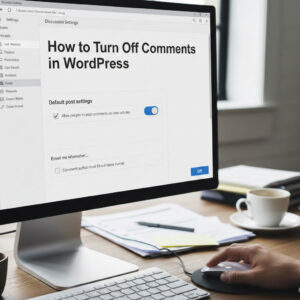
Como desativar os comentários no WordPress (sem enlouquecer)
Vamos falar sobre os comentários do WordPress. Em teoria, os comentários são ótimos. Eles incentivam a discussão, constroem comunidade e dão vida ao seu site. Na prática? Muitas vezes, eles atraem...

Criando um site WordPress escalável para uma marca voltada para a ciência: o projeto AminoUSA
Introdução No cenário digital atual, um website é mais do que um lugar para listar produtos. Para marcas com foco em ciência que atuam em setores regulamentados ou voltados para pesquisa, um...
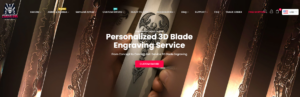
Construindo uma loja Shopify escalável para uma marca global de lâminas: O Projeto CoolKatana
Introdução No comércio eletrônico internacional, um site Shopify é muito mais do que uma vitrine. Para marcas que atuam em nichos de mercado e categorias culturais específicas, o site precisa fazer muito mais do que...
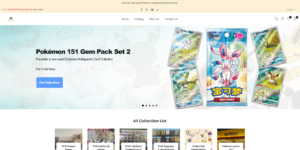
Criando uma loja Shopify de alta conversão para cartas Pokémon.
Introdução No mundo do comércio eletrônico de itens colecionáveis, especialmente no mercado do Pokémon Trading Card Game (TCG), um site precisa fazer mais do que simplesmente listar produtos...
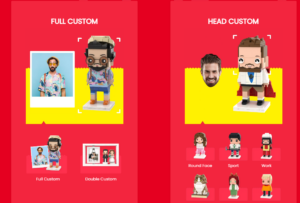
Design Shopify de alta conversão para uma marca de tijolos personalizada.
Introdução No cenário competitivo do comércio eletrônico atual, especialmente no segmento de presentes personalizados e itens colecionáveis, um site Shopify precisa fazer muito mais do que simplesmente exibir produtos. Ele...
Como entrar em contato com o suporte da Shopify: um guia simples e sem complicações.
Gerir uma loja Shopify deve ser uma experiência empolgante, não confusa. Quando surgem dúvidas ou problemas que atrapalham o seu trabalho, a Shopify oferece diversas opções de suporte, dependendo da situação.
Como desativar uma loja Shopify: um guia claro e prático
Desativar uma loja Shopify não é complicado, mas acarreta consequências que muitos lojistas ignoram. Este guia explica o processo de forma simples e didática...
Estudo de caso de design de website Shopify para uma marca de flores premium
Introdução No cenário competitivo do comércio eletrônico atual, um site Shopify precisa fazer muito mais do que exibir produtos. Ele precisa comunicar o valor da marca instantaneamente, guiar os usuários...
Estudo de Caso de Design da Shopify: Loja de Jogos Retrô
Introdução Em um ambiente de comércio eletrônico altamente competitivo, a clareza visual e a conexão emocional muitas vezes determinam se um visitante se torna um cliente. Isso é especialmente verdadeiro em...