Project overview
Product pictures of motorcycle armor and kneepad suits need to explain the protective structure, wearing details and size selection separately. This case focuses on the existing 7 Russian works of Ozon, dismantling the arrangements for product identification, theme description and condition verification. For brands and sellers who are preparing to produce pictures of similar products, the focus is not only on the style of the pictures, but also on understanding how different pictures distribute information so that product-related questions have corresponding reading positions.
| Dienstleistungen | Industry | Plattform |
| Ozon product primary and secondary product images design | clothing apparel | Ozon |
| Project requirements | target market | design style |
| Explain protective structure, wearing details and size selection separately | Russia | Hardcore sports, functional protection, strong vision |
| project budget | Delivery content | Delivery time |
| ¥500 | 7 case display pictures | 5 working days |
design challenge
For protective clothing, you need to clearly see the covered parts, but also check the suit, wear and size. The picture group should separate structural description and scene expression, and avoid using action photos to replace specific parts and code selection information.
Design strategy: Let the entire group of works form a clear information relationship
01 Allocate information tasks first, and then arrange the key points of the screen
The work is expanded according to “Suit Overview → Covered Parts → Contents → Wearing Structure → Local Details → Activity Scene → Size Chart”. Figure 1 establishes the identification first, and then switches the composition and description position according to the actual theme. This division of information allows different questions to have their own place, reducing the need to pile up all the text in the first image, and preventing subsequent images from simply repeating the same product photo.
02 Use a consistent visual language to connect different reading tasks
The black armor with red edges, the white and red headlines and the mountain background form a sports theme; the guide lines, detail cards and size charts are responsible for rational checking. The unified style serves the entire group identification, and composition changes serve different contents; the main title, auxiliary labels and product proportions in the picture jointly determine the reading order.
03 Reduce the explanation to specific parts, actions or choices
The focus of this series of works is to explain the protective structure, wearing details and size selection separately. When dismantling, look at the correspondence between the whole machine and parts, themes and conditions: when there is structural information, look at the positional relationship, when there is scene information, look at the objects used, and when there are numbers, look at the categories and limiting conditions. Letting each picture answer a specific question has more explanatory value than repeatedly emphasizing the excellence of the product.
Dismantling the work: explaining the screen arrangement and information responsibilities of each picture
Figure 1 | Overview of the package: first clarify the complete purchase object
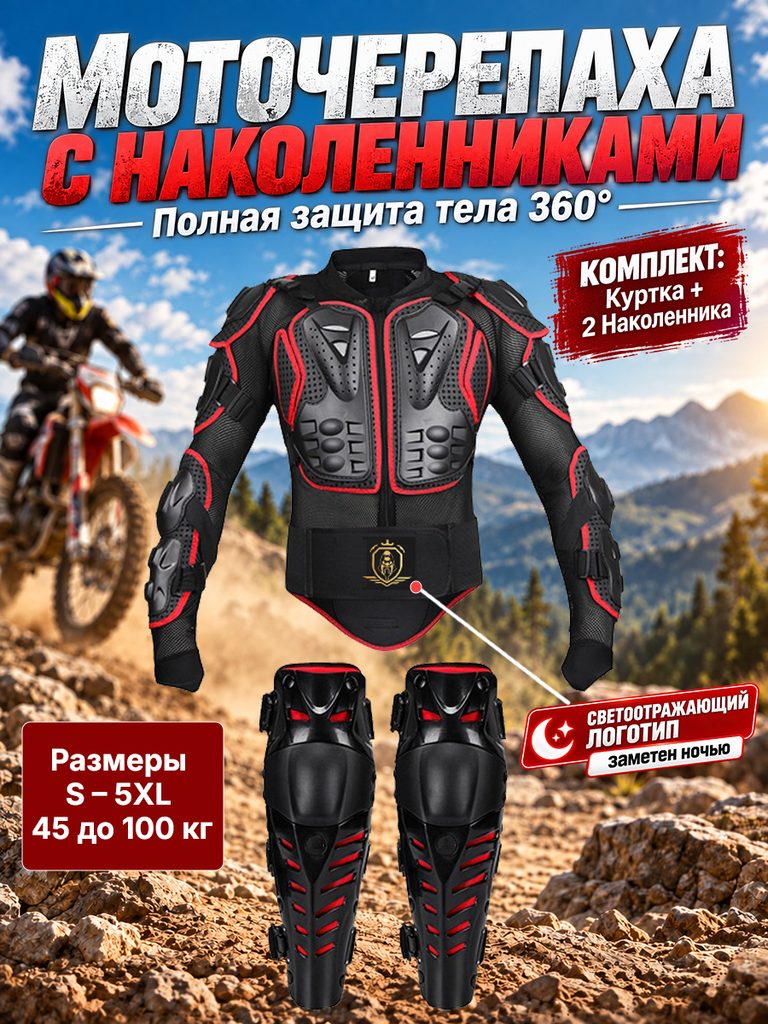
The armor is displayed separately in the center with the two knee pads, with a cyclist figure in the background and a red information box complementing the size range and theme of the set.
The first picture gives priority to displaying the purchase object, and does not let the sports background cover the product; the number of armor and knee pads has independent identification positions.
Figure 2 | Covered parts: connecting description to actual structure
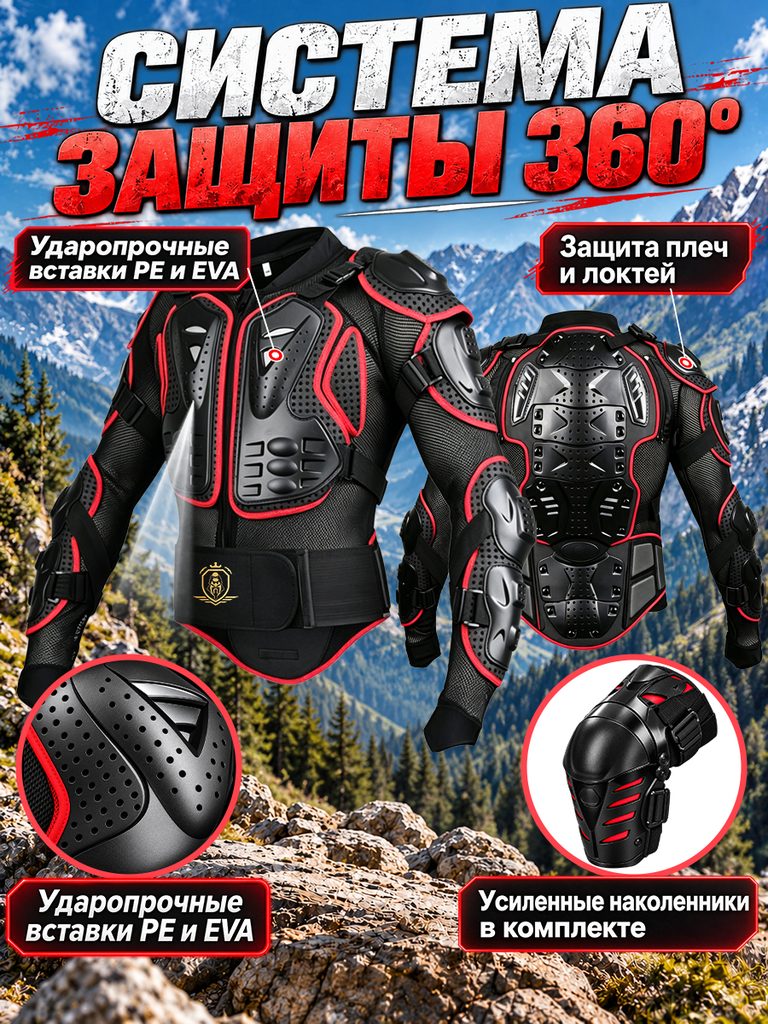
The front and back of the armor are juxtaposed, with partial circular frames enlarging the shoulders, elbows and knee pads, and red guide lines connecting them to the corresponding positions.
The front and back illustrate the overall distribution, close-ups illustrate the parts, and the 360° text is the subject of the picture. Safety certification or protection effects are not presumed.
Figure 3|Contents: Use serial numbers to distinguish armor and knee pads
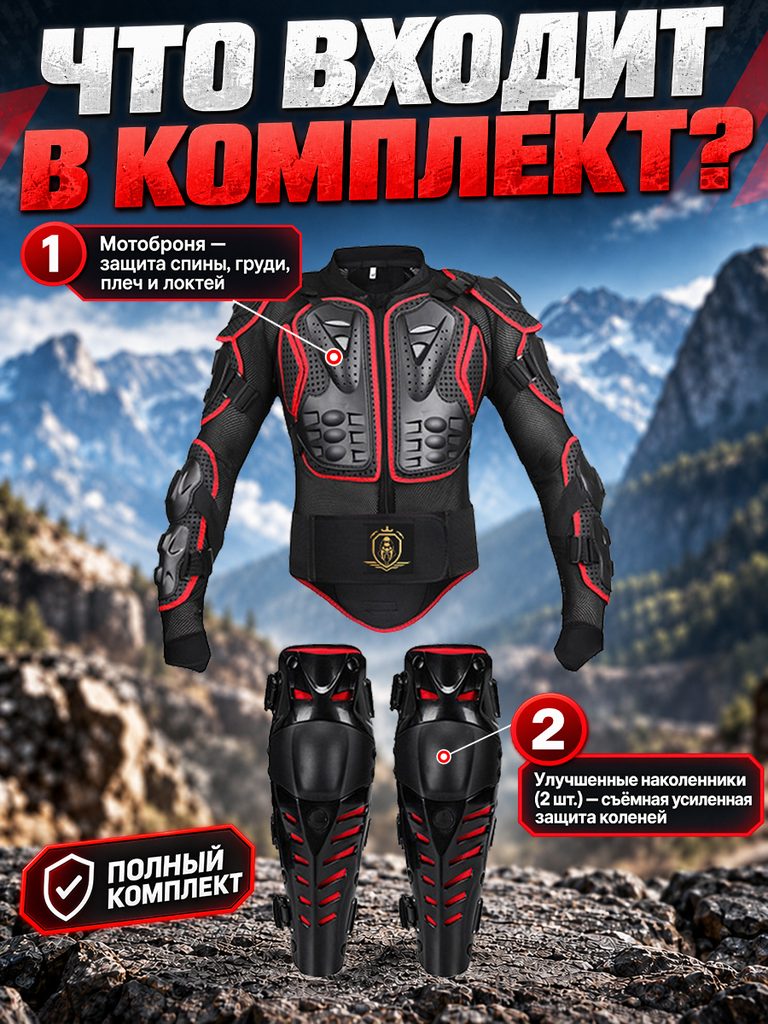
Number 1 corresponds to the armor, and number 2 corresponds to the two knee pads. The entire product and the description box are kept separate on the mountain background.
The serial number supports list verification, preventing consumers from mistaking the scene supplies in the main product image as belonging to a set.
Figure 4 | Wearing structure: arrows and partial diagrams to illustrate the breathability theme
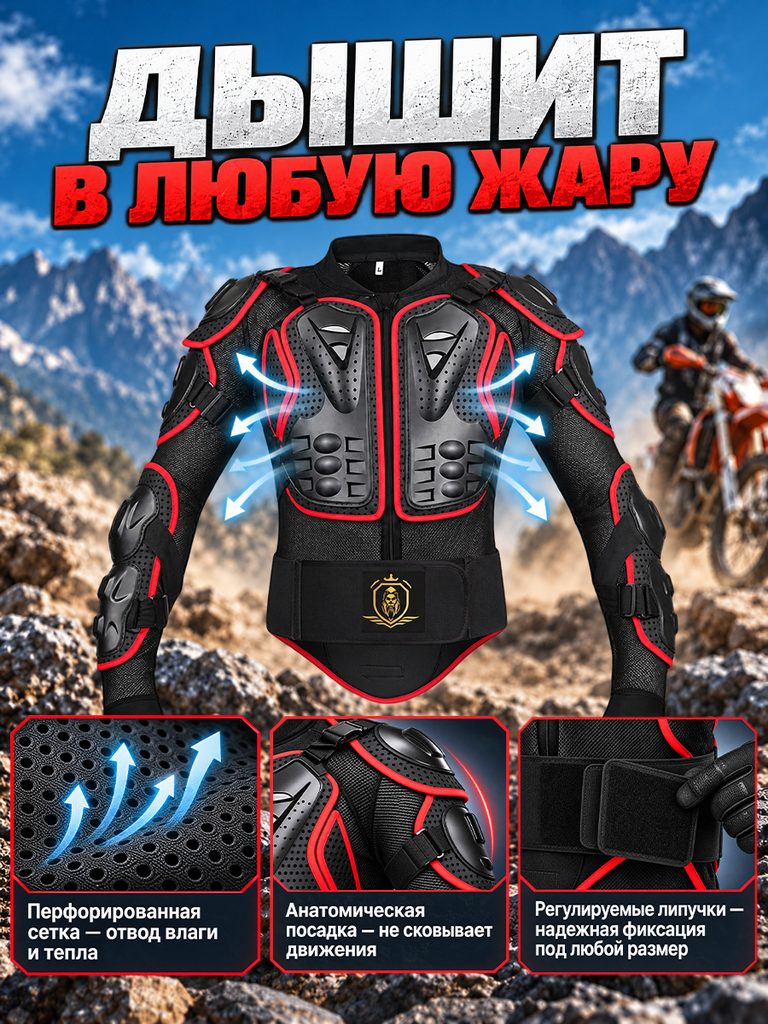
The blue arrows pass through both sides of the armor, and the three boxes below enlarge the mesh, structure and adjustment straps respectively.
The arrows express the theme of airflow, and the partial diagram allows the description to have corresponding parts, which separates the dressing issue from the scene photos.
Figure 5|Local details: four grids of corresponding connections and pads
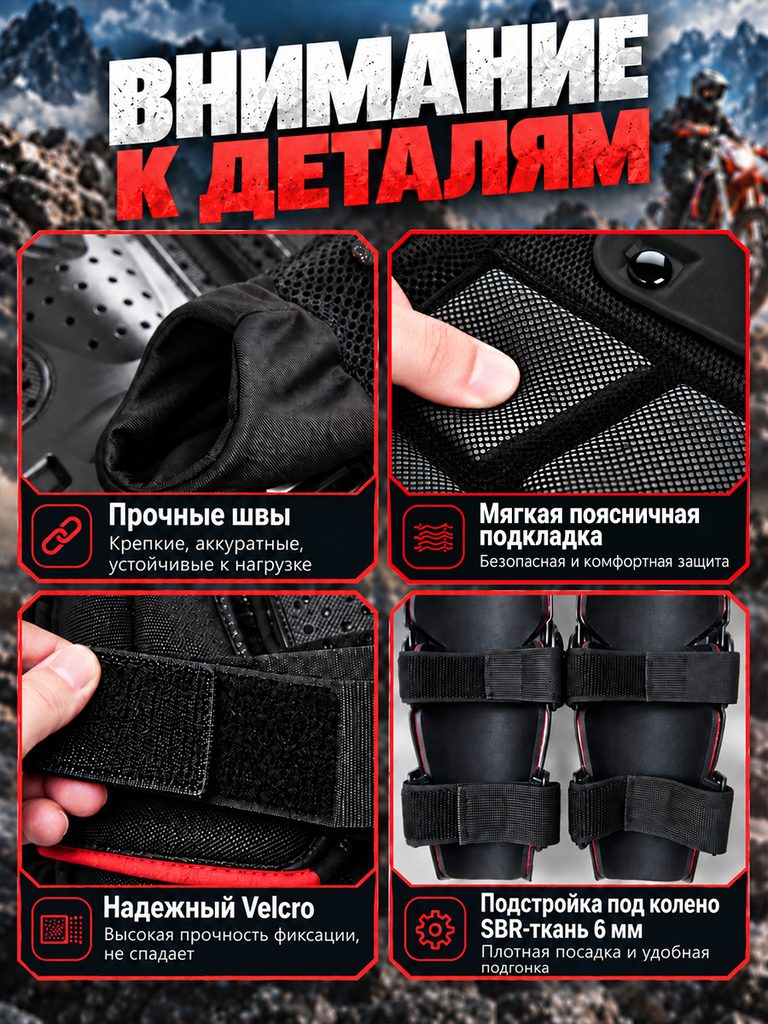
Fingers, seams, waist padding, hook and loop fasteners and knee brace straps appear in four boxes respectively, with red boxes maintaining boundaries.
The details page makes up for the connection and contact areas that cannot be seen clearly on the whole machine, supporting the view of the structure without directly proving the long-term durability results.
Figure 6|Activity scene: showing dressing status in different environments
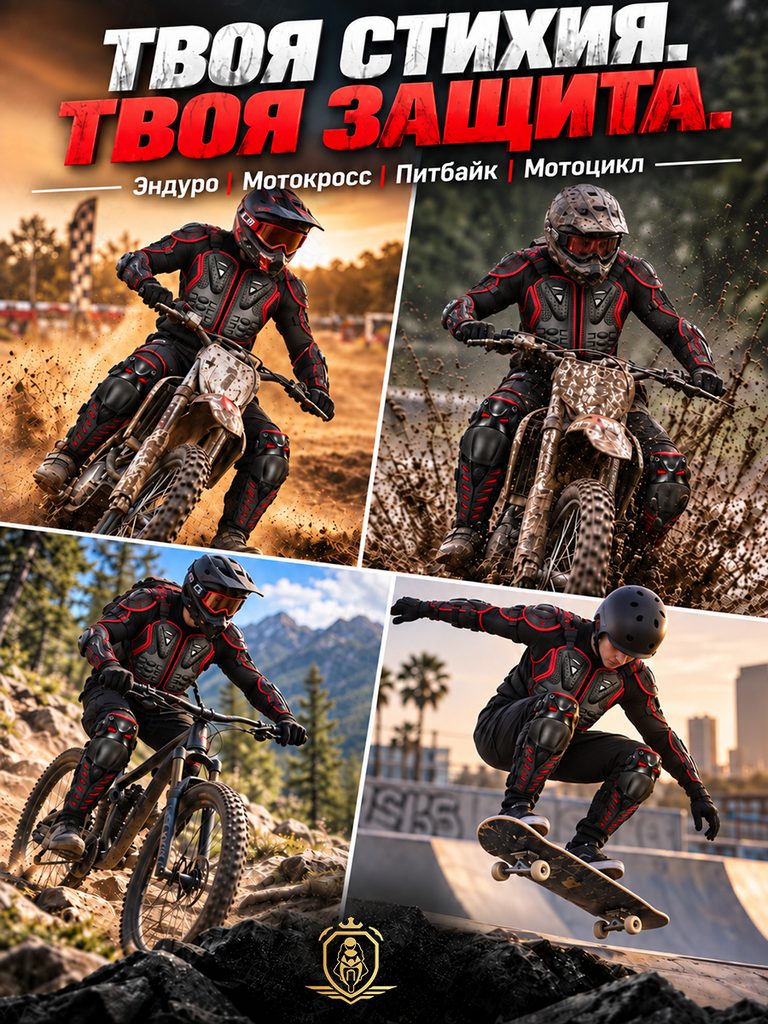
The pictures of riding, bicycles and skateboards are organized into compartments, the armor remains discernible in different actions, and the red title continues the series of identifications.
Scenarios are used to understand the context of wearing. The applicability of specific activities still needs to be supported by product data. Pictures are not used to replace safety judgments.
Figure 7|Size chart: put the values together with the measurement direction
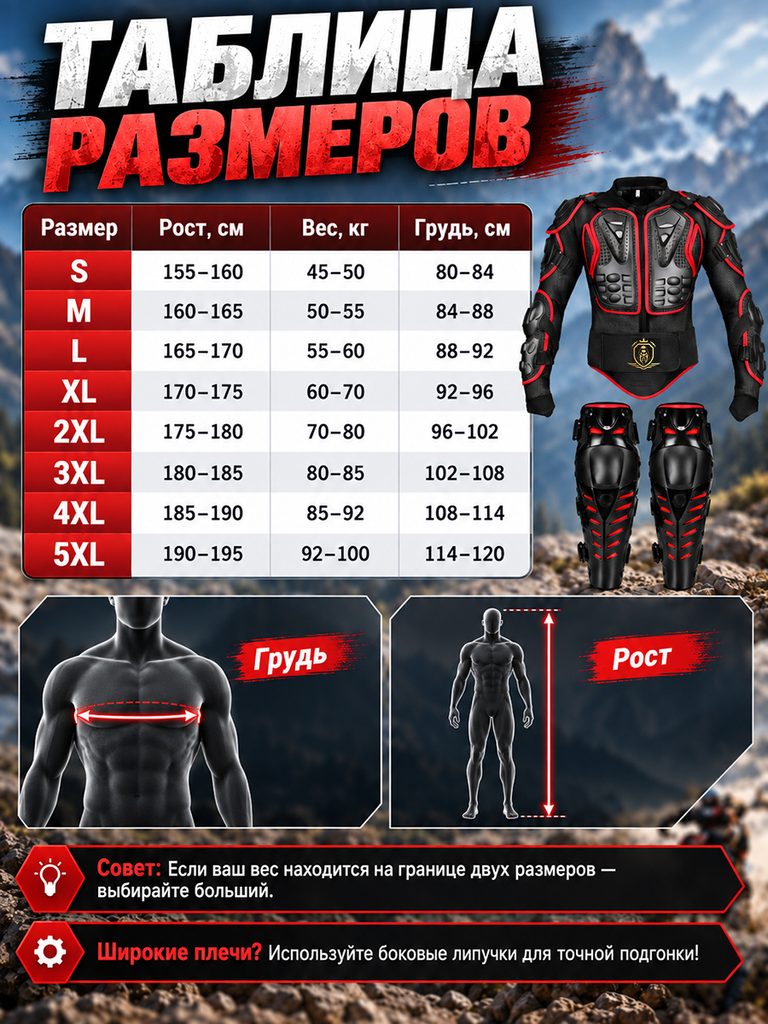
The table lists the ranges from S to 5XL and height, weight, and bust. The figures below indicate the directions for measuring bust and height.
The form is responsible for checking the value, indicating how to measure it, and the last page provides a clear entry for code selection and verification.
Delivery summary and design value
The entire team delivers with a clear division of labor
The 7 works in this case respectively cover “Suit Overview → Covered Parts → Contents → Wearing Structure → Local Details → Activity Scene → Size Chart”. The number of images depends on the actual content, and each image has its own theme while maintaining an overall identity through color, text hierarchy, or composition.
Procurement issues can be more easily mapped to specific information
Focusing on motorcycle armor and kneepad suits, the work will “separately explain the protective structure, wearing details and size selection” into different images. When brands plan similar designs, they can first list the content that consumers need to identify, understand and check, and then determine the tasks and order of primary and secondary product images.
Value is based on interpretive methods and authentic works
The whole machine, part, scene and information cards provide different reading entrances, helping to organize product descriptions more clearly. The value of this case is the visible design expression and information division of labor; changes in click-through rates, sales, and conversion rates require additional statistical or test data support.
The parameters, materials and functions in this article are used to explain the content of the accompanying pictures. The specific specifications, applicable conditions and accompanying items are subject to the product information of the corresponding model.
Plan clearer product images for your Ozon products
If you also need to plan primary and secondary product images for your Ozon motorcycle armor and kneepad set, you can submit product links, existing pictures or product information to AIRSANG, explain the target market and required picture group range, and communicate the information organization and visual direction suitable for the product.
Consultation email: [email protected] · Telephone: 177-5952-2770