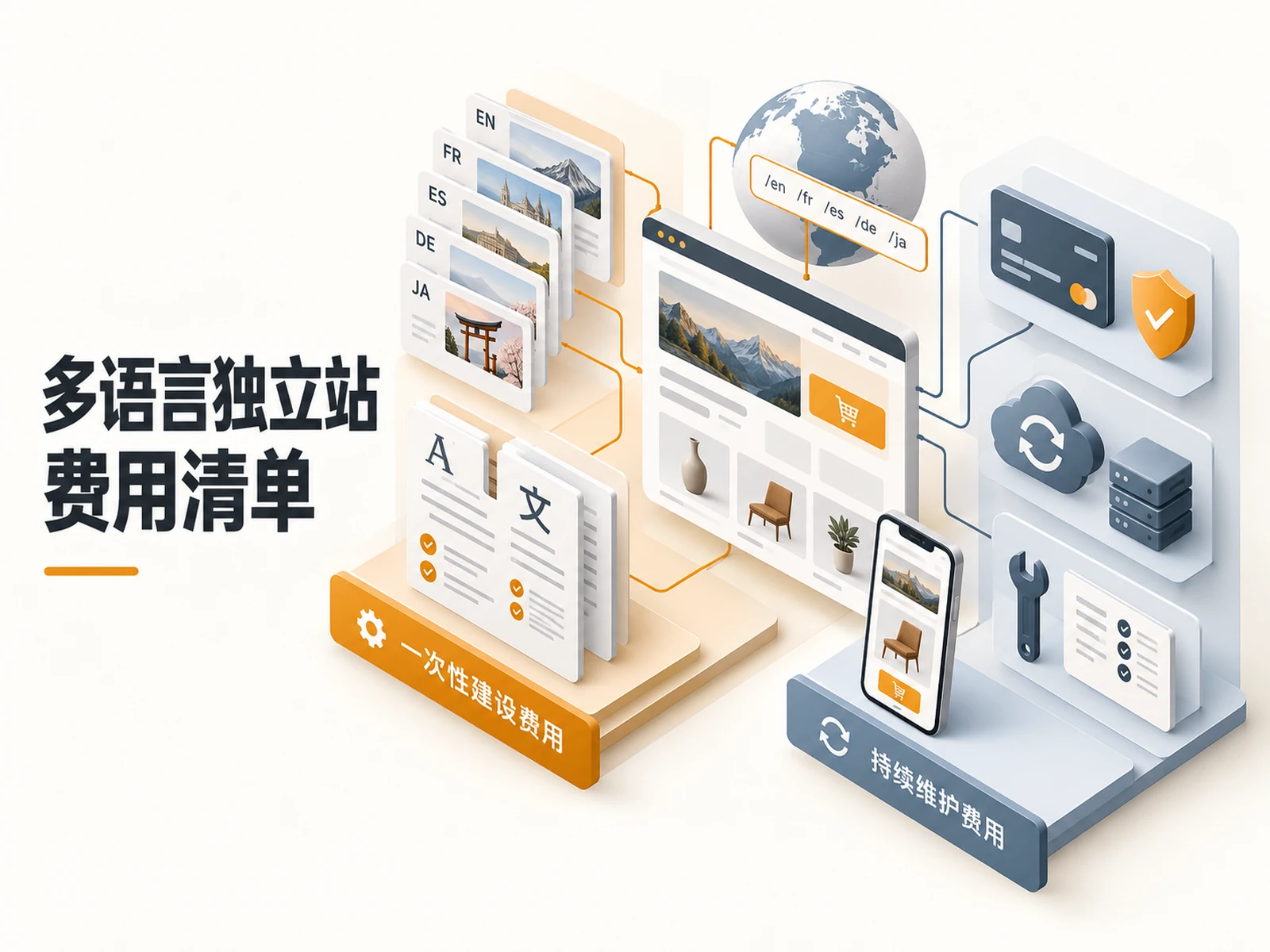
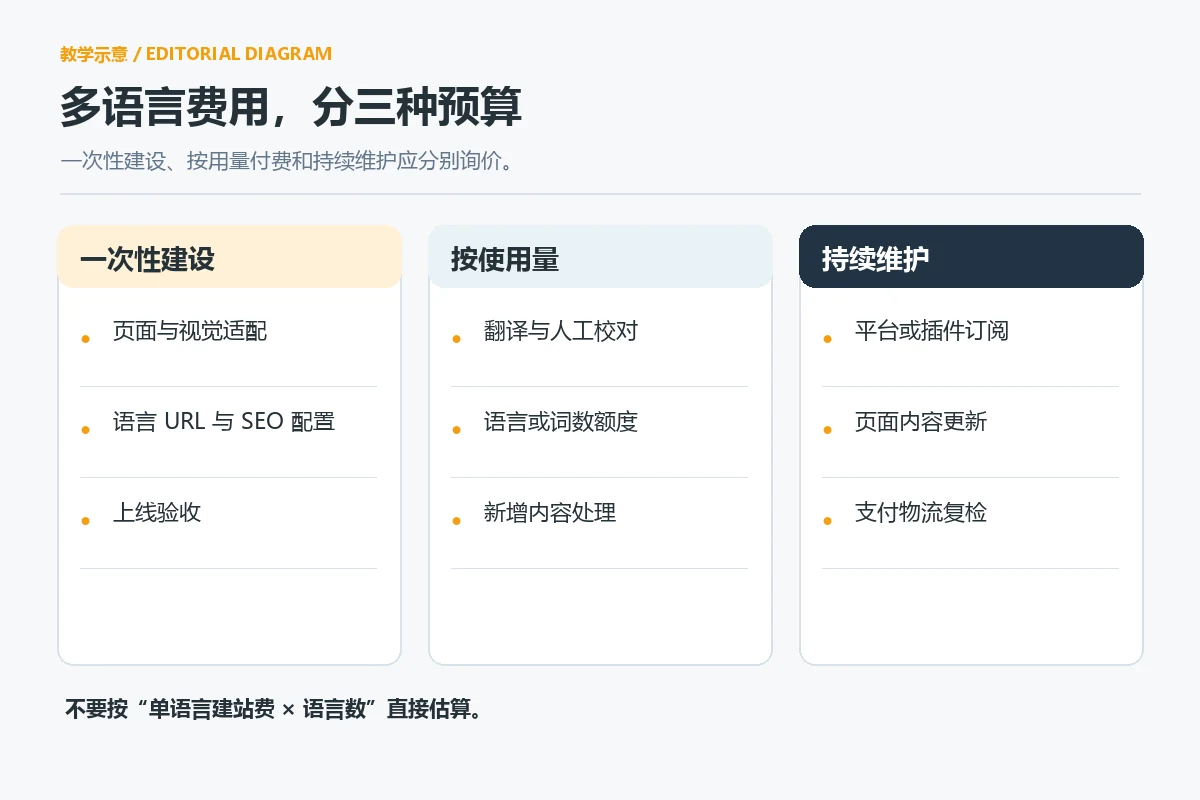
What are the additional costs for a multilingual brand website compared to a single language website? The main increase is Content translation and proofreading, page adaptation, language version configuration, localization of each market transaction, online testing and subsequent maintenance . If you use a translation plug-in or platform localization function, you also need to calculate the subscription fee, number of languages, or amount of translated words. Budgets can’t just be calculated as “original site price times number of languages”: some structures can be reused, and some content must be redone market by market.
First determine the target country, language, number of pages, and update frequency, and then ask the service provider to quote separate quotes for one-time work and ongoing work. If you already have a basic website budget, you can check it first International business website website development cost and budget split ;The following only discusses the additional parts of upgrading from single language to multi-language.
What additional costs will be incurred for a multilingual brand website?
The following items are suitable to be placed directly into the inquiry form. Whether fees are incurred depends on the platform, target market and page scope; the table does not provide unverified fixed prices.
| Expenses | when needed | Ask clearly when quoting |
|---|---|---|
| Translation and manual proofreading | Added language pages, product information, policies and email content | By word count, page or batch; whether glossary and review include |
| Plugin or platform localization | Use subscription-based translation, language management, or advanced marketplace features | How many languages, how many words are supported, which functions are charged separately, and renewal rules |
| Page and visual adaptation | The translation becomes longer, the image contains text, the form or navigation needs to be rearranged | Which templates, images, and mobile breakpoints are covered by each language? |
| Language URL and SEO configuration | Pages in each language need to be discoverable by search engines | Whether the URL structure, hreflang, sitemap, title and description are checked language by language |
| Payment, logistics and policy localization | The target country has different currency, payment, shipping, or legal text | Which markets are online; whether third-party transaction fees are calculated separately |
| Testing and ongoing maintenance | Every time a new product is added, the price is changed, the version is revised, or a language is added | Online acceptance, future synchronization, monthly maintenance and modification rounds |
Translation fee is not equal to “click automatic translation”
Machine translation can help form the first draft, but product specifications, selling points, after-sales commitments and legal policies still need to be checked by someone. Shopify’s Translate & Adapt supports automatic translation of some content. It also explains that the number of languages automatically translated is limited by conditions, and legal policies and other content cannot directly rely on automatic translation. When making an inquiry, it is necessary to distinguish the three delivery levels of “machine initial translation”, “manual polishing” and “local market proofreading”, and indicate the number of reworks and the billing method for new content. Shopify official description
Tool licensing is also an ongoing cost. Weglot’s plan is stratified by the number of translated words and the number of target languages; WPML’s authorization, renewal and automatic translation quotas need to be accounted for separately. They are examples of cost structures for different platforms and cannot be directly added to the same website quote. The specific price changes depending on the package and purchase time. You should open it before signing the contract. Weglot official price list Và WPML automatic translation instructions Review.
The more language versions, the more page and SEO checks
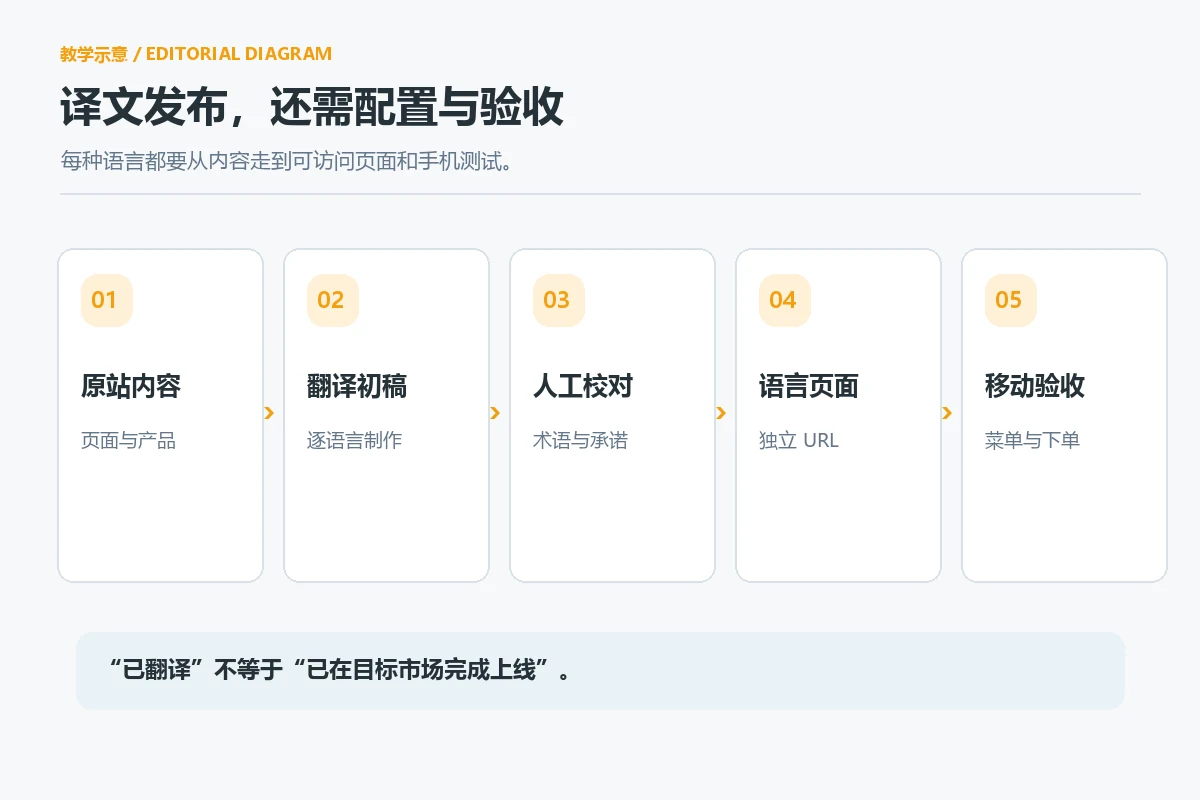
The same page in another language might need wider buttons, different line breaks for titles, or replacement text in images. The home page, product page, customer inquiry form and mobile menu should all be included in the acceptance scope. Google recommends that different language versions use independent URLs and use hreflang and other methods to mark version relationships; just making a switch button cannot replace the accessible language page. Google Search Central Guide
If the site is built on Shopify, also confirm the Markets, domain, and language structure. Shopify multilingual brand website building checklist It’s about the configuration steps; the focus of this article is how these configurations should be written into the budget.
How to control budget by stage?
First stage: Select only one target language and the most important pages, such as homepage, core product page, customer inquiry page, shipping and policy page. List the original page list, word count, text in images, and form fields; this determines the workload of translation and adaptation. Not all legacy blogs need to be translated the same day they go live.
Second stage: Clarify the technical route: platform native functions, translation plug-ins or custom development. Ask about one-time configuration, monthly and annual subscriptions, excess quota, and how to handle the language page after deactivation. Shopify Markets can configure domain name, language, currency and other items according to the market, but the available functions and package conditions are subject to the actual backend of the store. Shopify Markets official documentation
The third stage: Acceptance based on real customer path. Enter the corresponding language page from the search results, view the mobile menu and product description, complete additional purchases, payment methods, freight display, customer inquiry submission and confirmation email check. If a payment or delivery solution is not yet available in a market, “translated” should not be written as “available for sale.” After going online, new products and promotional content also need to go through the translation, proofreading and testing process.
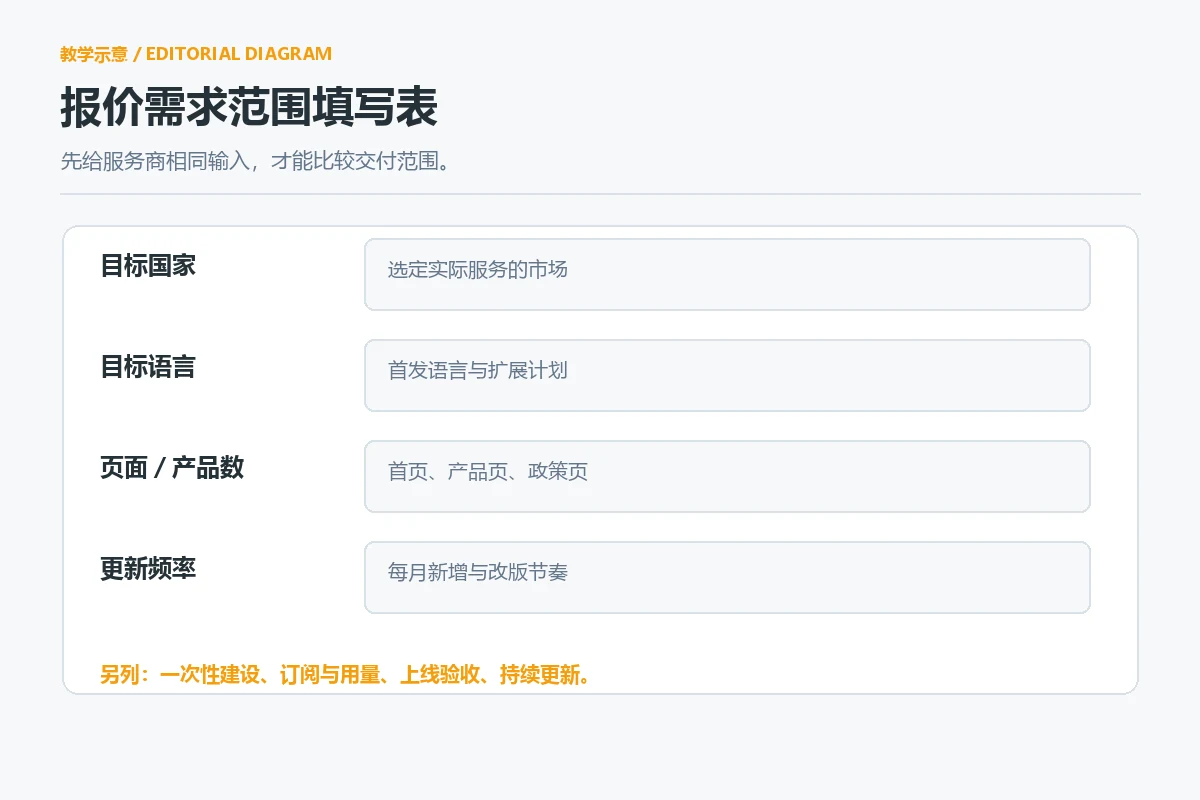
When requesting a quote from a website development service provider, what should you provide at a minimum?
Give the target country and language, platform, the number of pages and products planned to be launched online, whether language-by-language SEO is required, which images need to be changed, payment logistics requirements, and how much content is expected to be added every month. Request quotation breakdown: One-time construction, third-party subscription and translation usage, online acceptance, and continuous updates . Also indicate the number of languages included, page templates, manual proofreading rounds, unit price basis for subsequent added languages, and who will pay the third-party fees directly.
If you haven’t decided on a platform yet, compare it first Development and maintenance boundaries of WordPress website development , and then check the multi-language increment according to this list. In this way, the quotations from different service providers will have the same range, and “plug-in installation” will not be mistaken for complete localization delivery.
Conclusion: Scope first, then compare total cost of ownership
What a multilingual brand website adds is not a single “translation fee”, but a set of one-time and ongoing work. Launch the most valuable languages and pages first, and then use real visits, customer inquiries or order feedback to determine the order of expansion. When comparing quotes, unify the page range, number of languages, manual proofreading, technical configuration and follow-up maintenance standards; without these boundaries, it is difficult to judge whether the low price or the high price is suitable.