










Giỏ hàng hiện không có sản phẩm nào.

Learning how to add Google Analytics to WordPress is one of the most useful steps you can take after launching a website. A WordPress site should not only look good; it should also give you clear information about how people find your pages, what content they read, which devices they use, and where they leave your site.
Google Analytics helps website owners understand those visitor behaviors. Instead of guessing whether your blog posts, service pages, landing pages, or product pages are working, you can use real data to make smarter decisions. For example, you can see whether visitors come from Google Search, social media, paid ads, email campaigns, or direct visits. You can also learn which pages receive the most attention and which pages may need better content, stronger calls to action, or improved loading speed.
The original topic focuses on adding Google Analytics to a WordPress website through beginner-friendly methods such as analytics plugins, with options like MonsterInsights and ExactMetrics mentioned as common plugin choices. It also explains the basic WordPress plugin process: go to Plugins > Add New, install the plugin, and activate it. This rewritten guide expands that idea into a more complete educational explanation for modern WordPress users.
Many website owners publish content, run ads, or update their pages without knowing what actually happens after visitors arrive. Google Analytics solves that problem by turning website activity into readable reports.
With Google Analytics, you can answer important questions such as:
Who is visiting your website?
Which pages are getting traffic?
How long do people stay?
What traffic sources bring the best visitors?
Which pages lead to conversions?
Where do users drop off?
For a WordPress blog, this data can show which articles attract readers. For a business website, it can show whether service pages generate inquiries. For an online store, it can help you understand customer behavior before a purchase.
Google Analytics 4, often called GA4, is the current version of Google Analytics. Google’s setup process is based on creating an Analytics account, creating a property, adding a web data stream, and placing the tracking code or measurement setup on your website. In simple terms, WordPress needs a way to connect your website with your GA4 property so visitor activity can be recorded.
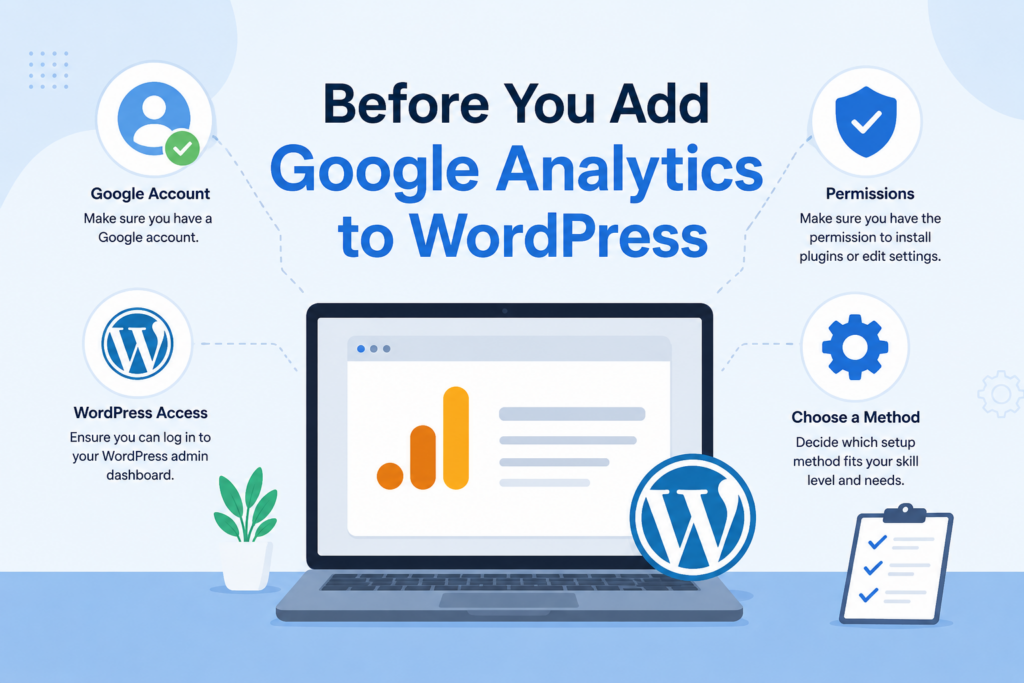
Before installing anything on WordPress, prepare three things.
First, you need a Google account. This is the account you will use to access Google Analytics. It is usually best to use a business-owned Google account instead of a personal account, especially if multiple people may need access later.
Second, you need access to your WordPress admin dashboard. You should be able to install plugins or edit your theme settings. If your account role does not allow plugin installation, ask the site administrator for help.
Third, you need to decide which setup method fits your skill level. Beginners usually prefer a plugin because it avoids direct code editing. More advanced users may prefer Google Tag Manager or manual code placement because those methods provide more flexibility.
For many beginners, the simplest way to add Google Analytics to WordPress is to use Site Kit by Google. Site Kit is Google’s official WordPress plugin. It can connect your site with Google services such as Analytics and Search Console, and it allows users to view some performance data directly inside the WordPress dashboard. The official WordPress plugin page explains that users can install Site Kit from Plugins > Add New, activate it, connect a Google account, and follow the setup flow.
To use this method, log in to your WordPress dashboard and go to Plugins > Add New. Search for Site Kit by Google. Install the plugin, then activate it. After activation, WordPress will show a Site Kit setup option. Click the setup button and sign in with the Google account connected to your website or business.
During setup, Site Kit may ask for permissions. These permissions allow the plugin to connect WordPress with your Google account and display data in your dashboard. After the basic setup, you can connect Google Analytics. Google’s Site Kit documentation says Analytics can be connected during the first setup or later by going to Site Kit > Settings > Connect More Services > Analytics > Set up Analytics.
Once connected, choose your Analytics account, property, and web data stream. If you do not already have a GA4 property, Site Kit may help create one. After setup, Google Analytics usually needs time before standard reports show data. Site Kit’s documentation notes that if a property has no data yet, Analytics may need a day or two before data becomes available in the account.
This method is best for beginners who want a guided setup, minimal code, and a dashboard inside WordPress.
Another common way to add Google Analytics to WordPress is by using a third-party analytics plugin. Plugins such as MonsterInsights and ExactMetrics are often used because they simplify the connection between WordPress and Google Analytics. The original article’s search result also mentions these as popular options for user-friendly analytics tracking.
The process is similar to installing any WordPress plugin. Go to Plugins > Add New, search for the analytics plugin you want, click Install Now, and then click Activate. After activation, most analytics plugins provide a setup wizard. The wizard usually asks you to connect your Google account, choose your website property, and confirm the tracking setup.
This type of plugin can be helpful because it often translates GA4 data into easier dashboard reports. Some plugins also include enhanced tracking options, such as outbound link tracking, file download tracking, affiliate link tracking, form tracking, or eCommerce tracking. However, advanced features may require a paid version depending on the plugin.
This method is suitable if you want more WordPress-friendly reports and marketing-focused features without manually working inside Google Analytics every day.
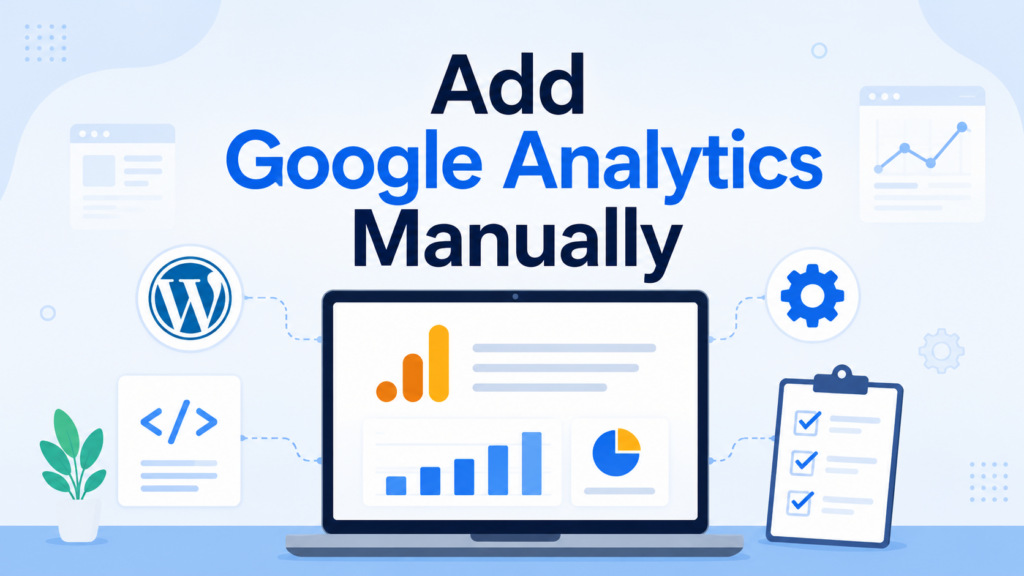
Manual installation is another option, but it is usually better for users who are comfortable editing website code or using a header-and-footer script manager.
In Google Analytics, you can find your GA4 measurement ID and Google tag instructions inside your property settings. Google’s setup documentation explains that the basic process includes creating an Analytics property, adding a data stream, and adding the Google Analytics code to your website.
For WordPress, the manual method usually means placing the Google tag in the website header so it loads on every page. Many users avoid editing theme files directly because theme updates can overwrite custom code. A safer approach is to use a trusted header and footer plugin or a child theme.
The general process looks like this:
Log in to Google Analytics.
Open your GA4 property.
Go to the web data stream.
Copy the Google tag or measurement code.
Paste it into the WordPress header area.
Save the changes.
Test the setup.
Manual installation gives you more control, but it also increases the chance of mistakes. If you paste the code in the wrong place, duplicate the tag, or add it only to some pages, your data may become inaccurate.
This method is best for users who want a lightweight setup and do not need a full analytics plugin.
Google Tag Manager is a more flexible option for users who plan to manage multiple tracking tools. Instead of adding every script directly to WordPress, you add one Tag Manager container to your site. Then you manage tracking tags from the Google Tag Manager interface.
This method is useful if your website uses several marketing tools, such as Google Analytics, Google Ads conversion tracking, Meta Pixel, LinkedIn Insight Tag, or custom event tracking. It keeps your tracking setup more organized.
The basic workflow is:
Create a Google Tag Manager account.
Create a web container for your WordPress site.
Add the Tag Manager container code to WordPress.
Create a GA4 tag inside Google Tag Manager.
Use an all-pages trigger.
Publish the container.
Test the setup with preview tools.
This method is more advanced than using Site Kit or a basic plugin. However, it can be the best long-term option for websites that rely heavily on advertising, conversion tracking, or custom marketing events.
After adding Google Analytics to WordPress, do not assume everything is working automatically. You should test the setup.
The easiest way is to open your website in a separate browser tab, then go to Google Analytics and check the real-time report. If your visit appears, the tracking is likely working.
You can also use browser extensions or Google Tag Assistant-style tools to check whether the Google tag is firing. If you use Google Tag Manager, preview mode can show whether your GA4 tag fires correctly on the page.
If you do not see data immediately, wait a little and test again. Real-time data usually appears quickly, but standard GA4 reports may take longer to fully process.
One common mistake is adding Google Analytics more than once. This can happen when a site owner uses Site Kit, another analytics plugin, and manual code at the same time. Duplicate tracking can inflate page views and make your reports unreliable.
Another mistake is connecting the wrong GA4 property. If you manage multiple websites, check the measurement ID carefully. A small mix-up can send one website’s data into another website’s account.
A third mistake is forgetting about privacy and cookie consent requirements. Depending on where your visitors live, you may need a cookie notice or consent setup before analytics tracking runs. Site Kit documentation mentions consent mode support for visitors from regions such as the EEA, Switzerland, and the UK.
Another issue is relying only on traffic numbers. Google Analytics is not just about counting visitors. A page with fewer visitors may still be more valuable if it brings qualified leads, email signups, or purchases.
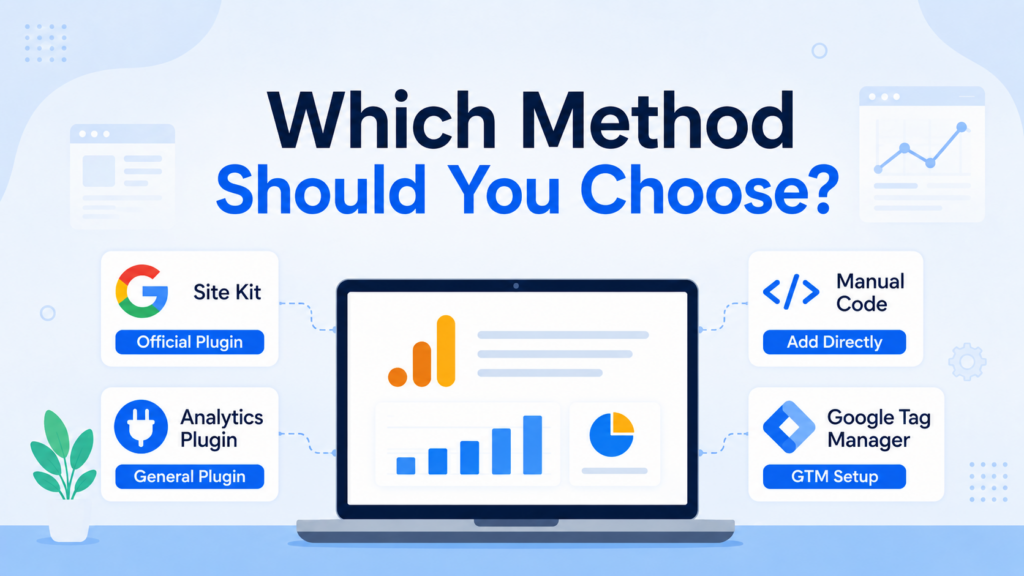
The best method depends on your website and your comfort level.
Choose Site Kit by Google if you want an official, beginner-friendly setup and basic Google data inside WordPress.
Choose a third-party analytics plugin if you want simplified reports, marketing features, and easier tracking options inside your dashboard.
Choose manual code installation if you want a lightweight setup and feel comfortable managing scripts.
Choose Google Tag Manager if you need advanced tracking, advertising tags, conversion events, or multiple marketing scripts.
For most small WordPress websites, Site Kit or a reliable analytics plugin is enough. For growing businesses, eCommerce sites, and paid advertising campaigns, Google Tag Manager may be worth learning.
Once Google Analytics is installed, focus on the reports that actually help you improve your website.
Start with traffic acquisition. This shows where visitors come from. You may find that organic search brings the most visitors, while social media brings shorter visits. Or you may discover that email traffic converts better than paid ads.
Next, review your landing pages. These are the first pages people see when they enter your site. A strong landing page should match the visitor’s intent and guide them toward the next step.
Then look at engagement. GA4 focuses on engaged sessions, events, and user behavior. These signals can help you understand whether people are actually interacting with your content.
Finally, define conversions. A conversion could be a contact form submission, newsletter signup, product purchase, quote request, phone click, or booking action. Without conversion tracking, you may know how many people visited your site but not whether those visits created business value.
Knowing how to add Google Analytics to WordPress gives you a stronger foundation for managing your website. Instead of guessing what visitors do, you can use real data to understand traffic sources, popular pages, user behavior, and conversion opportunities.
The easiest beginner method is usually Site Kit by Google, because it connects WordPress with Google Analytics through a guided setup. A third-party analytics plugin can also work well if you want easier reports or extra tracking features. Manual installation gives more control, while Google Tag Manager is better for advanced marketing and conversion tracking.
No matter which method you choose, the most important step is to verify that tracking works correctly. After that, use the data regularly. Google Analytics is not just a setup task; it is a decision-making tool that helps you improve content, marketing, user experience, and website performance over time.
The easiest way is to use a WordPress plugin such as Site Kit by Google or another analytics plugin. This method lets you connect Google Analytics without manually editing code.
Yes, Google Analytics helps you understand where visitors come from, which pages they view, how they interact with your site, and whether your content or marketing efforts are working.
Yes. You can manually add the Google Analytics tracking code to your WordPress site header. However, this method is better for users who are comfortable working with website code or header script settings.
Yes, Google Analytics is free to use for most WordPress websites. You only need a Google account and a proper setup method to connect it to your site.
Real-time reports may show visitor activity shortly after setup, but standard reports can take several hours or up to 24–48 hours to display complete data.
For beginners, Site Kit by Google is usually the best option. For advanced tracking, Google Tag Manager is better. If you want more WordPress dashboard reports, an analytics plugin may be more useful.