Project overview
The product image of the white electric toothbrush needs to unfold the 45° theme, five modes and operating procedures layer by layer. This case focuses on the existing 7 Russian works of Ozon, dismantling the arrangements for product identification, theme description and condition verification. For brands and sellers who are preparing to produce pictures of similar products, the focus is not only on the style of the pictures, but also on understanding how different pictures distribute information so that product-related questions have corresponding reading positions.
| Serviços | Industry | Plataforma |
| Ozon product primary and secondary product images design | Digital 3C | Ozônio |
| Project requirements | target market | design style |
| Expand the 45° theme, five modes and operating procedures layer by layer | Russia | Technological texture, glare vision, three-dimensional fineness |
| project budget | Delivery content | Delivery time |
| ¥700 | 7 case display pictures | 7 working days |
design challenge
There is no natural correspondence between technical numbers and brushing movements. The diagram set needs to explain the angle, movement frequency, mode selection and brush head structure separately, while leaving an operating sequence that first-time users can follow.
Design strategy: Let the entire group of works form a clear information relationship
01 Allocate information tasks first, and then arrange the key points of the screen
The work is expanded according to “Core Overview → Function Map → 45° Schematic → Mode Selection → Brush Head Structure → Motor Theme → Six-Step Operation”. Figure 1 establishes the identification first, and then switches the composition and description position according to the actual theme. This division of information allows different questions to have their own place, reducing the need to pile up all the text in the first image, and preventing subsequent images from simply repeating the same product photo.
02 Use a consistent visual language to connect different reading tasks
The dark background sets off the white body, and the silver-blue light spreads along the outline of the product. Numbers, guide lines and luminous icons form a consistent technical expression. The unified style serves the entire group identification, and composition changes serve different contents; the main title, auxiliary labels and product proportions in the picture jointly determine the reading order.
03 Reduce the explanation to specific parts, actions or choices
The focus of this set of works is to unfold the 45° theme, five modes and operational processes layer by layer. When dismantling, look at the correspondence between the whole machine and parts, themes and conditions: when there is structural information, look at the positional relationship, when there is scene information, look at the objects used, and when there are numbers, look at the categories and limiting conditions. Letting each picture answer a specific question has more explanatory value than repeatedly emphasizing the excellence of the product.
Dismantling the work: explaining the screen arrangement and information responsibilities of each picture
Figure 1|Core Overview: Let the perspective topic become the focus of reading
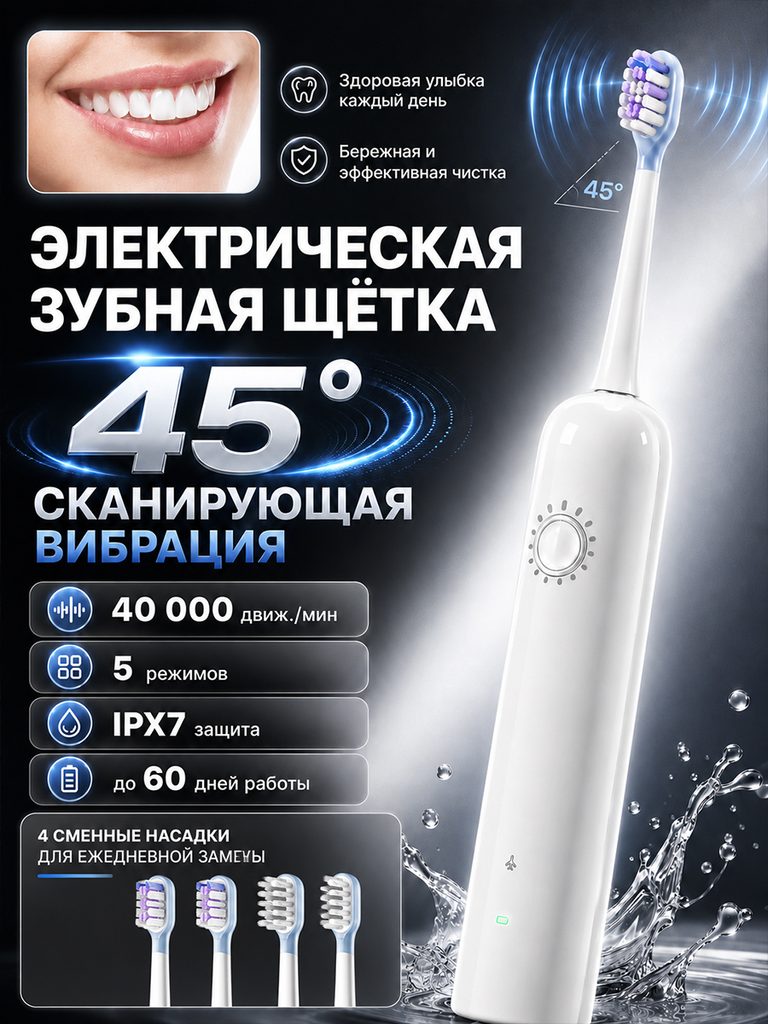
45° is placed under the title. The toothbrush occupies the right side. The frequency of exercise, mode, waterproofing and battery life are listed on the lower left. The replacement brush head is displayed at the bottom.
The main visual uses a larger theme to capture the key points, and other information serves as a summary to avoid multiple numbers competing for the same level.
Figure 2|Function map: map descriptions to fuselage locations
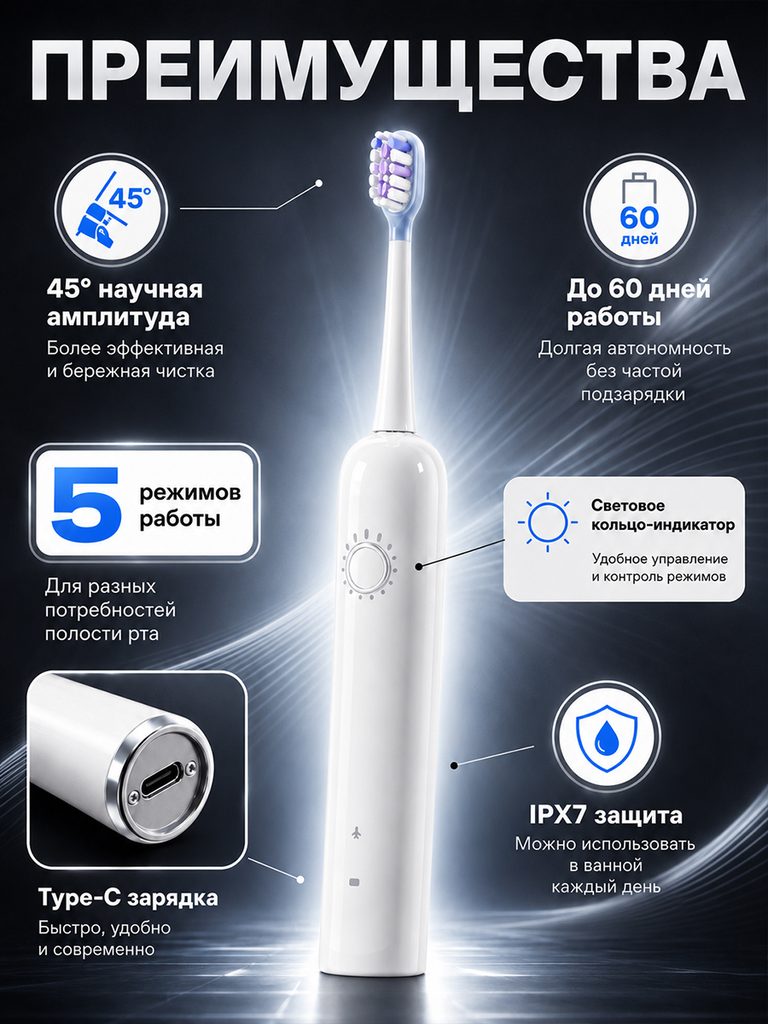
The whole machine is placed in the center, with instructions such as mode, battery life, light ring, and waterproofing arranged around it, and the Type-C interface is enlarged at the bottom.
The whole and the parts appear at the same time, allowing users to know where these functions are involved, and the information distribution is easier to find than continuous long paragraphs of description.
Figure 3 | 45° diagram: place the angle mark close to the action
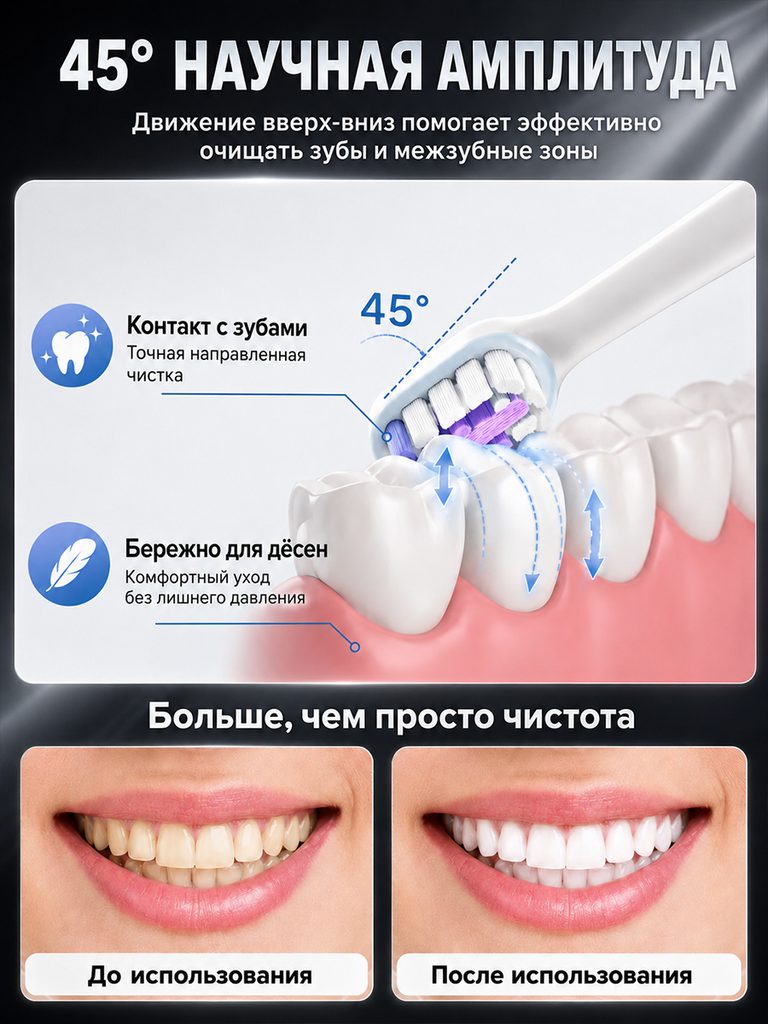
The upper part uses the brush head, teeth and directional arrows to explain the 45° theme, while the lower part juxtaposes two smile comparison pictures.
The angle annotations are put together with the actions to give the concept a positional reference; the comparison pictures are presented as design illustrations and the actual measured whitening results are not presumed.
Figure 4|Mode selection: use serial numbers to distinguish five types of instructions
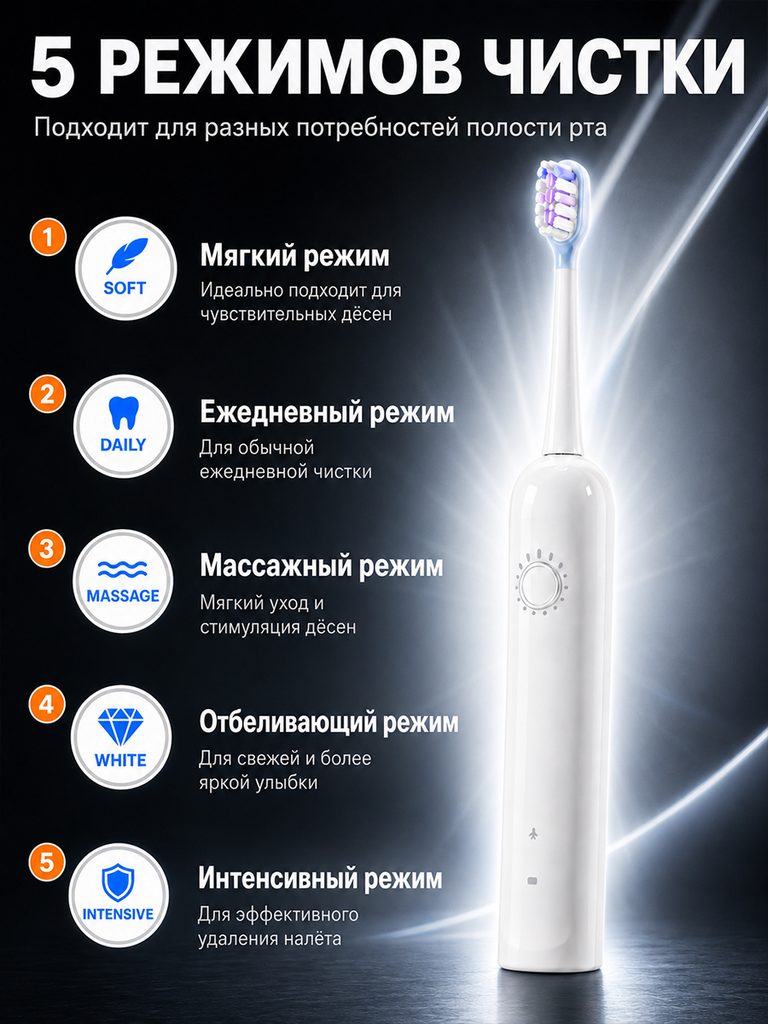
The five serial numbers and circular icons are arranged vertically on the left side, and the entire machine is retained on the right side, with text explaining the mode themes in the picture.
The numbers and icons help with item-by-item comparisons, making it easier to read in terms of which way I need to use it, rather than just remembering the number of modes.
Figure 5|Brush head structure: moving from big picture to contact details
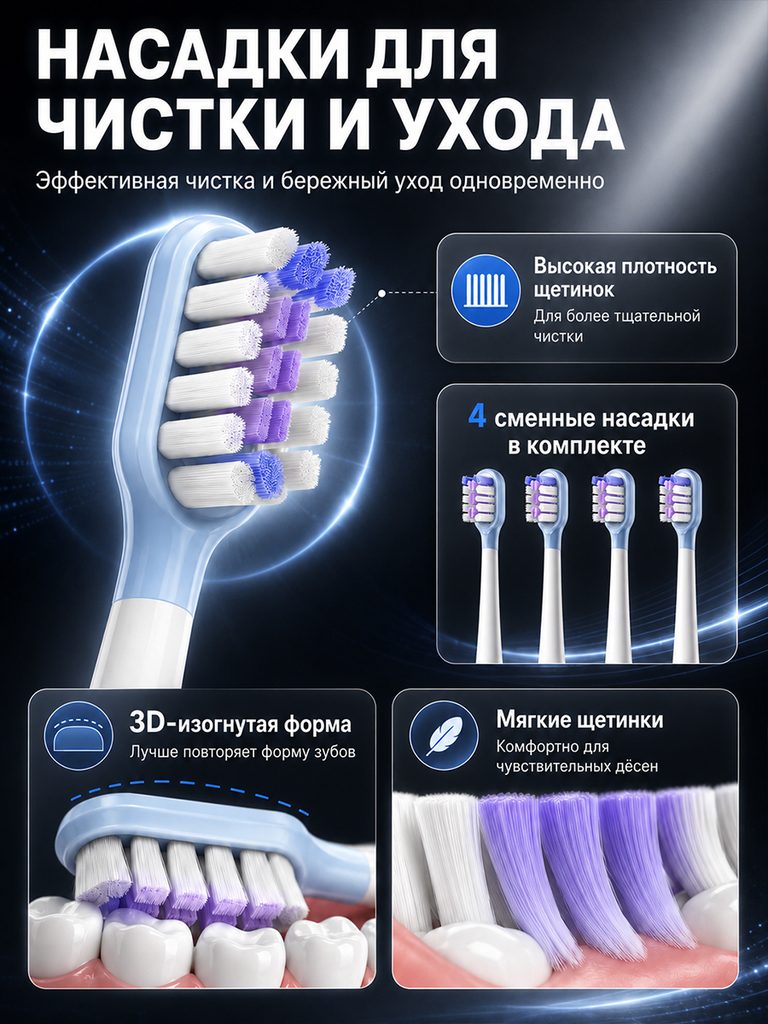
An enlarged brush head is juxtaposed with an illustration of the curved shape and soft bristles, and four replacement brush heads and an illustration of contact with teeth are placed in the auxiliary area.
This picture answers what the brush head looks like and what replacement parts are included in the set. It uses partial enlargement to complete the content that cannot be clearly seen in the photo of the whole machine.
Figure 6|Motor topic: Organizing power information with cutaway diagrams
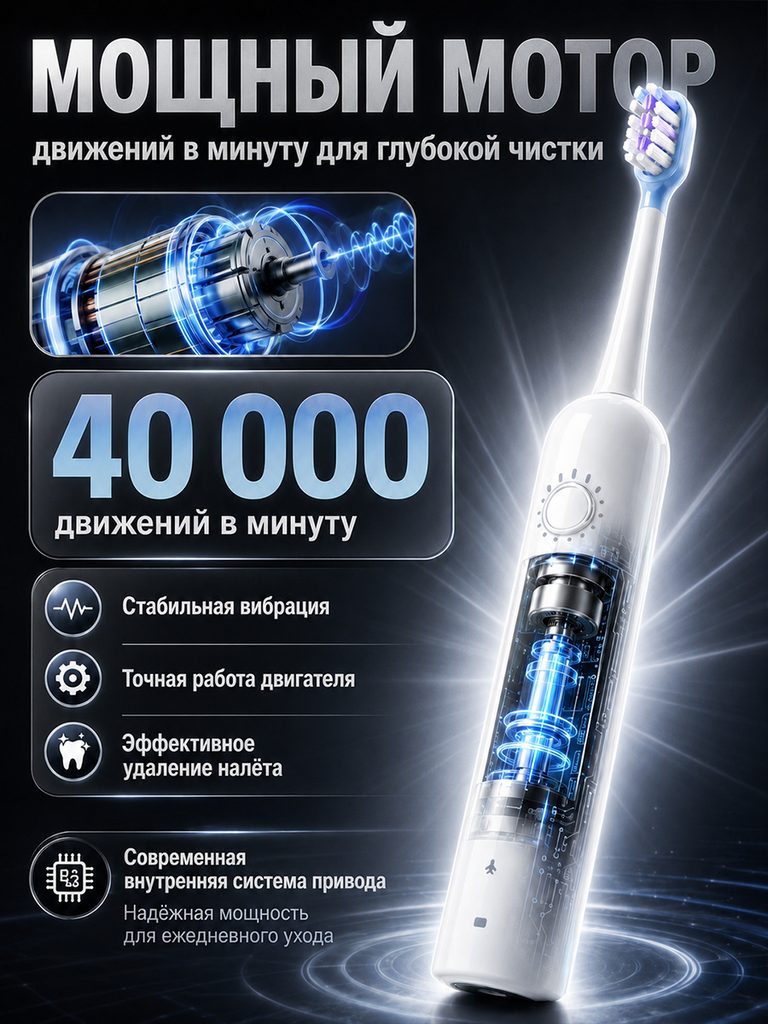
The motor diagram and transparent body present the internal theme, and the large font size 40000 and function icons are placed in a separate information area.
The structure is responsible for explaining the components pointed to by the numbers, and the icons are responsible for distinguishing the instructions, retaining the connection between the technical theme and the product appearance.
Figure 7|Operation Guide: Use six grids to complete the instructions
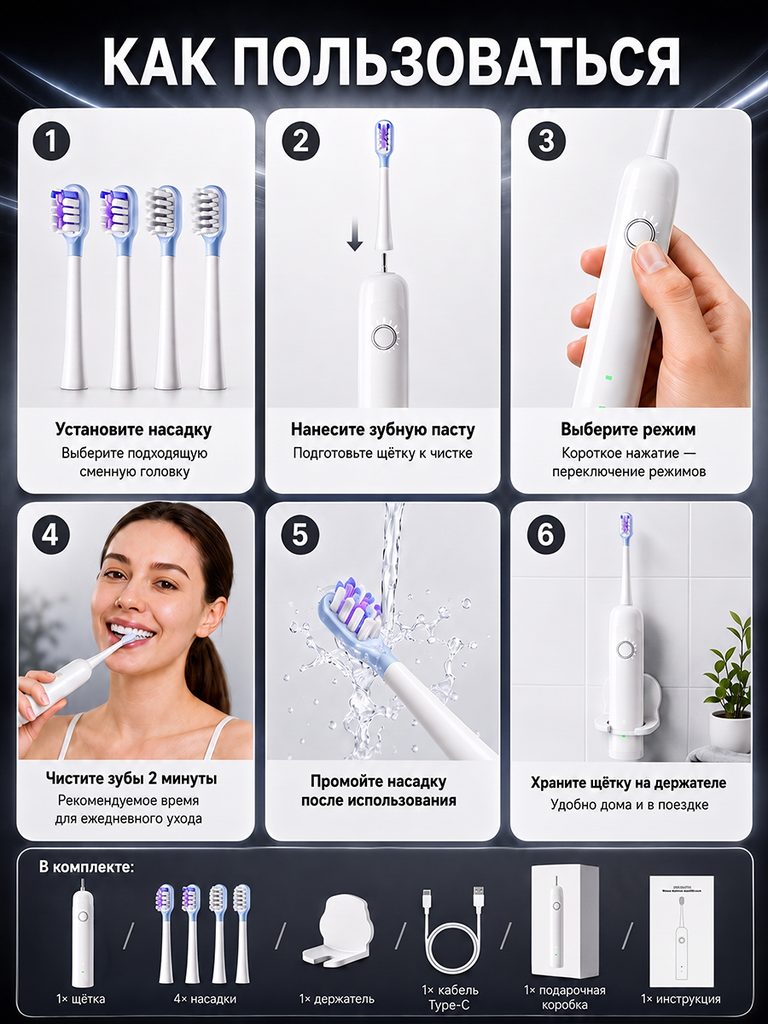
Installing the brush head, adding toothpaste, selecting mode, brushing teeth, cleaning and storage are arranged in six grids, with a supplementary set list at the bottom.
The actions are sequential, and the explanatory diagram can be used as an entry point to understand the usage process. The series naturally transitions from understanding the product to how to operate it.
Delivery summary and design value
The entire team delivers with a clear division of labor
The 7 works in this case respectively cover “Core Overview → Function Map → 45° Schematic → Mode Selection → Brush Head Structure → Motor Theme → Six-Step Operation”. The number of images depends on the actual content, and each image has its own theme while maintaining an overall identity through color, text hierarchy, or composition.
Procurement issues can be more easily mapped to specific information
Centering around the white electric toothbrush, the work will “expand the 45° theme, five modes and operating procedures layer by layer” into different images. When brands plan similar designs, they can first list the content that consumers need to identify, understand and check, and then determine the tasks and order of primary and secondary product images.
Value is based on interpretive methods and authentic works
The whole machine, part, scene and information cards provide different reading entrances, helping to organize product descriptions more clearly. The value of this case is the visible design expression and information division of labor; changes in click-through rates, sales, and conversion rates require additional statistical or test data support.
The parameters, materials and functions in this article are used to explain the content of the accompanying pictures. The specific specifications, applicable conditions and accompanying items are subject to the product information of the corresponding model.
Plan clearer product images for your Ozon products
If you also need to plan primary and secondary product images for your Ozon white electric toothbrush, you can submit product links, existing pictures or product information to AIRSANG, explain the target market and required picture group range, and communicate the information organization and visual direction suitable for the product.
Consultation email: [email protected] · Telephone: 177-5952-2770