Project overview
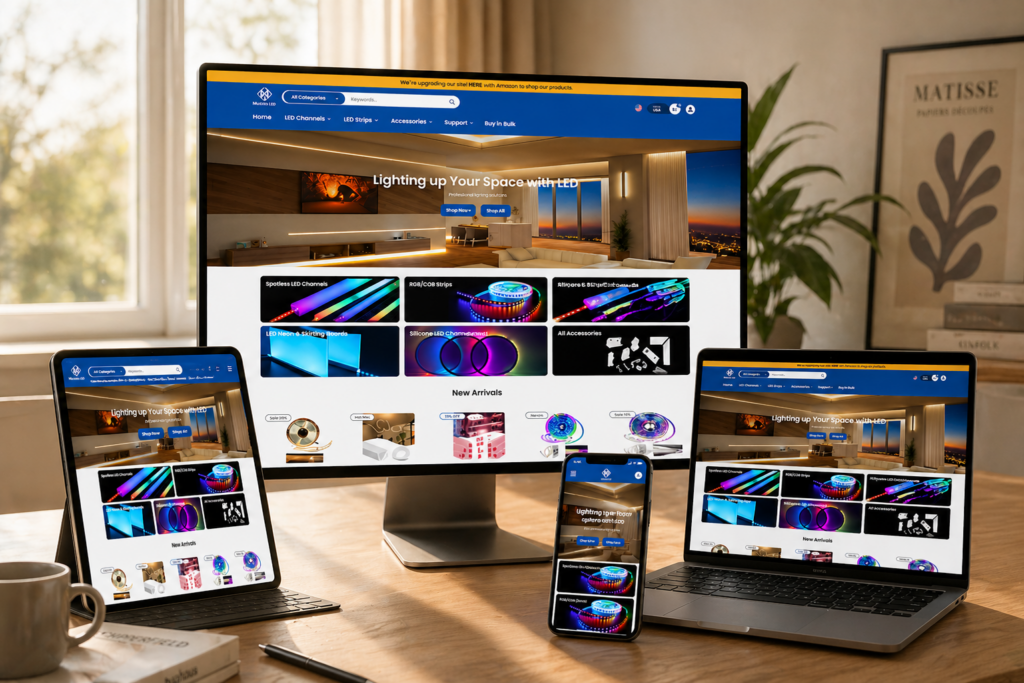
Minebrick is a cross-border ecommerce brand that focuses on personalized building block figures and customized gifts. It mainly sells building block figures customized with customer photos through the Shopify platform to couples, families, pets and holiday gift-giving groups. As product types and marketing activities continue to increase, the original page needs to be further optimized in terms of customization process expression, product value display, and user purchase guidance. Therefore, the customer found AIRSANG and hoped to reorganize the overall website visual and user experience. The project focuses on Shopify website design. By optimizing the visual hierarchy and content structure of the homepage, product pages, category pages and customization process, consumers can more intuitively understand the purchase process of “upload photos – complete customization – get finished products”. It also strengthens the display of real cases, customer reviews and gift scenes, improves brand trust and conversion efficiency, and establishes a sustainably expanded page system for subsequent new products and holiday marketing.
| Servicios | Industry | Plataforma |
| Website design and decoration | Home department store | shopify |
| Project requirements | target market | design style |
| Improve user trust and customer inquiry conversion rate | Global | Fun and lively · Personalized customization · Gift-oriented |
| project budget | Delivery content | Delivery time |
| ¥8300 | Website construction and full-site page design | 14 working days |
Project Challenges
The biggest challenge of this project is how to transform the relatively complex purchase model of “photo-customized building block dolls” into a simple, clear and trustworthy Shopify shopping experience. Users cannot directly see the final product before placing an order, so we need to focus on solving the problems of difficulty in understanding the customization process, unclear expectations of product results, excessive page information density, and the balance between brand interest and professionalism. Before starting the project, we first sorted out the brand positioning, target consumer groups, product categories and main gift-giving scenarios, and analyzed the complete path of users from entering the homepage, understanding the customization method to completing the purchase. At the same time, plan the information level, visual focus, CTA guidance, real cases and evaluation display of the home page, product page, and category page to prepare for the subsequent establishment of a unified and scalable Shopify page system.
Our Shopify design approach
Design first, not code first
This project was first viewed by us as a design and user experience issue rather than a pure technology development project.
Rather than focusing on developing features or custom code from the beginning, we focus more on:
- Jerarquía de páginas
- visual movement
- Content priority
- User psychology and purchasing behavior
Shopify itself has provided mature and stable basic e-commerce capabilities. What we really need to solve is how to design the user’s browsing and purchasing experience throughout the website.
Home Page Design Strategy
Make a powerful first impression
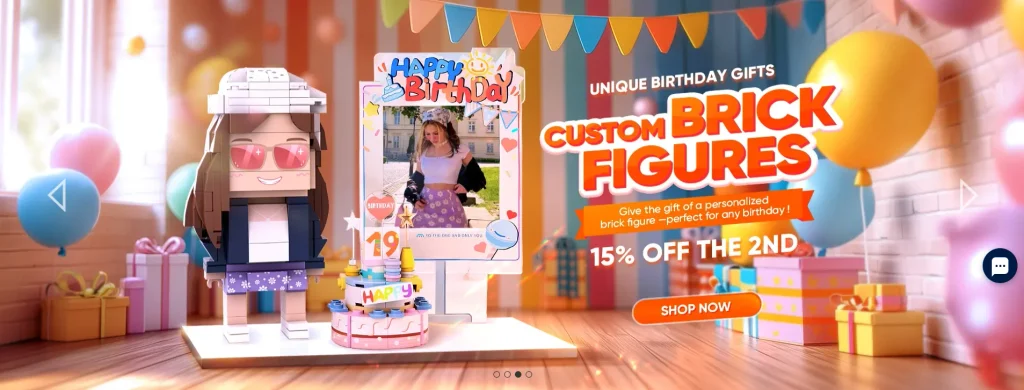
The homepage is the main entrance for new users to enter the website. For Minebrick, the homepage needs to answer three questions immediately:
- What product is this?
- What is the customization process?
- ¿Por qué debería confiar en esta marca?
The above-the-fold banner quickly establishes product relevance through eye-catching holiday visuals and promotional information, which can quickly attract users’ attention, especially during peak sales seasons such as Christmas when gift-giving is the main demand.
Visual storytelling through modular content
Instead of using a lot of text to explain to users, we split the homepage into multiple visually distinct modules, including:
- Step-by-step “customization process”
- Selected customized cases
- Hot product recommendations
- Real customer pictures and reviews
This modular structure allows users to quickly scan the page, understand the product, and gradually interact at their own browsing pace without reading pressure due to too much information.
Customized process design
Make customization simple and easy to understand
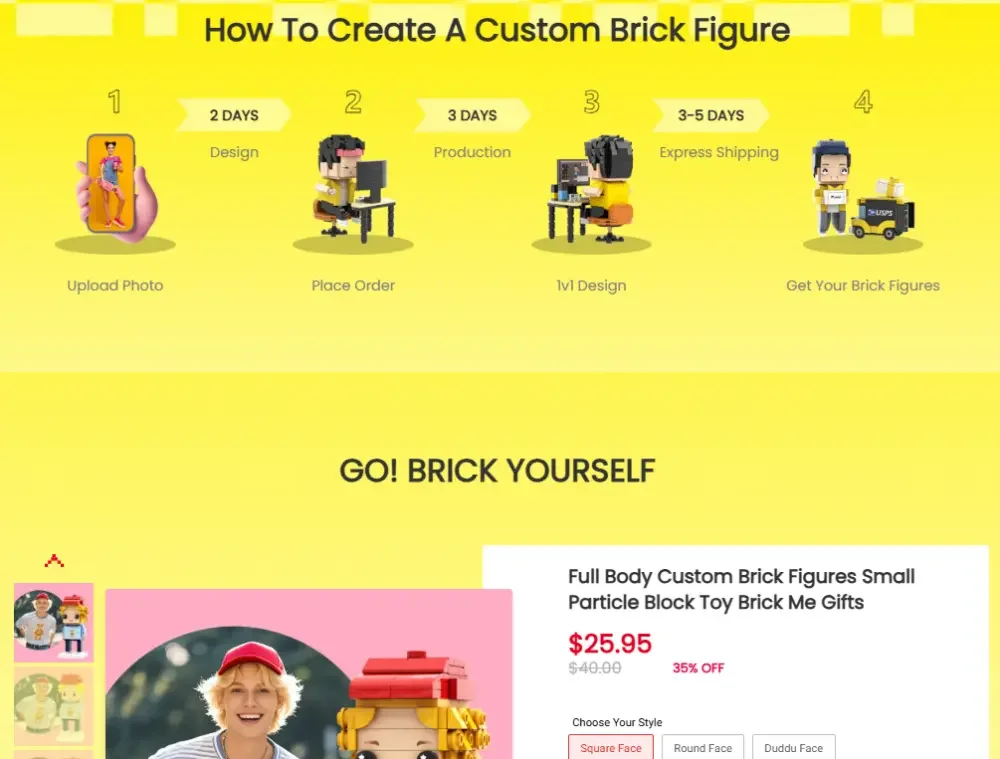
If the expression is not clear enough, customized products can easily cause concerns to first-time purchasers.
Therefore, we have simplified the customization process by design:
- The entire customization process is explained using iconized steps
- Keep instructions short and visually guided
- Add concern-mitigating instructions near action buttons
Each step is designed to be as simple and intuitive as possible so that even first-time users of customized products can quickly understand it.
Guide users to take next action
By properly planning the location of your CTA button, users always know what to do next during the browsing process.
Buttons such as “Customize Yours” receive enough visual emphasis without appearing overly promotional, keeping the overall experience friendly, natural, and intuitive.
Product Page Design: Build Buying Confidence
Visual presentation takes precedence over technical specifications
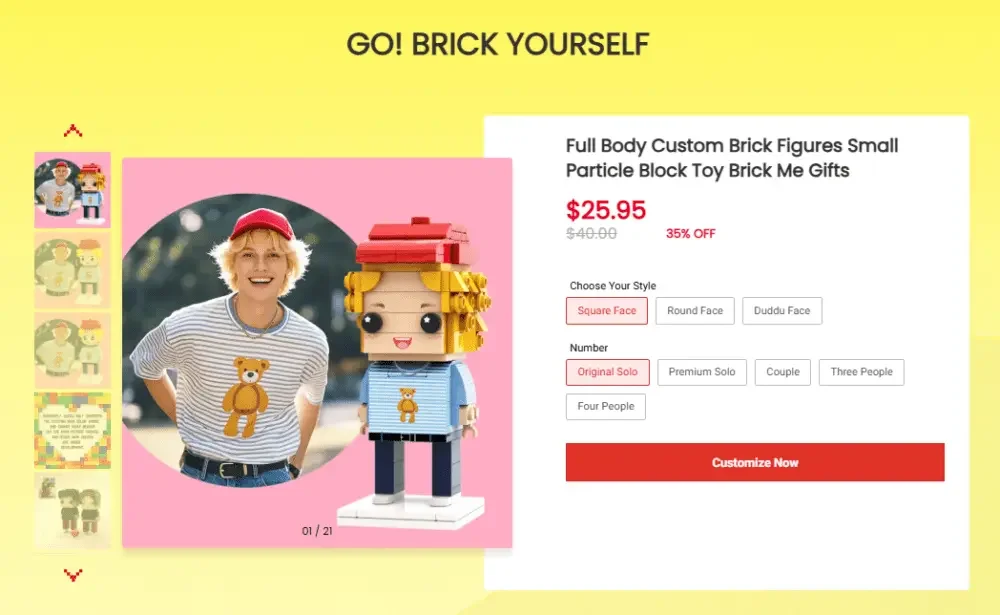
For custom products like Minebrick, visuals often drive purchasing decisions more than complex product parameters.
Therefore, product pages focus on:
- Large, high-quality product images
- Comparison of effects before and after customization
- Display of usage scenarios and gift-giving scenarios
Through these visual contents, consumers can more intuitively imagine the effect of receiving the product instead of relying solely on abstract text descriptions.
Build trust through page layout
We naturally integrate multiple elements that can enhance trust into the product page design, including:
- Clear price display
- Transparent and easy-to-understand customization instructions
- Guaranteed information about product quality and delivery
Instead of piling up large paragraphs of text, we split the information into multiple content areas that are easy to browse quickly, which is more in line with modern consumers’ habit of browsing the web quickly.
Product classification and series page design
Help users browse products more easily
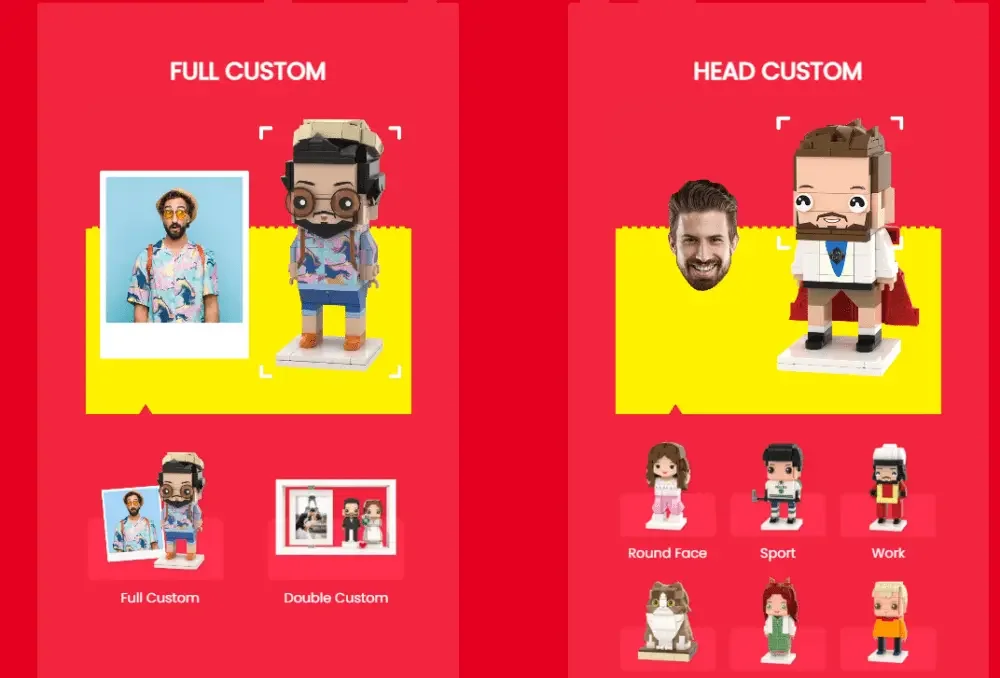
Minebrick has many different ways to customize it and use it in many different ways.
In order to avoid the excessive number of products that puts pressure on users to choose, we visually classify the series according to the following dimensions:
- Usage scenarios: couples, pets, families, etc.
- Degree of customization: full body customization, only headshot customization, etc.
- Popular products or products suitable for gifts
This classification method can help consumers browse products more intuitively without relying on complex filtering functions.
Maintain visual consistency between series
We have unified the following across our different product lines:
- Product card layout
- Image ratio
- page spacing
By maintaining consistent design rules, the entire browsing experience is made more unified and professional, while further enhancing consumers’ trust in the brand.
Promotional and holiday marketing design
Allow flexibility for marketing activities
Gift brands are often highly dependent on holiday and seasonal traffic, so website design needs to have sufficient marketing flexibility.
The entire page structure supports:
- Quickly change active banners without affecting the overall layout
- Highlight discount information and limited time promotion information
- Flexibly add holiday-themed product recommendation areas
This allows the website to quickly adjust according to different marketing nodes without the need to redesign the entire page for each campaign.
Social proof and brand credibility
Not simply adding reviews, but designing a sense of trust
Rather than treating testimonials as a separate and secondary module, we systematically integrated social proof into the page design.
The main contents include:
- Customer real picture reviews
- Visual user feedback
- Content similar to recommendations from experts or social media
These trust elements will naturally appear in the user’s browsing path, continue to strengthen the brand’s credibility without interrupting the shopping experience, help consumers reduce purchasing concerns, and further increase the possibility of conversion.