










لا توجد منتجات في سلة التسوق.

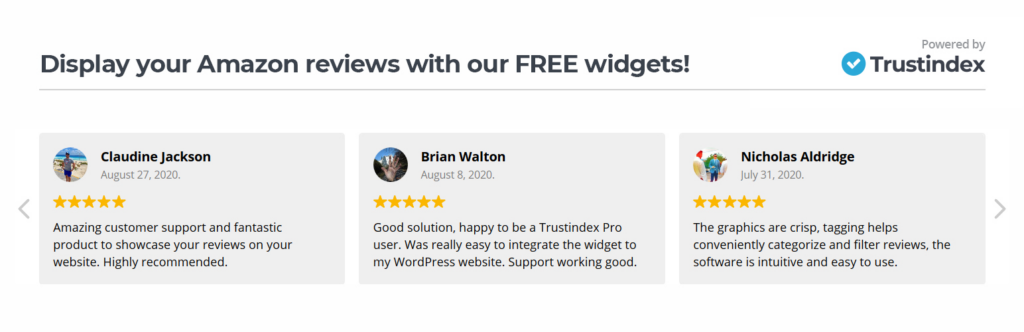
When shoppers visit a ووردبريس store, they usually ask one simple question before buying: “Can I trust this product?” Product photos, descriptions, and prices matter, but reviews often play a bigger role in the final decision. This is why many store owners want to learn how add أمازون reviews for multiple products on wordpress in a clean, scalable, and beginner-friendly way.
Amazon reviews can be useful because many customers already recognize Amazon as a familiar shopping platform. When a product has positive feedback on Amazon, showing that feedback on a WordPress or WooCommerce product page can help reduce doubt, especially if your website is new or your brand is still building trust. The original article explains that WooCommerce is strong for product management and checkout, but it does not automatically import third-party Amazon reviews by default.
This guide explains the idea in a more educational way. Instead of only focusing on one tool, it will help you understand why Amazon reviews matter, where to place them, how to use them across multiple products, what mistakes to avoid, and how to keep your product pages professional.
Reviews work because they give shoppers proof from other buyers. A store owner can say a product is high quality, durable, or useful, but customers often trust real buyer feedback more than brand messaging. This is especially true for products that are also sold on Amazon.
For example, imagine you sell kitchen tools, beauty products, gadgets, or home accessories on both Amazon and your WooCommerce website. Your WordPress store may have a better layout, stronger branding, or more flexible checkout options, but it may not have many reviews yet. If your Amazon listing already has reviews, showing selected Amazon feedback on your WooCommerce product pages can make your own website feel more trustworthy.
This is not just about decoration. Reviews help answer hidden customer questions, such as:
Is the product actually useful?
Did other buyers like it?
Does it look the same in real life?
هل يستحق ثمنه؟
Are there any quality concerns?
When shoppers see relevant feedback near the product information, they can make decisions faster. The original article highlights that Amazon reviews can support buyer confidence, reinforce purchase intent, and help connect Amazon-synced products with WooCommerce product pages.
The phrase how add amazon reviews for multiple products on wordpress points to a common problem. Many tutorials only show how to add reviews to one product page. But real stores often have many products, and each product may need its own matching Amazon reviews.
For example, a store may sell ten different coffee makers, twenty skincare items, or fifty phone accessories. It would not make sense to show the same Amazon review widget on every product page. Each product should display reviews that match that exact item, not generic reviews for the whole store.
So, the goal is not just “adding Amazon reviews.” The real goal is building a system that helps you display the right reviews on the right WordPress product pages without making your store messy or difficult to manage.
The most basic way to add Amazon reviews is by using a review widget or embed code. Some review tools allow you to create a widget, customize the design, and paste a code snippet into your WordPress or WooCommerce product page.
In WooCommerce, you can usually place this type of code in areas such as:
Product description
Short description
Custom HTML block
Elementor product template
Gutenberg block
Theme product page section
The original article explains a similar process: create the review widget, copy the embed code, open the WordPress product editor, paste the code into the chosen content area, then update or publish the product page.
This method is simple for a small store. If you only have a few products, you can manually add one review widget to each product page. However, if your store has many products, this method can become time-consuming. You must keep track of which widget belongs to which product, and you may need to update each product manually whenever you change the review design.
A more organized way is to use product-specific review blocks. This means each product gets its own review section, but the design stays consistent across the store.
For example, every product page may include a section called “What Amazon Customers Are Saying.” Inside that section, the reviews change depending on the product.
This works well for stores with multiple products because it keeps the user experience consistent. Customers always know where to find review information, but the content remains relevant to the item they are viewing.
A strong product-specific review block should include:
A clear section title
A star rating or review summary
Three to five useful reviews
A clean layout that matches the page design
Proper spacing on desktop and mobile
A reference showing the reviews are from Amazon buyers
This structure is better than randomly placing review popups or review boxes across different pages. It creates a system that feels intentional and professional.
If your WordPress store uses Elementor, you can add Amazon review sections to your product page template. This is useful because you can control the layout visually.
For example, you can create a WooCommerce single product template with a dedicated review area below the product description or near the add-to-cart button. Then you can use dynamic content, custom fields, or product-specific HTML blocks to show different reviews for different products.
This approach is helpful when you want the same layout across all products but different review content for each item. It also gives you better design control over typography, spacing, colors, borders, and mobile layout.
A good Elementor-based review section may include:
A heading like “Verified Amazon Buyer Feedback”
A short trust-building sentence
A review carousel or grid
A CTA near the review area
Mobile spacing controls
Consistent design with the rest of the product page
The original article also mentions that reviews can be embedded through Elementor, Gutenberg blocks, or Custom HTML widgets, which makes this method flexible for different WordPress setups.
Where you place reviews matters. If the reviews are hidden at the bottom of a long product page, many shoppers may never see them. If they appear too aggressively as popups, they may feel distracting.
For most WordPress product pages, the best review placements are:
Near the product image and price
Below the short description
Near the add-to-cart button
Before the product details section
Inside a dedicated review tab
Below key product benefits
The original article recommends placing reviews in high-visibility areas, such as above the fold, below product descriptions, and near call-to-action buttons.
For multiple products, consistency is important. If one product page shows reviews near the add-to-cart button and another hides them at the bottom, the store may feel uneven. A repeated structure builds a smoother shopping experience.

More reviews are not always better. A product page should not feel crowded. If you add too many Amazon reviews, customers may become distracted from the main purchase action.
For most product pages, three to five strong reviews are enough. These reviews should be specific, easy to read, and directly related to the product.
Good reviews usually mention:
Product quality
Product size or fit
سهولة الاستخدام
Real customer experience
Durability
Shipping or packaging experience
Comparison with similar products
Avoid using vague reviews such as “Great product” or “Nice item” unless they support a broader rating summary. Specific reviews are more persuasive because they answer real questions.
For example, a review saying “The pan heats evenly and feels sturdy after two months of daily use” is more helpful than “Good quality.” It gives shoppers a concrete reason to trust the product.
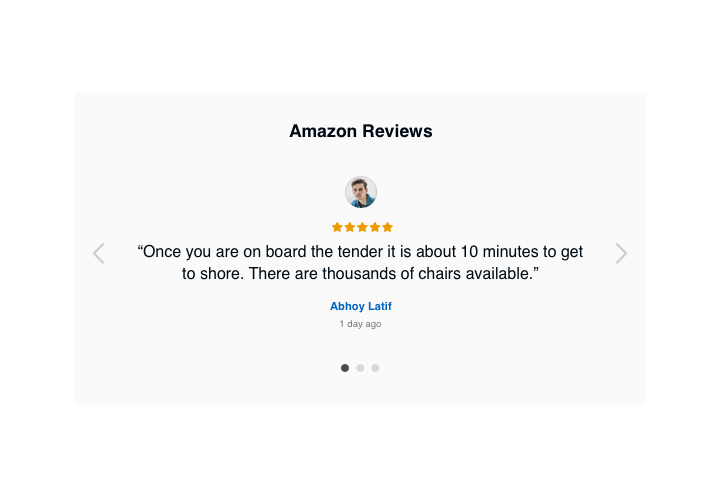
A carousel can be useful when you want to show several reviews without taking up too much space. Instead of stacking many reviews vertically, a carousel allows customers to slide through them.
This can work especially well on mobile product pages, where screen space is limited. A carousel keeps the page clean while still showing enough social proof.
However, the carousel should be simple. Do not make it move too fast. Do not hide important content behind confusing controls. Customers should be able to read reviews comfortably.
For multiple products, use the same carousel style across your store. Keep the same card shape, font style, star rating layout, and spacing. This makes your product pages feel unified.
The original article also suggests using carousel-style review displays to show multiple reviews without adding too much clutter to WooCommerce product pages.
Amazon reviews should not look randomly pasted into your website. Even if the reviews come from another platform, the design should still match your store.
انتبه إلى:
Font size
Text color
Background color
Card border
Border radius
Spacing
Star icon size
Mobile readability
Section width
Button style
If your website uses a clean white background and soft gray borders, your review widget should follow the same visual direction. If your store uses bold typography and strong contrast, the review section should match that style.
The goal is to make Amazon reviews feel like part of the product page, not like an outside element that was added without planning.
Many store owners also wonder whether Amazon reviews can help SEO. The answer depends on how the reviews are added.
If reviews are loaded through JavaScript or an iframe, search engines may not treat the review text as normal page content. If reviews are imported as readable text, they may provide more keyword-rich content on the page. The original article notes that SEO impact depends on whether the review content can be crawled and understood by search engines.
However, store owners should be careful. Do not copy large amounts of Amazon review content without understanding Amazon’s rules and review usage guidelines. You should also avoid editing review meanings, removing context, or making reviews appear fake.
From an SEO perspective, the review section should support the product page, not replace your own product content. You still need original product descriptions, clear benefit sections, useful FAQs, and strong category structure.
One common mistake is showing the same Amazon reviews on every product page. This weakens trust because shoppers may notice that the reviews do not match the product.
Another mistake is placing reviews too low on the page. If customers must scroll through a long page before finding social proof, the reviews may not help conversion.
A third mistake is using too many widgets. Multiple popups, floating boxes, and review carousels can make the page feel noisy. A clean product page usually performs better than a cluttered one.
You should also avoid poor mobile formatting. Many WooCommerce customers shop from phones, so the review section must be easy to read on smaller screens. The original article specifically warns against skipping mobile testing when displaying Amazon reviews on WooCommerce pages.
Finally, avoid reviews that are too generic. A review should help the customer understand the product better. If it does not add useful information, it may not be worth showing.
For a WordPress store with many products, you can use this workflow:
First, list all products that also have Amazon reviews. Do not start with the whole catalog. Begin with the products that already have strong buyer feedback.
Second, group products by category. For example, group kitchen products, beauty products, electronics, or home products separately. This makes review management easier.
Third, choose the best three to five reviews for each product. Focus on reviews that mention real benefits, product quality, or buyer experience.
Fourth, decide where the review section will appear on every product page. Keep the placement consistent.
Fifth, build one design style for all review sections. Use the same heading style, card layout, star rating style, and spacing.
Sixth, test everything on desktop and mobile. Make sure the reviews do not slow down the page, overlap with other content, or distract from the add-to-cart button.
Seventh, review and update the content regularly. If your Amazon product listing receives better reviews later, you can refresh the WordPress product page.
This workflow is more scalable than adding random reviews one by one without a system.
The section title affects how customers understand the review content. A clear title builds trust and avoids confusion.
You can use titles such as:
What Amazon Customers Are Saying
Amazon Buyer Feedback
Verified Reviews From Amazon Customers
Real Feedback From Amazon Shoppers
Loved by Customers on Amazon
Amazon Reviews for This Product
Customer Feedback From Amazon
For SEO and clarity, avoid overly clever titles. Simple titles work better because customers immediately understand the purpose of the section.
Learning how add amazon reviews for multiple products on wordpress is not only about installing a widget or pasting code. It is about building trust across your product pages in a clear, organized, and customer-friendly way.
Amazon reviews can help WordPress and WooCommerce stores show social proof, reduce hesitation, and make product pages feel more reliable. The best approach is to display product-specific reviews, place them in high-visibility areas, match the design with your website, keep the layout clean, and test the experience on both desktop and mobile.
For stores with multiple products, consistency matters. Each product should show relevant reviews, but the review section should follow the same structure across the website. When done correctly, Amazon reviews become more than extra content. They become a useful trust signal that supports the customer’s buying decision.
You can add Amazon reviews to multiple WordPress products by using product-specific review widgets, embed codes, custom HTML blocks, Elementor templates, or WooCommerce product page sections. The key is to make sure each product shows reviews that match that exact item.
Yes. Each WooCommerce product page can display its own Amazon review section. You can do this manually with separate embed codes or by using custom fields, Elementor templates, or review widgets that support product-specific content.
The best places are near the product price, below the short description, close to the add-to-cart button, inside a review tab, or below the product benefits section. Reviews should be easy to see without making the page feel crowded.
They can support SEO if the review content is readable by search engines and used correctly. However, reviews should not replace original product descriptions, FAQs, category content, or other unique website copy.
Usually, three to five strong reviews are enough. Choose reviews that mention product quality, ease of use, size, durability, or real buyer experience. Too many reviews can make the page look cluttered.
The biggest mistake is showing the same reviews on every product page. This can reduce trust because shoppers may notice the reviews do not match the product they are viewing. Each product should display relevant, product-specific feedback.