










لا توجد منتجات في سلة التسوق.
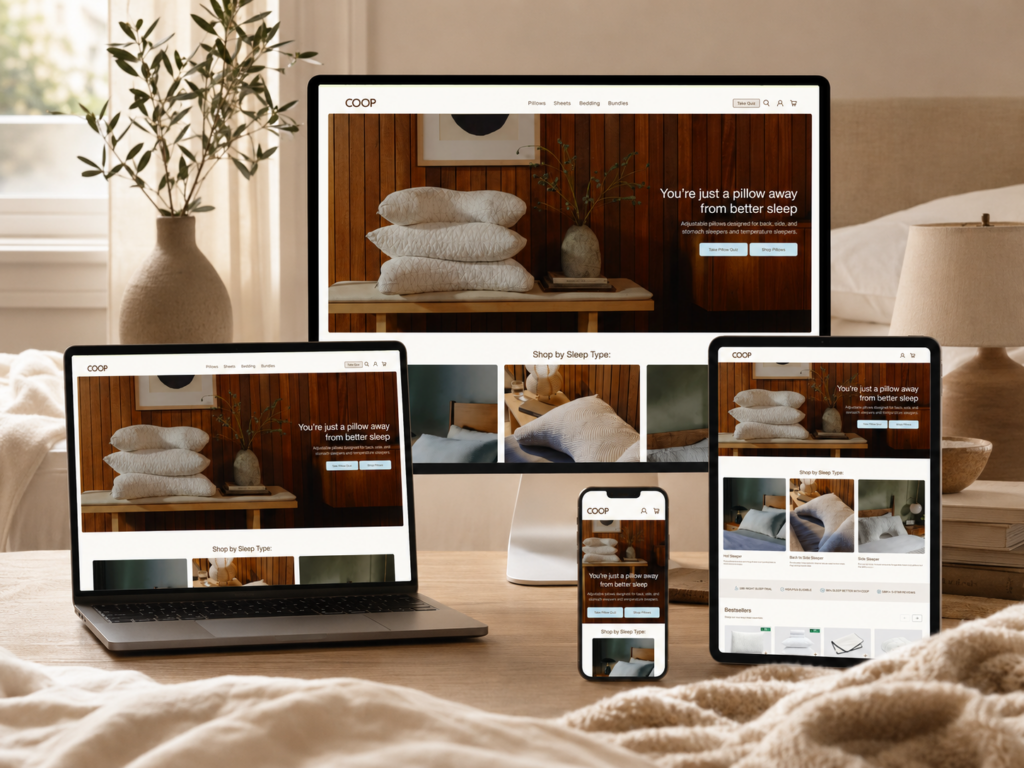
لا ينبغي أن يبدو موقع إلكتروني جيد لمنتجات النوم ككتالوج منتجات بارد. بل يجب أن يكون مريحًا ومفيدًا وسهل الفهم من الصفحة الأولى. عندما ننظر إلى منتجات النوم من COOP من خلال الموقع الإلكتروني، نلاحظ توجهاً تصميمياً واضحاً: فالعلامة التجارية لا تقتصر على بيع الوسائد أو الشراشف أو مستلزمات الفراش فحسب، بل تُقدّم تجربة نوم أفضل من خلال صور جذابة، وتوجيه عملية اختيار المنتجات، ومحتوى يُعزز الثقة، وتجربة تسوق سلسة. يعرض الموقع الوسائد القابلة للتعديل، ومستلزمات الفراش، ومنتجات التبريد، واختبارات النوم، ومراجعات المنتجات، وصفحات المجموعات بطريقة تجعل عملية الشراء بسيطة وشخصية. كما تُعبّر العلامة التجارية عن رسالتها الواضحة في مساعدة الناس على النوم بشكل أفضل بالطريقة التي تُناسبهم.
من وجهة نظرنا كمصممين، يتميز هذا الموقع الإلكتروني بفعاليته العالية، حيث أن لكل قسم فيه هدفًا واضحًا. فالصفحة الرئيسية تُثير المشاعر، وتُرشد أقسام المنتجات المستخدمين حسب نوع النوم، بينما يُسهّل قسم المنتجات الأكثر مبيعًا عملية الاختيار، وتُنظّم صفحة مجموعة المنتجات كتالوجًا واسعًا، وتُوضّح صفحة تفاصيل المنتج قيمة كل منتج على حدة، أما صفحة "نبذة عنا" فتُعزّز ثقة المستخدمين بالعلامة التجارية من خلال سرد قصصها ومصداقيتها. وتُساهم هذه الخيارات التصميمية مجتمعةً في خلق تجربة تسوق إلكتروني متكاملة تدعم بناء العلامة التجارية وزيادة المبيعات.
| التسليم في الوقت المحدد | فئة | نوع الموقع الإلكتروني |
| 18 يومًا | موقع إلكتروني للنوم | shopify |
| المصممون المشاركون | يكلف | تأثير |
| نانسي | $2100 | مبيعات📈214% |
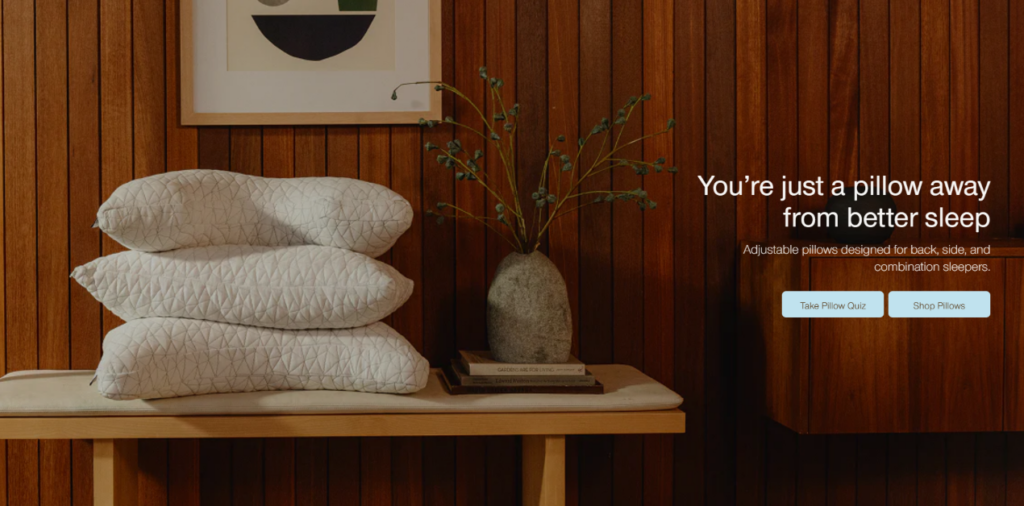
يستخدم قسم الصفحة الرئيسية درجات دافئة من الخشب، وأغطية سرير ناعمة، وألوانًا محايدة، وأجواء غرفة نوم هادئة. صممناه بهذه الطريقة لأن منتجات النوم تتطلب ثقة عاطفية. لا يهتم العملاء بالسعر أو الخامة فقط، بل يتطلعون إلى الشعور بالراحة والاسترخاء ونوم هانئ.
بدلاً من عرض المنتج على خلفية بيضاء عادية، يعرض الموقع الإلكتروني الوسائد داخل بيئة نوم مألوفة. هذا يضفي على المنتج إحساساً بالفخامة والطبيعية. كما أن الألوان الدافئة المستخدمة في التصميم تقلل من الشعور بالضغط التسويقي، وتوحي للعميل بأن هذا المنتج مصمم خصيصاً لحياته اليومية.“
يركز العنوان الرئيسي على الوعد الأساسي: نوم أفضل. ويشرح النص المصاحب أن الوسائد مناسبة لمن ينامون على الظهر أو الجانب أو كليهما. ينجح هذا الأسلوب لأنه يجمع بين الجانب العاطفي والوظيفي. يشعر المستخدم أولاً بالفائدة، ثم يفهم آلية عمل المنتج.
يخدم الزران نوعين مختلفين من المستخدمين. يساعد زر "أجب عن أسئلة الوسادة" المتسوقين المترددين الذين يحتاجون إلى إرشادات، بينما يدعم زر "تسوق الوسائد" المستخدمين الذين يرغبون بالفعل في تصفح المنتجات. نستخدم هذا التصميم ثنائي الوظيفة لأنه يزيد من مرونة واجهة المستخدم دون تعقيدها.
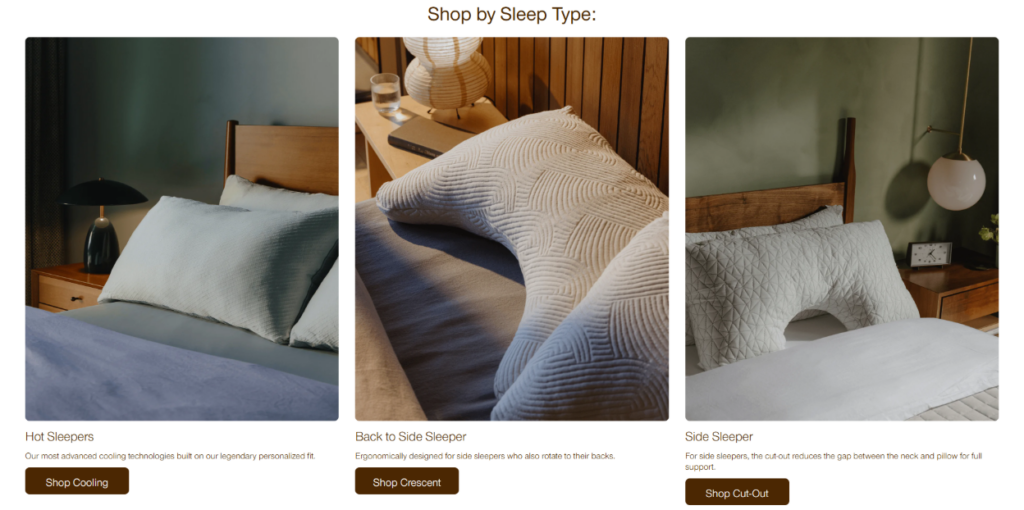
يُعد قسم "التسوق حسب نوع النوم" من أبرز مزايا تصميم الموقع. فبدلاً من إجبار المستخدمين على مقارنة كل منتج يدويًا، يُصنّف الموقع المنتجات حسب احتياجات النوم الفعلية: من يعانون من الحرارة الزائدة أثناء النوم، ومن ينامون على ظهورهم أو جوانبهم، ومن ينامون على جوانبهم.
صممنا الموقع بهذه الطريقة لأن العملاء غالبًا لا يعرفون نوع الوسادة المناسب لهم. فهم عادةً ما يعرفون مشكلتهم أولًا. قد يعانون من ارتفاع درجة حرارة الجسم أثناء النوم، أو قد ينامون على جانبهم، أو قد يغيرون وضعيات نومهم ليلًا. ومن خلال تنظيم تجربة التسوق وفقًا لهذه السلوكيات، يصبح الموقع أكثر فائدة وأقل إرباكًا.
تحتوي كل بطاقة على صورة كبيرة لغرفة نوم، وعنوان قصير، ووصف بسيط، وزر مباشر. يساعد هذا التصميم المتناسق المستخدمين على التصفح السريع. كما تُظهر الصور الوسادة في سياقها، مما يُسهّل فهم الفئة.
يتميز التصميم البصري بالبساطة والاتساع، فلا يبدو المكان مزدحماً. وهذا أمر بالغ الأهمية، لأن منتجات النوم يجب أن تعكس بصرياً شعوراً بالهدوء. فالتصميم الفوضوي قد يضر بالقيمة العاطفية للعلامة التجارية.
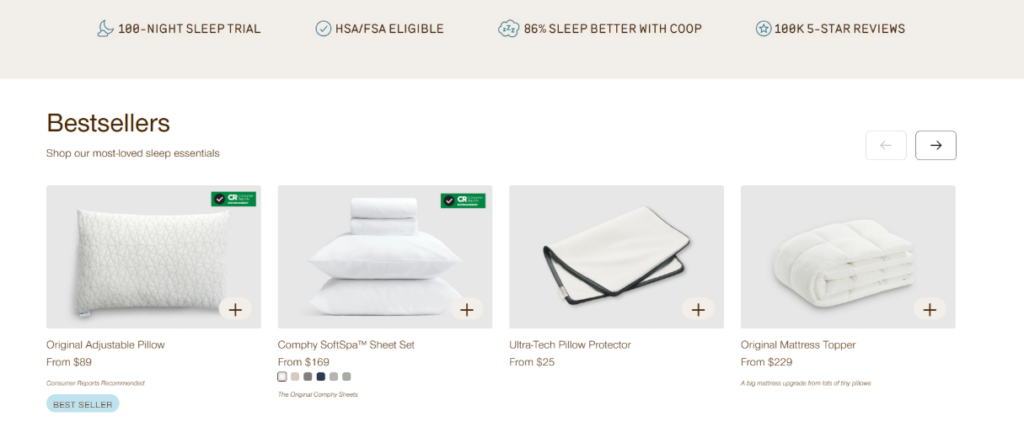
يعرض الموقع الإلكتروني رسائل تعزيز الثقة، مثل ضمان النوم لمدة 100 ليلة، وإمكانية الاستفادة من حسابات التوفير الصحي/حسابات الإنفاق المرن، وادعاءات تحسين جودة النوم، وتقييمات إيجابية عالية، بالقرب من أقسام المنتجات. نعتمد هذا الأسلوب لأن مؤشرات الثقة تكون أكثر فعالية قبل أن يبدأ المستخدم باتخاذ قرارات الشراء.
عندما يطمئن المتسوقون مبكراً، يشعرون براحة أكبر عند استكشاف المنتجات. وهذا مهم بشكل خاص لمنتجات الفراش لأن الراحة أمر شخصي. قد يقلق العملاء بشأن مدى ملاءمة الوسادة لهم، لذا فإن فترة تجربة النوم ووجود تقييمات إيجابية كثيرة يقللان من هذا القلق.
يستخدم قسم "الأكثر مبيعًا" بطاقات منتجات بسيطة تتضمن صورًا واضحة، وأسماء المنتجات، والأسعار، وملاحظات مختصرة، وعلامات، وأيقونات للإضافة السريعة. صممنا هذا القسم لمساعدة المستخدمين على اتخاذ قرارات أسرع. تُعدّ المنتجات الأكثر مبيعًا بمثابة دليل اجتماعي، إذ تُخبر المتسوقين أن "العديد من الأشخاص قد اختاروا هذه المنتجات بالفعل".“
تحافظ الخلفيات المحايدة للمنتج على تركيز الانتباه على المنتج نفسه. يسهّل رمز الإضافة السريعة عملية الشراء، بينما توفر ملاحظات المنتج معلومات كافية لدعم المقارنة. يحقق هذا القسم توازناً مثالياً بين الوضوح وزيادة المبيعات.
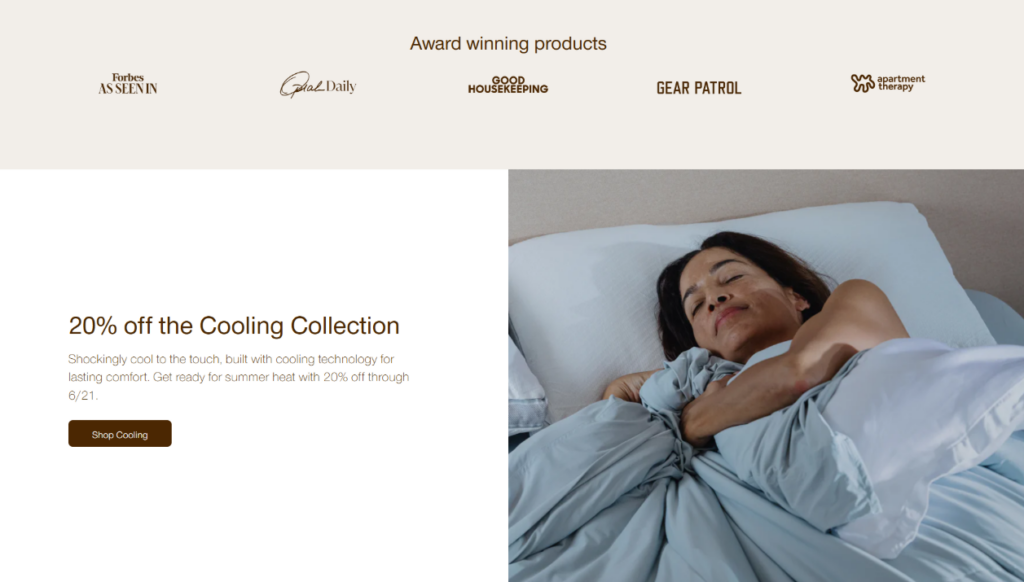
يُبرز قسم المنتجات الحائزة على جوائز شعاراتٍ ذات طابع إعلامي فوق لافتة ترويجية لمجموعة منتجات التبريد. يُرسي هذا تسلسلاً قوياً: أولاً المصداقية، ثم العرض. نستخدم هذا الهيكل لأن العروض الترويجية تبدو أكثر إقناعاً عندما تكون العلامة التجارية قد رسّخت مكانتها بالفعل.
إذا رأى العميل عرضًا قبل أن يتأكد من مصداقية العلامة التجارية، فقد يبدو الخصم زهيدًا. ولكن عندما تظهر الجوائز والتقدير أولًا، يبدو العرض الترويجي فرصة قيّمة من علامة تجارية موثوقة.
يستخدم شعار مجموعة التبريد صورة كبيرة لشخص مسترخٍ على سريره. لا تُظهر هذه الصورة المنتج فحسب، بل تُظهر النتيجة المرجوة: نوم مريح ومنعش. نستخدم هذا النوع من الصور التي تُجسّد نمط الحياة لأن العملاء يشترون النتيجة، وليس المنتج فقط.
يعرض الجانب الأيسر العرض بوضوح، بينما يخلق الجانب الأيمن رغبة عاطفية. يحافظ هذا التصميم ذو العمودين على تنظيم الرسالة وتوازنها البصري.
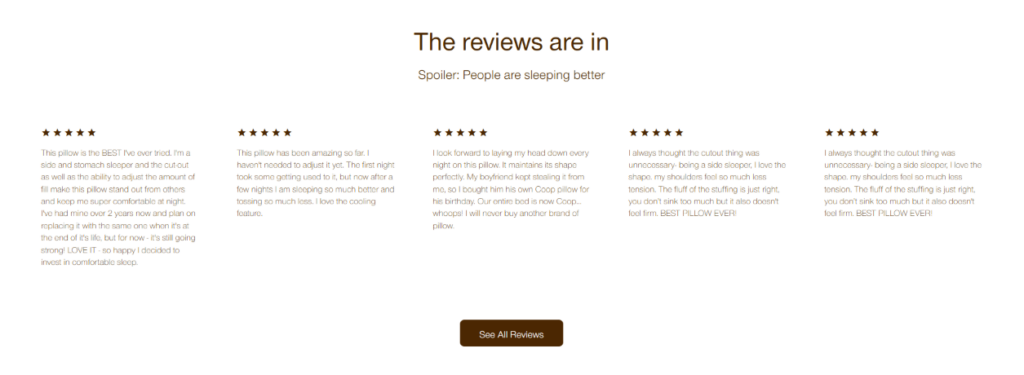
يستخدم قسم التقييمات عنوانًا مركزيًا، وعنوانًا فرعيًا قصيرًا وجذابًا، وتقييمات بالنجوم، واقتباسات متعددة من العملاء. سنحرص على أن يكون هذا القسم بسيطًا وواضحًا لأن التقييمات يجب أن تبدو موثوقة، لا مُفتعلة.
يبدو العنوان الرئيسي "وصلت التقييمات" عفوياً وواثقاً. أما العنوان الفرعي فيضفي عليه طابعاً مميزاً. ويتيح تصميم الأعمدة المتعددة للزوار الاطلاع على آراء متعددة في آن واحد، مما يخلق إحساساً بالشمولية والاتساق.
تُسهّل المساحة البيضاء الواسعة المحيطة بالتقييمات قراءة القسم، كما تُضفي على الصفحة طابعًا مميزًا. نتجنب وضع التقييمات داخل مربعات كبيرة أو رسومات صاخبة، لأن ذلك قد يُوحي بأن القسم إعلانٌ مُزعج. هنا، يُتيح التصميم لآراء العملاء التعبير عن أنفسهم بشكل طبيعي.
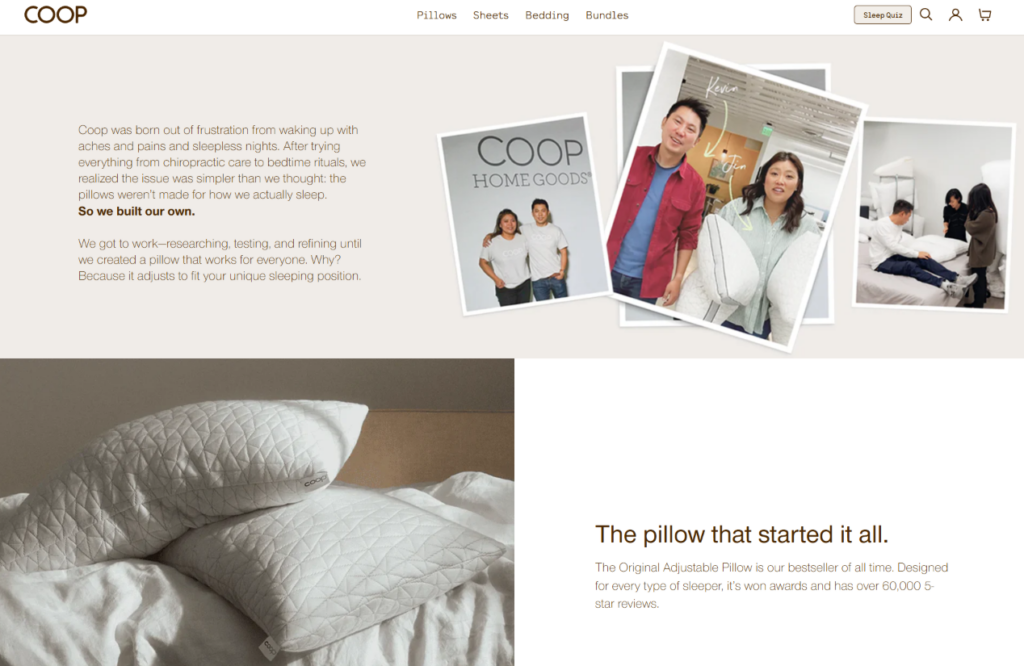
تستخدم صفحة "نبذة عنا" صورًا مستوحاة من مؤسس العلامة التجارية، ومحتوى يروي قصتها، وصورًا للمنتجات، وأقسامًا للتسوق. صممناها بهذه الطريقة لأن صفحة "نبذة عنا" لا تقتصر على شرح هوية العلامة التجارية فحسب، بل يجب أن تربط قصتها بتجربة المنتج أيضًا.
يعرض القسم العلوي قصصًا حقيقية لأشخاص حقيقيين ولحظات من تطور العلامة التجارية، مما يضفي على الشركة طابعًا إنسانيًا. تشرح القصة أن المنتج نشأ من معاناة الأشخاص الذين يعانون من قلة النوم وعدم راحة الوسائد، وهذا الأصل يمنح المنتج دافعًا أقوى للوجود.
لا تقتصر الصفحة على سرد القصص فحسب، بل تُعرّف بالوسادة الأصلية، وتعرض الوسائد القابلة للتعديل الأكثر مبيعًا، وتُقدّم منتجات أغطية الأسرة، وتتضمن لافتة اختبار النوم. وهذا ذكاءٌ من جانبنا، لأن ثقة العلامة التجارية يُمكن أن تتحول بسرعة إلى رغبة في الشراء.
سنستخدم هذا الهيكل لأن المستخدمين الذين يزورون صفحة "نبذة عنا" غالبًا ما يرغبون في الحصول على تأكيد. وبمجرد أن توفر لهم الصفحة هذا التأكيد، ينبغي أن تُسهّل عليهم الخطوة التالية. وتُساهم عروض المنتجات الدوّارة والاختبار في خلق مسار سلس من الاعتقاد إلى الفعل.
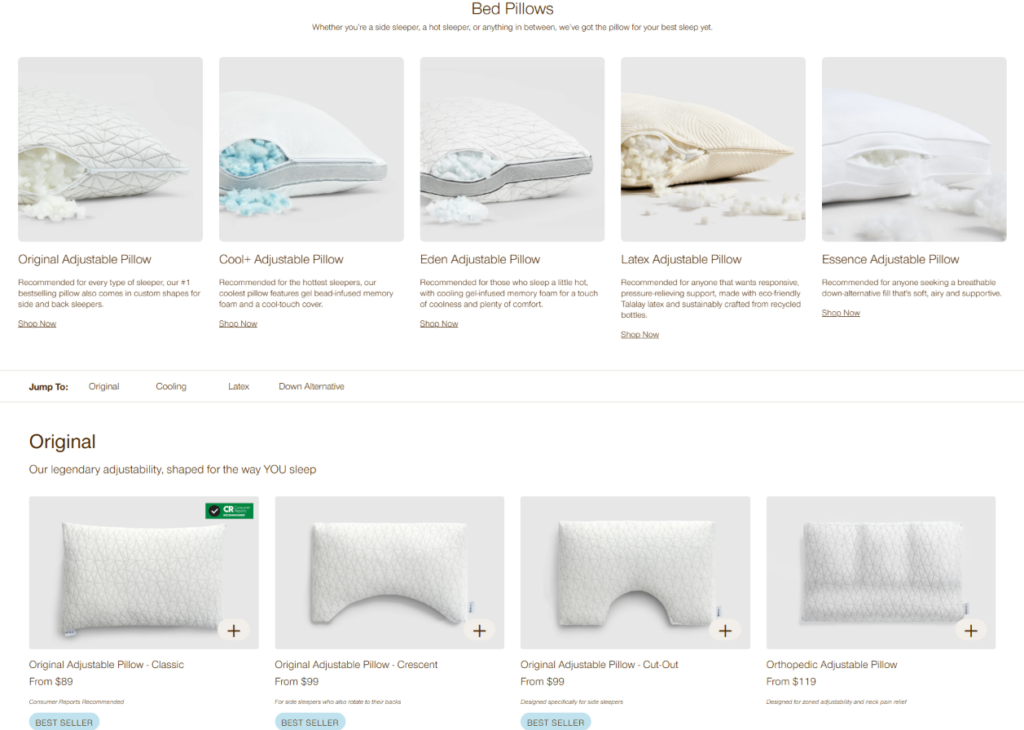
تضم صفحة مجموعة المنتجات أنواعًا متعددة من الوسائد، مثل الأصلية، والباردة، وإيدن، واللاتكس، والبديلة للريش. كما يعرض الموقع الإلكتروني أشكالًا مختلفة للمنتجات، بما في ذلك الخيارات الكلاسيكية، والهلالية، والمقطوعة في العديد من خطوط الوسائد.
سننظم الصفحة بهذه الطريقة لأن كتالوج المنتجات الكبير قد يُربك العملاء بسهولة. تساعد فئات المنتجات الواضحة المتسوقين على المقارنة حسب الوظيفة، والمادة، وقدرة التبريد، ومستوى الراحة، ونوع الدعم.
تتبع كل بطاقة منتج نفس البنية: صورة، اسم، سعر، علامات الميزات، وأيقونة الإضافة. هذا التكرار مقصود. فالاتساق يُسهّل على المستخدمين المقارنة بشكل أسرع. عندما تعمل جميع البطاقات بنفس الطريقة، لا يضطر العميل إلى إعادة تعلم التصميم.
تستخدم الصفحة أيضًا علامات صغيرة مثل "تبريد" و"ممتاز" و"مستدام" و"الأكثر مبيعًا" و"خصم". تعمل هذه العلامات كمؤشرات سريعة لاتخاذ القرار، حيث تساعد المستخدمين على تحديد اختلافات المنتجات دون الحاجة إلى قراءة أوصاف مطولة.
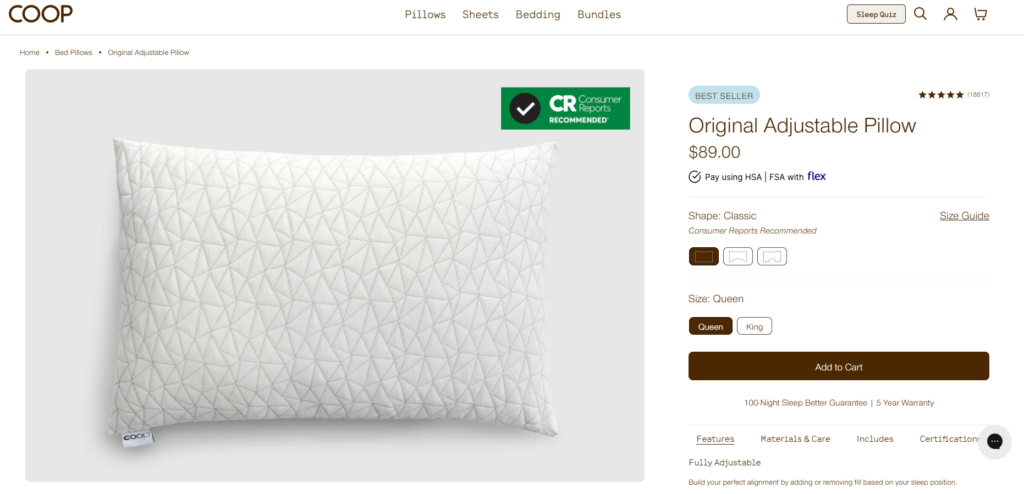
في صفحة تفاصيل المنتج، يظهر معرض المنتجات الكبير على اليسار، بينما تظهر لوحة الشراء على اليمين. صممنا ذلك بهذه الطريقة لأن المستخدمين يحتاجون إلى رؤية واضحة ومعلومات الشراء في آن واحد.
يعرض معرض المنتجات الوسادة من زوايا متعددة، بما في ذلك شكلها، وملمس سطحها، وحشوتها الداخلية، واستخداماتها المتعددة. وهذا مهم لأن مشتري الوسائد يهتمون بنعومتها، ودعمها، وارتفاعها، وملمس خاماتها. كما يسهل الوصول إلى اسم المنتج، وسعره، وتقييمات المستخدمين، وخياراته، وزر إضافته إلى سلة التسوق، وذلك من خلال قسم الشراء الموجود على الجانب الأيمن.
تتضمن صفحة المنتج صورًا مقرّبة للمواد، وتفاصيل الحشو، ومخططات التصميم، وقسم الأسئلة الشائعة، والمنتجات ذات الصلة، وآراء العملاء. ينجح هذا الهيكل متعدد المستويات لأن كل قسم يجيب على سؤال مختلف.
أولاً، يرى العميل المنتج. ثم يفهم المواد المستخدمة. ثم يتعرف على مزايا التصميم. ثم يقرأ الأسئلة الشائعة. ثم يطلع على المنتجات ذات الصلة. وأخيراً، تؤكد التقييمات تجربة المنتج. هذه الخطوات تدعم قرار شراء واثق.
ال منتجات النوم من COOP ينجح الموقع الإلكتروني لأنه يتعامل مع تصميم التجارة الإلكترونية كرحلة عميل متكاملة، وليس مجرد تصميم مرئي. فهو يستخدم صورًا دافئة تعكس نمط الحياة لخلق شعور بالراحة النفسية، وتصميمًا واضحًا للفئات لتوجيه عملية اكتشاف المنتجات، ومؤشرات ثقة لتقليل التردد، وبطاقات منتجات لتسهيل المقارنة، وصفحات منتجات مفصلة لدعم الشراء بثقة.
كمصممين، نصف هذا النهج بأنه يركز على زيادة المبيعات مع الحفاظ على هدوئه وتوجهه نحو العلامة التجارية. لا يبدو الموقع الإلكتروني عدوانيًا أبدًا، بل يرشد المستخدمين خطوة بخطوة، بدءًا من الاهتمام وصولًا إلى الثقة، ومن الثقة إلى فهم المنتج، ومن فهم المنتج إلى الشراء. هذا هو بالضبط نوع التفكير التصميمي الذي يساعد المتجر الإلكتروني على تجاوز مجرد بيع المنتجات الفردية وبناء تجربة علامة تجارية حقيقية. بالنسبة للشركات التي ترغب في تجربة موقع إلكتروني مستقل مماثل، ولكن بهيكل أقوى، وسرد أفضل للمنتجات، ومسارات تحويل أوضح،, أيرسانج يمكننا المساعدة في تخطيط وتصميم هذا النوع من مواقع التجارة الإلكترونية التي تركز على العلامة التجارية.