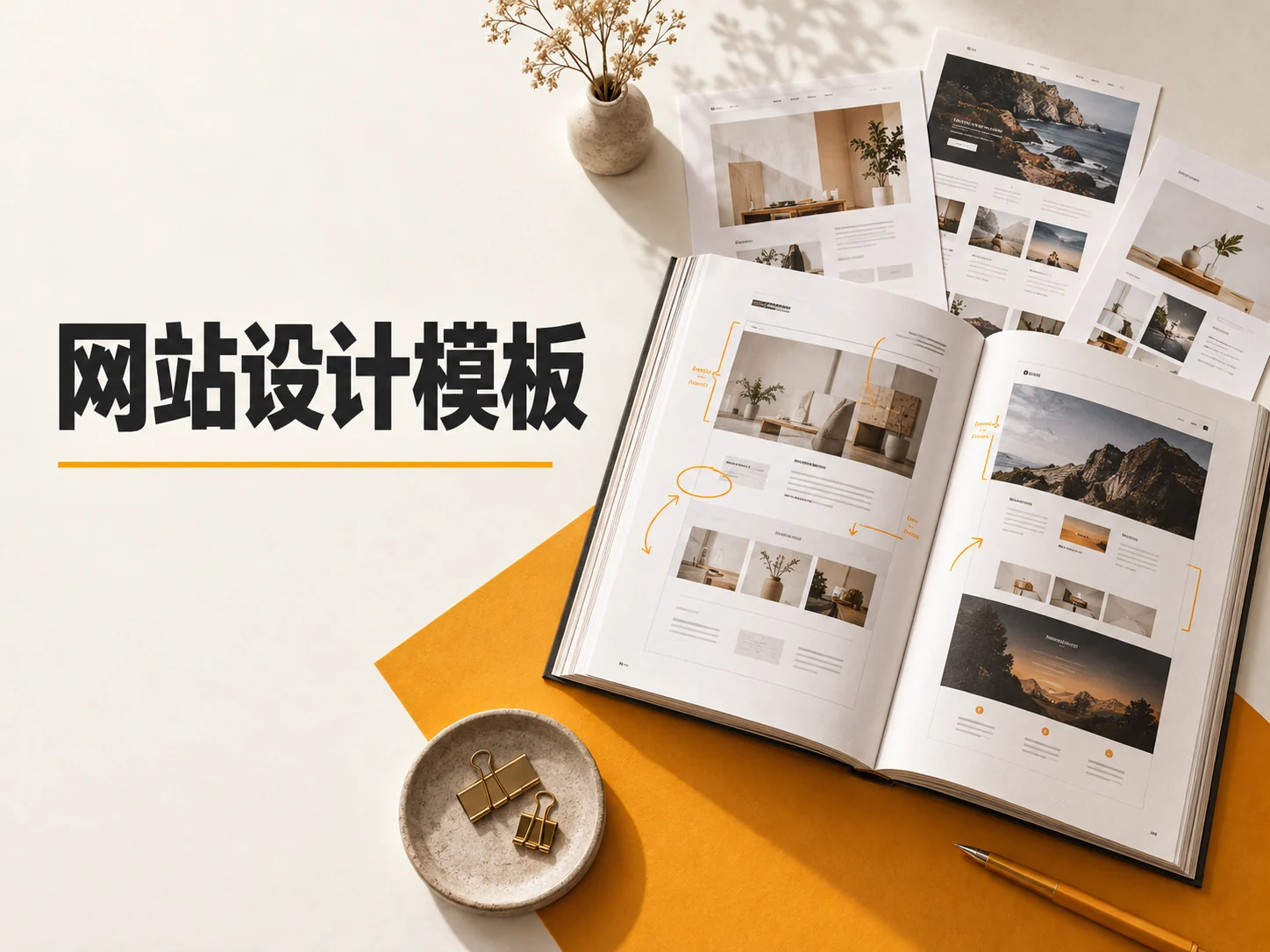
When searching for “website design template”, you are most likely to be attracted by the color matching and dynamic effects of the demo page. But the demo page does not have your real product, copywriting, and customer inquiry process. What companies really need to judge is: after putting their own content in, whether visitors can understand the business and find the next step, and whether the team can continue to maintain it. The following method is suitable for teams preparing brand websites, brand official websites or service websites; it helps you narrow down the scope of candidates and does not guarantee the speed or effectiveness of any specific template.
List pages and conversion tasks first, then choose styles
Start by writing a one-page list of requirements: What markets and languages should the website cover? From which page do visitors enter? Do you want them to submit a customer inquiry, make an appointment for communication, or purchase directly? The home page is responsible for positioning, the product or service page answers details, the case and qualification pages provide evidence of trust, and the contact page is responsible for conversion. Only by listing the person responsible for each page, the required materials, and the target actions can you judge whether the demo page is close to the business.
If you haven’t decided yet whether you want to build a corporate official website or a transactional brand website, you can read this first The difference between brand website and official website . The content structure and subsequent maintenance tasks of the two sites are different, so you cannot directly apply a certain set of templates just because they “look like e-commerce.”

Divide requirements into “must have when going online” and “will be added in the next stage”. If there are only ten products and one customer inquiry form in the first issue, check this path first; if you plan to display different content by country in the future, confirm in advance whether the language, currency, and page structure can be expanded. This also makes it easier to discuss the actual scope of work with the designer or developer.
Filter out inappropriate website design templates with a five-point checklist
Open the demo or trial environment of the candidate theme and don’t just look at the screenshots. Fill in your title length, image proportions and product quantity, and then follow the table one by one. Projects that cannot be confirmed in the trial phase are recorded as “to be verified”. Do not regard the functions displayed on the demo site as functions you have already obtained.
| Check items | How to verify in demo or trial | The cost of failure |
|---|---|---|
| Page and module editability | Try adjusting the order of the home page, product detail page, and form fields, and record what can be done in the editor. | Each subsequent revision may depend on code or new components. |
| Licensing, updates and support | Check theme and material licenses, update history, and support scope; check with the supplier for questions. | There may be cases where the material is not authorized to be used, updates are interrupted, or maintenance responsibilities are unclear. |
| Mobile navigation and conversion | Use a real device to navigate through menus, search, forms, or checkout to check button size and input experience. | Critical steps are difficult to complete on a mobile phone. |
| Performance and accessibility | After importing real content, test loading by page and device; use the keyboard to check the contrast of menus, forms, and text. | Experience problems were discovered only after going online and required additional rectification. |
| Multilingual and subsequent expansion | Draw out the next stage of the page and test long copy, different languages and new columns. | Your information architecture may need to be redone as your business expands. |
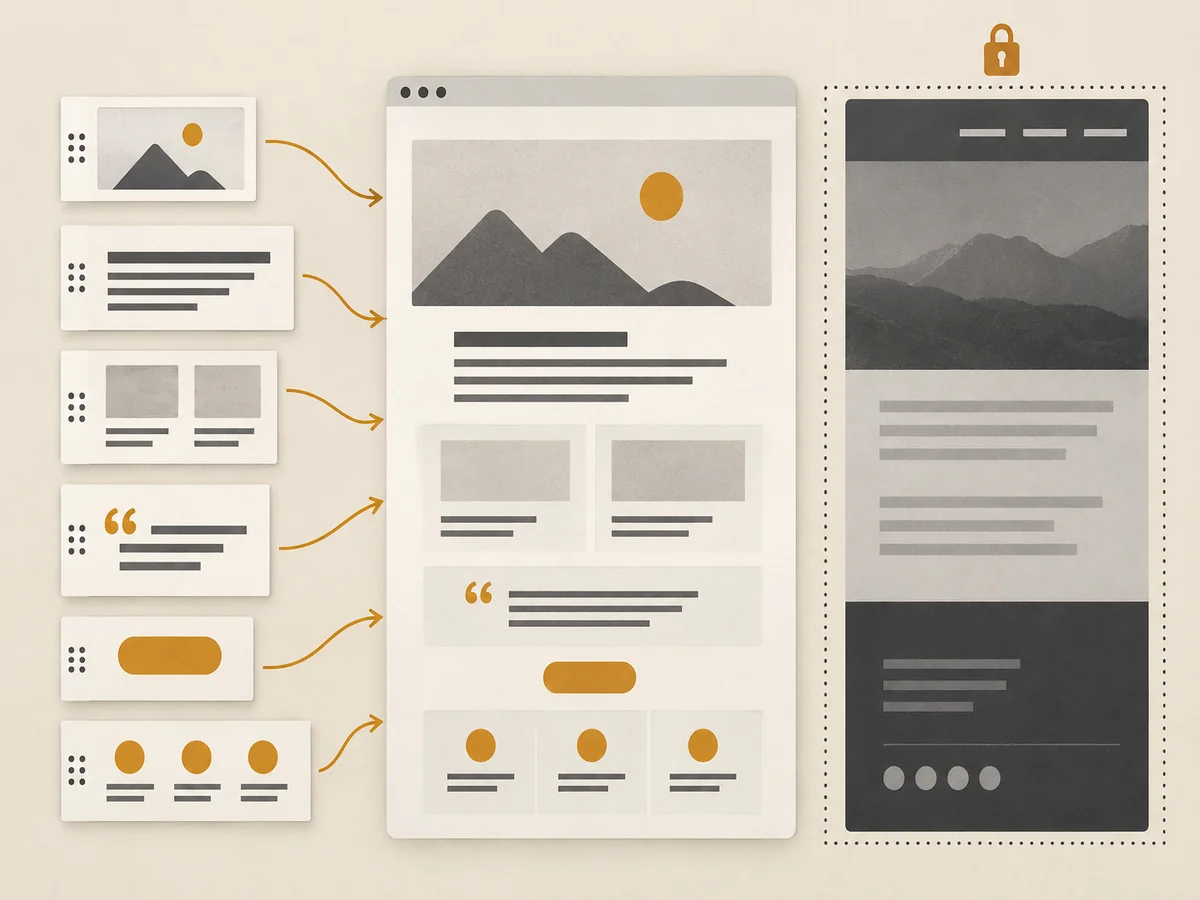
These five items are not a single scoring scale. For customer inquiry websites, form and case pages are often more important than complex shopping functions; for direct sales stores, filtering, product variations, and checkout paths must be tested first. Give each item a “passed, to be verified, or not satisfied” and then compare the candidate templates to avoid being interfered by irrelevant animations or add-ons.
What to check for Shopify vs WordPress themes
Shopify: filter by features, but also try specific themes
Shopify Official Theme Selection Guide Note that Theme Store can find themes by function and industry. Screening is only the first step: based on Official theme structure description , the page template is composed of sections and blocks, and the modules provided by different themes are different. Please actually test whether the product page, collection page, and home page have the required blocks, and also confirm whether a certain effect comes with the theme, is implemented by the application, or is the look and feel caused by the demo data.
WordPress: separate themes, plugins and page templates
WordPress themes are responsible for the overall presentation of the website, page builder templates usually only cover a certain page or section, and plugins take on specific functions. Before purchasing a “whole-site template”, first ask which components it depends on and who maintains which content. WordPress Official Business Support Theme Description It shows that themes can be equipped with additional paid support; but the specific license, update frequency and service boundaries still need to check the selected theme and supplier terms, and all themes in the catalog cannot be regarded as the same guarantee.
Both platforms should be piloted with their own content. Whether a template can be edited and whether it can be updated stably should not be judged solely by promotional images; if you encounter support commitments that cannot be verified, write the questions into the selection form and ask for a written reply from the provider.
When is a template sufficient and when does it need to be customized?
If the website is mainly about general service introduction, product catalog, blog and standard customer inquiry process, it is usually easier to judge the scope of investment by first running a complete path with the candidate template. “Sufficient” here means that key pages and maintenance actions can be completed. It does not mean that any template can be directly launched, nor does it necessarily mean that it will be faster or cheaper.
If the business requires complex product configurators, unique quotation rules, content logic for different countries, in-depth system docking, or brand components that exceed the existing structure of the theme, customization must be evaluated. When evaluating, clarify which parts will remain templated, which parts will be developed separately, and whether the content team can update it themselves. Customization also requires budget, testing and maintenance responsibilities, and it cannot be understood as just “designing to look better”.
Before making a quotation or asking a service provider, you can use Website design proposal list Organize pages, materials, interactions and delivery boundaries; this way you are comparing the same needs, not two demo sites with different appearances.
Conduct desktop and mobile testing with real content before going online
Start by filling in the final or near-final product images, title, FAQ, and contact information. On the desktop, enter a product or service details from the home page and check the navigation level, search and button directions; on the mobile phone, repeat the same task, complete the form or purchase steps, and observe whether the menu is blocked, whether the input box is easy to use, and whether there is clear feedback after submission. The test covers at least one normal process and one error input process.
Then use PageSpeed Insights or a similar tool to record the actual pages, devices, detection dates, and issues seen. Speed is affected by images, applications, hosts, content and network conditions. Scores from a blank demo site cannot replace your own online page. After the performance and accessibility check is completed, the issues are graded according to “must be fixed before going online” and “subsequent optimization”.

At the end of the trial, leave a record of your decision: candidate theme names and versions, verified pages, open issues, licensing and support links, components that need to be purchased separately, and who will be responsible for maintenance.
Conclusion: Decide template selection from the business path backwards
A website design template can be the starting point, but the order of selection should be a list of requirements, a trial run of real content, a five-point check, a mobile task test, and finally visual preference and budget. Themes that can complete the critical path and meet authorization and maintenance requirements can continue to be evaluated; if they cannot, the cost of modification should be indicated, and customization can be turned to if necessary. What you get in this way is a reviewable basis for selection, rather than a general recommendation for a certain set of templates.