










Giỏ hàng hiện không có sản phẩm nào.
In today’s competitive eCommerce landscape, design is no longer just about aesthetics—it’s about guiding user behavior, building trust, and driving conversions. For furniture-focused brands, especially those offering functional lifestyle products like slipcovers, the challenge becomes even more nuanced: how do you visually communicate comfort, durability, and style—within seconds?
This case study explores how we approached the design of a premium Shopify website for a furniture covers brand, focusing on user experience, visual storytelling, and conversion-oriented layout strategy. Rather than relying on technical complexity, the project was driven entirely by thoughtful design decisions—ensuring that every visual element served a purpose.
| Thời gian giao hàng | Loại | Nền tảng ứng dụng |
| 29 ngày | Furniture Covers | shopify |
| Các nhà thiết kế tham gia | Trị giá | Tác dụng |
| Lin Zhang | $3200 | Turnover📈263% |
Before any design work began, we first clarified the brand’s positioning:
This positioning informed every design decision—from typography and color palette to layout structure and image direction.
We identified key audience segments:
These users are highly visual and emotionally driven. They don’t just buy products—they buy lifestyle upgrades.
The homepage was structured to guide users through a natural journey:
Every section was intentionally placed to answer a specific user question.
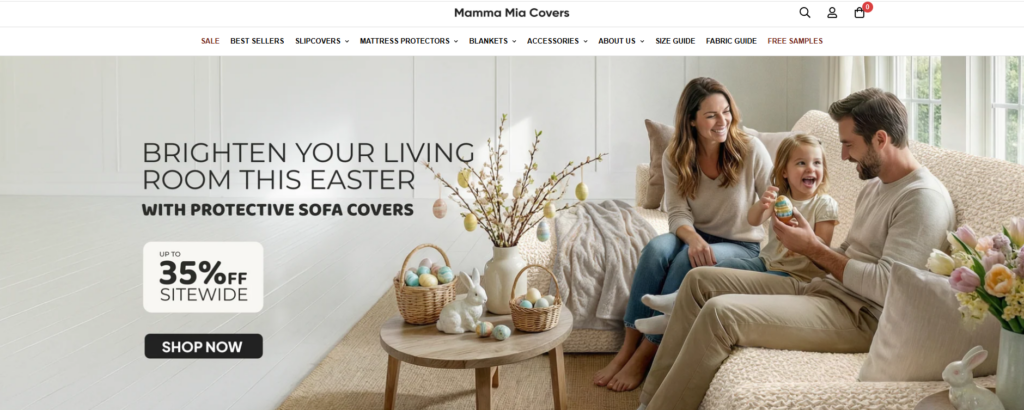
Instead of focusing purely on product features, the hero section emphasizes real-life scenarios:
This approach immediately answers the subconscious question:
“Will this fit into my life?”
We selected a combination of:
The color palette focused on:
This balance ensures the site feels both premium and welcoming.
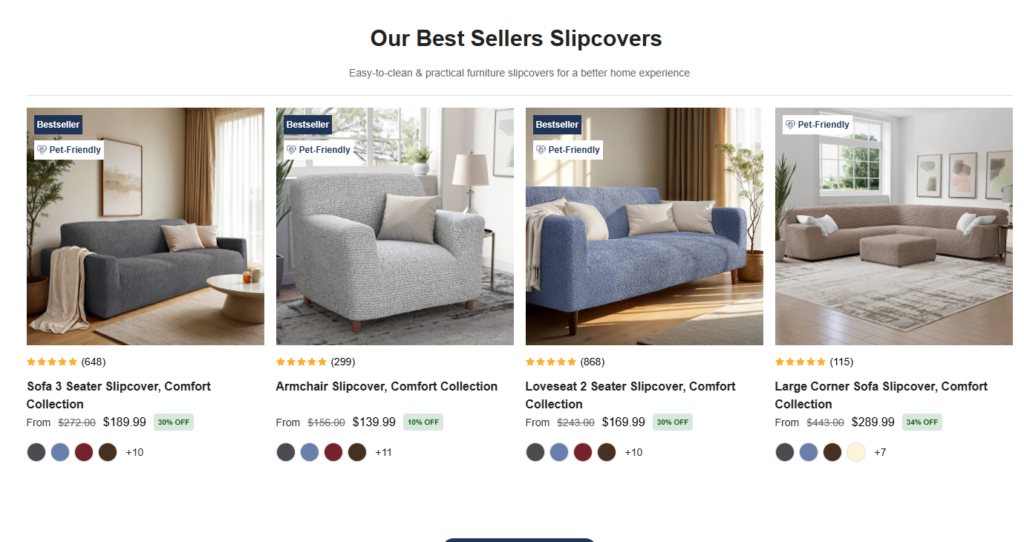
Instead of isolated product shots, we used:
This helps users visualize the product in context.
Mỗi thẻ sản phẩm được thiết kế để:
We avoided overwhelming users with too many options. Instead, we focused on:
Rather than complex filtering systems, we designed a visually intuitive filtering flow:
This allows users to quickly narrow down choices without friction.
Trust is critical in eCommerce, especially for higher-ticket home products.
We incorporated:
These elements were integrated seamlessly into the design—not as intrusive blocks, but as natural parts of the browsing experience.
Instead of overwhelming users with badges, we used:
This maintains a premium feel while still reinforcing credibility.
While the homepage sets the tone, supporting pages reinforce consistency.
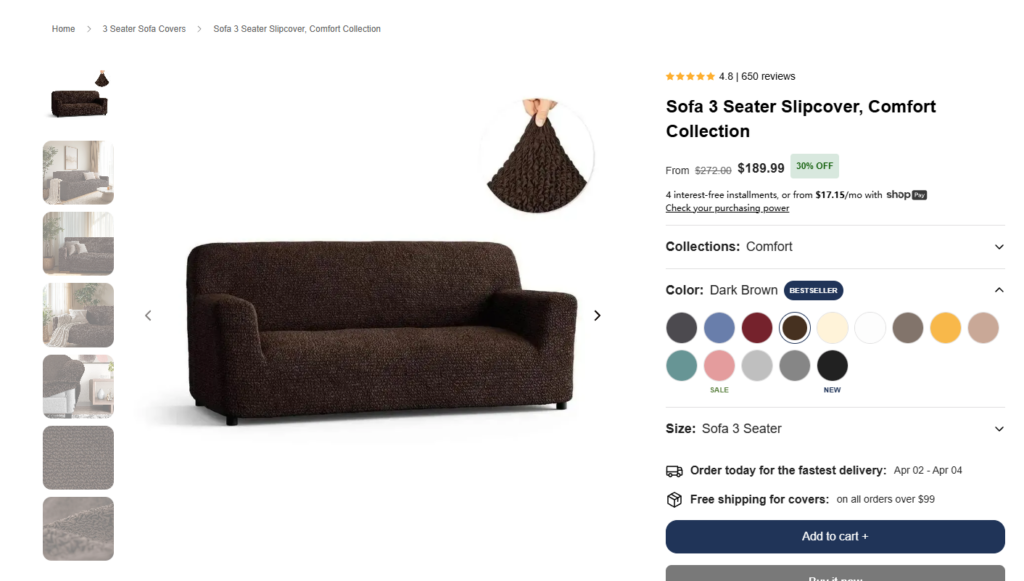
The PDP design focused on:
The About page was designed to:
Instead of long text blocks, we used:
Collection pages were designed to:
We analyzed:
The goal was to identify gaps and opportunities.
Before visual design, we mapped:
This ensured that the design would be both functional and intuitive.
We defined:
This created a cohesive visual identity.
We continuously refined:
Every iteration focused on improving clarity and conversion potential.
Furniture covers are practical products, but functionality alone isn’t enough.
Challenge:
How to visually communicate durability, flexibility, and ease of use—without relying on technical explanations?
A premium look can sometimes conflict with usability.
Challenge:
Maintaining a high-end feel while ensuring the site remains easy to navigate.
With multiple product variations and features, there’s a risk of overwhelming users.
Challenge:
Keeping the design clean while still delivering all necessary information.
Chúng tôi đã sử dụng:
This communicates product value instantly.
Chúng tôi đảm bảo:
This improves readability and user flow.
Instead of selling features, we focused on:
This aligns with how users actually make purchasing decisions.
A high-converting Shopify furniture store design focuses on clear visual hierarchy, lifestyle-driven imagery, and intuitive navigation. Instead of overwhelming users with features, it highlights key benefits like comfort, durability, and ease of use. Strong product storytelling and trust elements—such as reviews and real-life scenarios—also play a crucial role in guiding users toward purchase decisions.
Lifestyle imagery helps customers visualize how products fit into their daily lives. For furniture covers, showing real homes, pets, and cozy environments builds emotional connection and trust. This approach reduces uncertainty and makes the product feel more relevant, which significantly increases engagement and conversion rates.
Good design improves user experience by simplifying navigation, organizing content clearly, and reducing cognitive load. Elements like clean layouts, consistent spacing, and easy-to-use filters help users find what they need quickly. A well-structured design ensures users move smoothly from browsing to purchasing without confusion.
An effective Shopify homepage typically includes a strong hero section, clear value propositions, organized product categories, lifestyle visuals, and trust-building elements like testimonials. Each section should serve a specific purpose, guiding users step-by-step toward understanding the product and taking action.
Balancing aesthetics and functionality means creating a visually appealing interface without sacrificing usability. This involves using clean layouts, readable typography, and a consistent color system while ensuring all key information remains easy to access. The goal is to create a premium feel that still allows users to navigate effortlessly and make quick decisions.
The design led to:
Users perceived the brand as:
By simplifying navigation and improving clarity, the design:
This project reinforces a key principle:
Good design is not decoration—it’s strategy.
In eCommerce, especially on platforms like Shopify, design directly influences:
A well-designed store doesn’t just look good—it performs.
Designing a high-performing Shopify store requires more than templates or visual polish. It demands a deep understanding of user behavior, brand positioning, and conversion psychology.
From homepage structure to product storytelling, every element of this project was crafted with intention—ensuring that users not only understand the product but also feel confident purchasing it.
Tại AIRSANG, we specialize in design-driven eCommerce experiences. From independent site design to product visual strategy, we help brands turn ideas into high-converting digital storefronts. If you’re looking to elevate your Shopify presence through thoughtful design, our team is here to help.