









Giỏ hàng hiện không có sản phẩm nào.
When designing a main image set for a cycling helmet on Ozon, the primary goal is not visual impact alone, but clarity, trust, and fast comprehension. Ozon users scroll quickly, compare aggressively, and rely heavily on visual cues to judge safety, comfort, and value within seconds.
For this cycling helmet project, we approached the design with a clear strategy: every image must answer one key user question. Instead of overwhelming the buyer with technical text, we used structured layouts, clean typography, and realistic product rendering to guide the customer through features step by step. Each image plays a distinct role in reducing hesitation and increasing confidence.
This article breaks down the design logic behind every image in the Ozon main image set and explains how visual decisions directly support higher click-through rates and better conversion.
| Thời gian giao hàng | Loại | Nền tảng ứng dụng |
| 8 ngày | Cycling helmet | Ozon |
| Các nhà thiết kế tham gia | Trị giá | Tác dụng |
| Nancy | $150 | Sales volume📈196% |
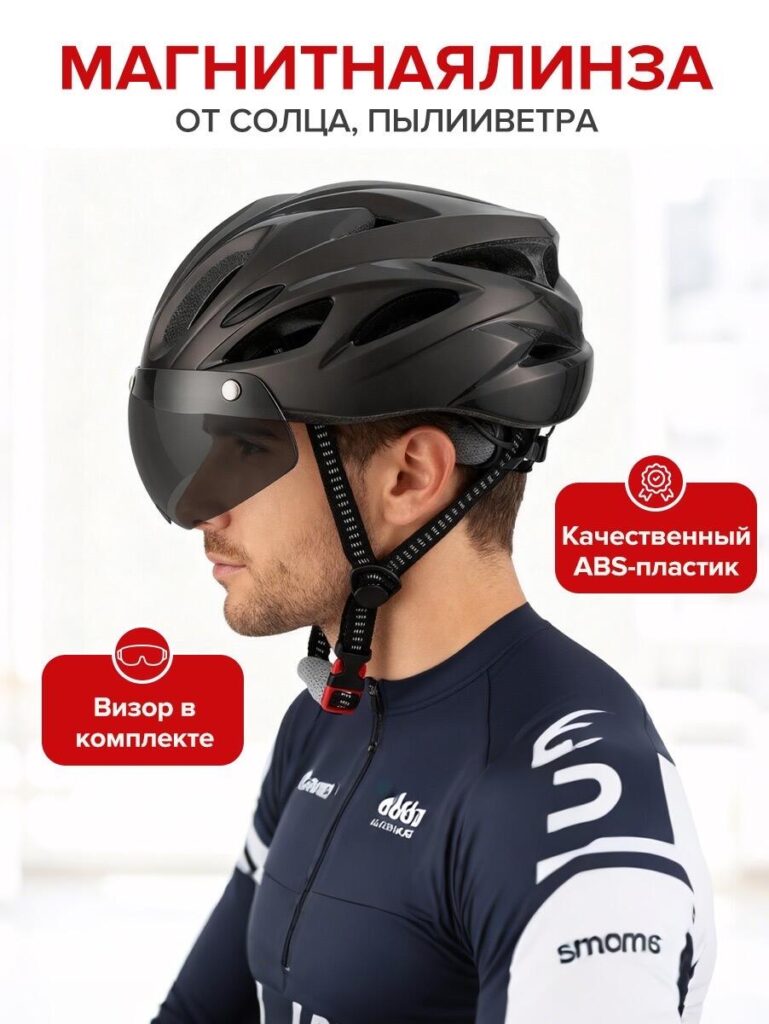
The first image introduces the helmet worn by a real cyclist in a clean, bright environment. This image focuses on the magnetic visor, clearly labeled as protection from sun, dust, and wind.
From a design perspective, we placed the visor at the center of attention for a reason. On Ozon, differentiation is critical. Many helmets look similar at first glance, but a magnetic visor instantly communicates added value. Showing it in real-world use helps users immediately understand its purpose without reading long descriptions.
We chose a neutral background and realistic lighting to emphasize the product rather than distract from it. The helmet’s contours, visor transparency, and fit on the rider’s head are all clearly visible, reinforcing trust and authenticity. The red callout elements are intentionally bold to guide the eye and ensure readability even on mobile screens.
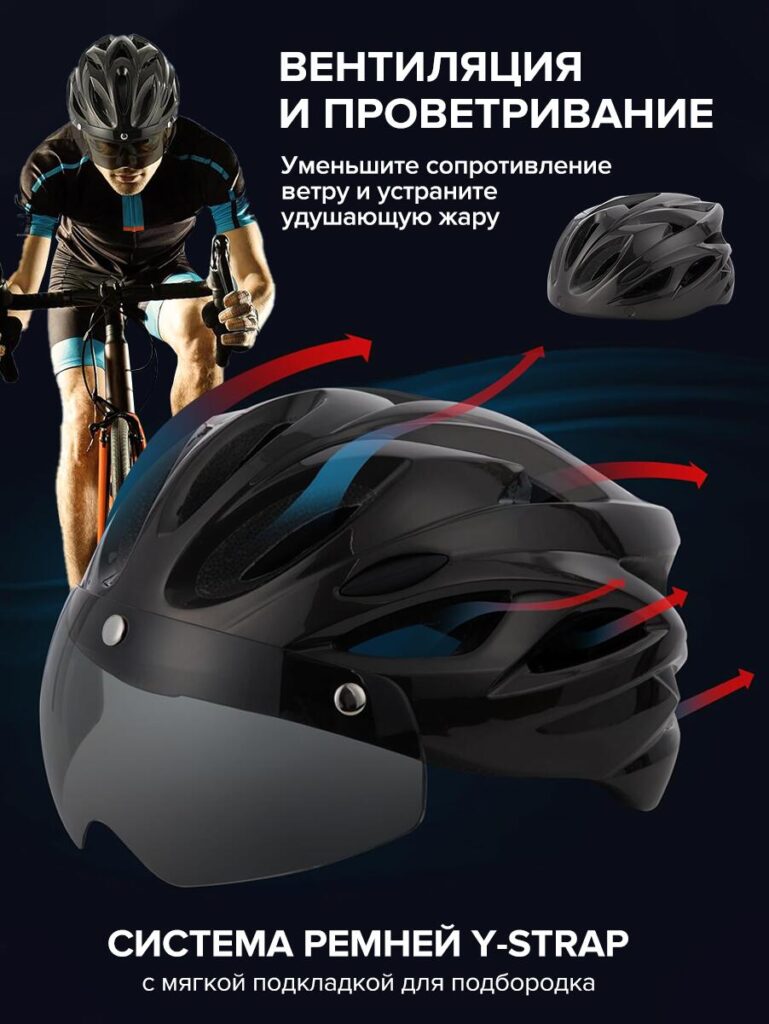
The second image shifts from lifestyle to functional performance. Here, we visually explain ventilation and airflow using directional arrows and layered graphics.
Instead of listing airflow numbers or technical jargon, we chose a visual metaphor that instantly communicates cooling and reduced wind resistance. Cyclists care deeply about heat buildup, especially during long rides, so this image answers a critical concern: “Will this helmet feel hot?”
The darker background creates contrast, allowing the airflow arrows and helmet shape to stand out. This design choice increases visual clarity while also giving the image a more technical, performance-driven feel. By showing both a rider in motion and a close-up helmet render, we bridge emotional appeal and technical reassurance in a single frame.
In the third image, the focus moves to fit and stability, specifically the Y-strap system and chin padding.
From a UX standpoint, strap systems are often overlooked in product photos, yet they strongly influence comfort perception. We designed this image to highlight how the straps sit naturally along the face, with soft padding under the chin to prevent irritation.
The clean text hierarchy ensures users can instantly identify the benefit without reading dense copy. By pairing the strap close-up with a helmet render, we show both micro details and the overall structure, reinforcing quality and thoughtful engineering.
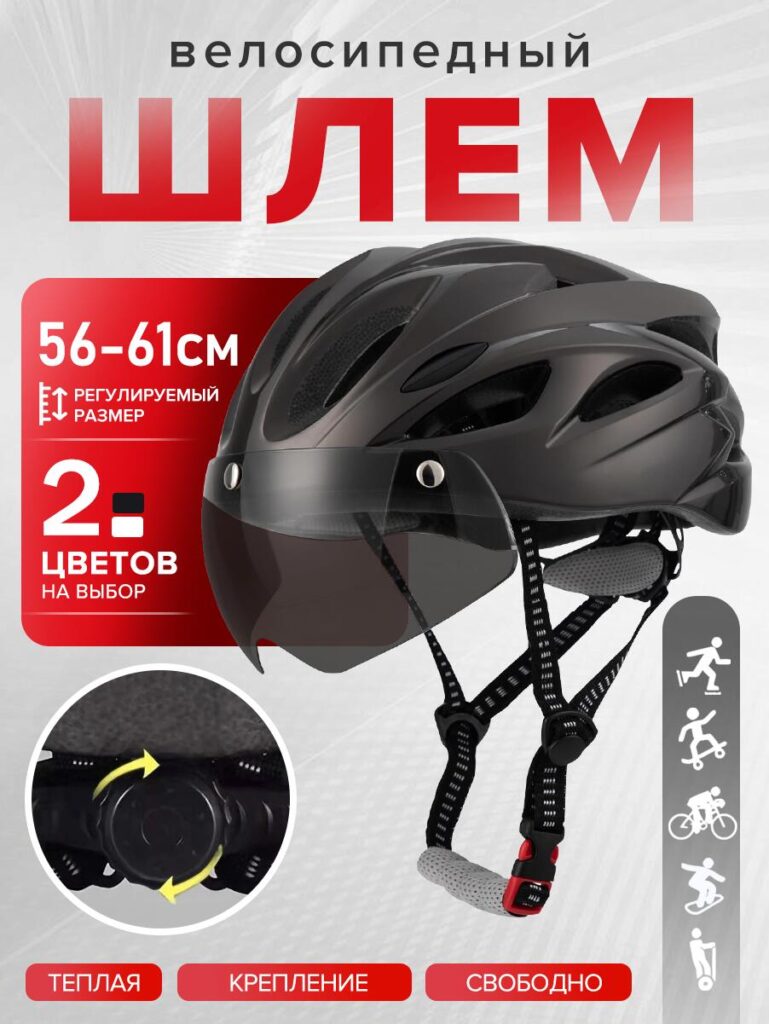
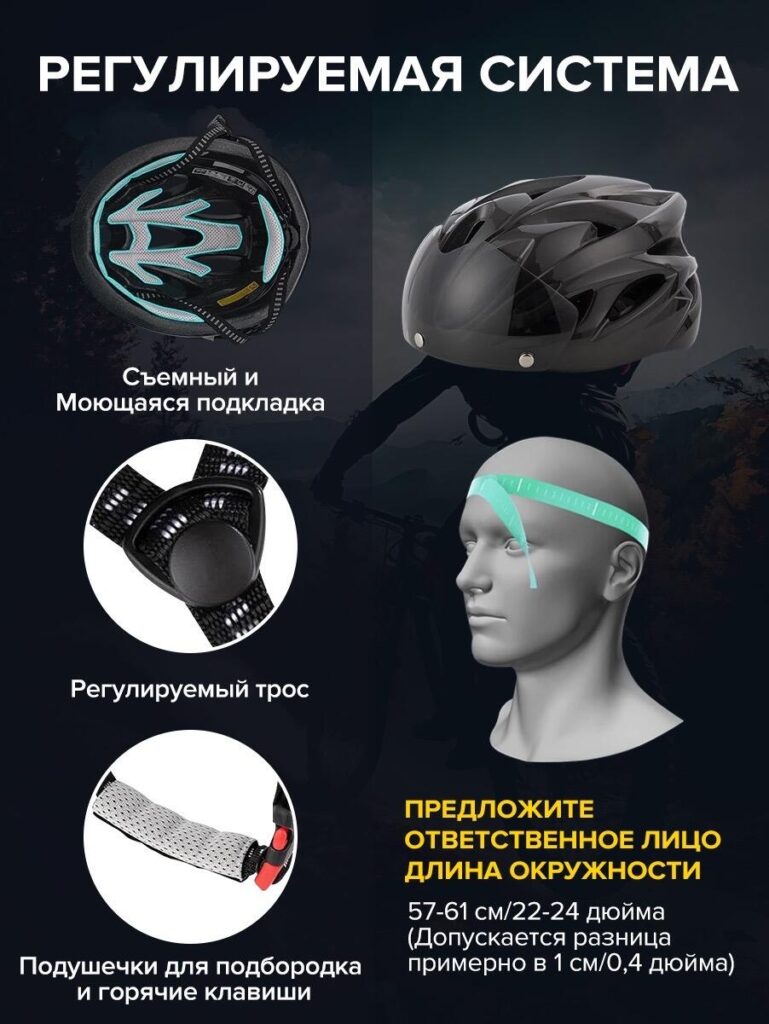
This image dives deeper into internal helmet design, showing the adjustable fit system, removable padding, and washable lining.
Cycling helmets are personal items, and hygiene matters. By visually isolating the padding and adjustment dial, we communicate ease of maintenance and long-term comfort. The exploded-style layout helps users understand how the helmet adapts to different head shapes without feeling complicated.
We intentionally avoided clutter and used clear spacing so each feature remains legible. This approach aligns with Ozon’s preference for clean, information-first visuals and helps reduce doubts around sizing and usability.
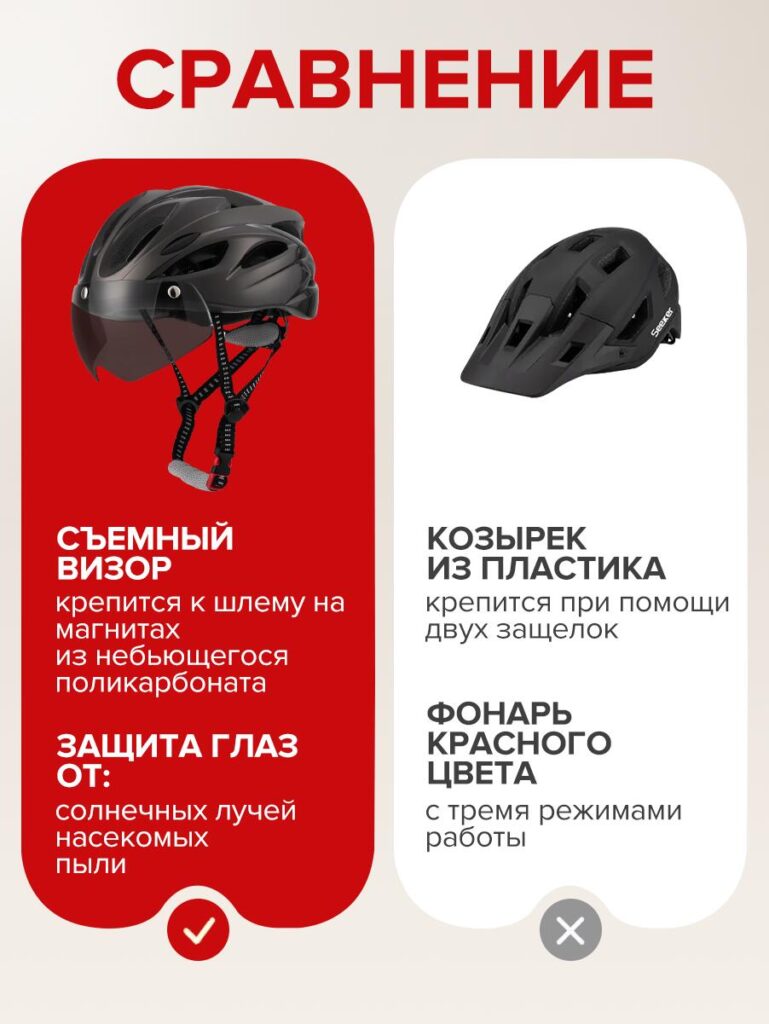
The final image is a direct comparison, a powerful conversion tool on Ozon.
On the left, we present the featured helmet with a removable magnetic visor and eye protection. On the right, a standard helmet shows limited features. The contrasting background colors help users instantly distinguish advantages without reading complex text.
This side-by-side layout taps into decision psychology. Instead of asking users to imagine the difference, we show it clearly. The visual checkmark and cross symbols reinforce the conclusion intuitively: the featured helmet offers more protection, more comfort, and better value.
Across all images, we maintained consistent color language, typography, and spacing. Red accent elements guide attention, while dark and neutral backgrounds support clarity and professionalism.
This consistency builds subconscious trust. When users scroll through the image set, the experience feels structured and intentional rather than random. That sense of order directly influences perceived product quality.
Every image follows a single-message rule: one image, one key idea. This design principle is essential for Ozon, where attention spans are short and visual overload leads to skipped listings.
Ozon shoppers rely heavily on images to make fast decisions. Unlike brand-driven platforms, Ozon prioritizes functionality, clarity, and comparison. This cycling helmet image set aligns perfectly with that behavior.
By guiding users from feature discovery to comfort assurance and finally to competitive comparison, the image sequence mirrors the buyer’s decision journey. Each visual reduces uncertainty and answers objections before they arise.
This is not decorative design. It is conversion-driven visual communication, tailored specifically for how Ozon users browse and buy.
Designing a high-performing Ozon main image set requires more than attractive visuals. It demands a deep understanding of user psychology, platform behavior, and product storytelling.
This cycling helmet project demonstrates how thoughtful image planning, clear hierarchy, and feature-focused layouts can significantly improve product perception and conversion. Every design choice—from lighting and angles to text placement—serves a strategic purpose.
This is exactly the approach we apply at AIRSANG, where we help brands turn complex products into clear, compelling visual stories that perform across global marketplaces.